• 2026.05.08 (Fri)
  • All articles
  • LOGIN
  • JOIN
Global Economic Times
fashionrunwayshow2026
  • Synthesis
  • World
  • Business
  • Industry
  • ICT
  • Distribution Economy
  • Well+Being
  • Travel
  • Eco-News
  • Education
  • Korean Wave News
  • Opinion
  • Arts&Culture
  • Sports
  • People & Life
    • International Student Report
    • With Ambassador
  • Column
    • Cho Kijo Column
    • Cherry Garden Story
    • Ko Yong-chul Column
    • Kim Seul-Ong Column
    • Lee Yeon-sil Column
  • Photo News
  • New Book Guide
MENU
 
Home > Distribution Economy

South Korea's Stock Market Plunges Amidst Trump Victory and Internal Challenges

Hwang Sujin Reporter / Updated : 2024-11-14 08:16:09
  • -
  • +
  • Print


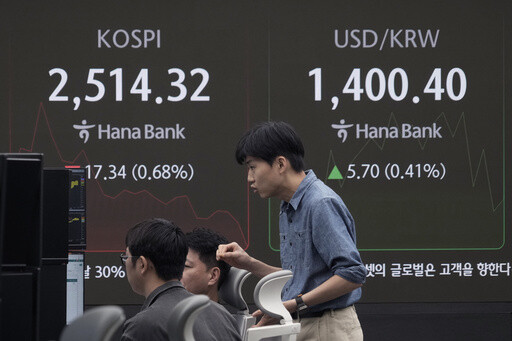
Seoul, South Korea – South Korea’s stock market has suffered a significant decline in recent weeks, with both the KOSPI and KOSDAQ indices hitting their lowest levels of the year. The sharp downturn has been attributed to a combination of external factors, including the election of Donald Trump as U.S. president, and internal challenges, such as concerns over corporate governance and economic policy.   

On Wednesday, the KOSPI index plummeted 2.64% to close at 2,417.08, while the KOSDAQ index dropped 2.94% to finish at 689.65. This marks the lowest closing levels for both indices in 2023. The total market capitalization of the KOSPI fell below 2,000 trillion won for the first time since the "Black Monday" in August, indicating a broader market sell-off.   

While a previous market downturn in August was attributed to temporary shocks, the current decline is seen as a more concerning trend reflecting deeper underlying issues. Analysts point to several factors contributing to the prolonged bearish sentiment, including:

Weakening semiconductor industry: The sluggish performance of the global semiconductor industry, a key driver of the South Korean economy, has weighed heavily on the stock market.   

Trump's protectionist policies: The election of Donald Trump and his anticipated protectionist trade policies have raised concerns about the future of South Korea's exports.   

Currency fluctuations: The depreciation of the South Korean won against the U.S. dollar has made South Korean exports less competitive and put downward pressure on corporate earnings.
Loss of confidence in the government and Samsung: Investors have expressed growing concerns about the government's ability to address economic challenges and support the stock market. Additionally, doubts about Samsung Electronics' ability to maintain its technological leadership have eroded investor confidence.
Weak corporate governance: The lack of progress in improving corporate governance and protecting shareholder rights has further deterred foreign and domestic investors.
The government's efforts to stabilize the market, such as the "value-up" program and proposed tax cuts on capital gains, have failed to stem the tide of selling. The sharp decline in the stock market has raised concerns about the broader economic outlook for South Korea.   


[Copyright (c) Global Economic Times. All Rights Reserved.]

Hwang Sujin Reporter

Popular articles

  • BYD Hits 10,000-Unit Milestone in South Korea Within One Year, Eyes Exclusive "10,000 Club" Entry

  • South Korean Financial Groups Surpass ₩4,000 Trillion in Total Assets; Net Profit Hits ₩26.7 Trillion Amid Stock Market Rally

  • Generative AI Use Triples Among Seoul Citizens, but Digital Divide Persists for Seniors

I like it
Share
  • Facebook
  • X
  • Kakaotalk
  • LINE
  • BAND
  • NAVER
  • https://www.globaleconomictimes.kr/article/1065568514286037 Copy URL copied.
Comments >

Comments 0

Weekly Hot Issue

  • South Korea’s KOSPI Surges to 7th in Global Market Cap, Overtaking Canada and UK
  • Global Pay Parity Demands Shaking Tech Giants: Samsung and SK Hynix Face Rising Labor Unrest in China
  • the 28th Overseas Koreans Literary Awards
  • Ambassador Hyuk-sang Sohn attended the "2026 Educational Community Sports Day" held at the Korean School of Paraguay on Friday, May 1.
  • Official Presentation of Credentials in Paraguay
  • U.S. World Cup "Host City Boom" Fizzles: Hotel Bookings Slump One Month Before Kickoff

Most Viewed

1
Iran Imposes Transit Fees on Strait of Hormuz Amid Escalating Maritime Tensions
2
Korea and Vietnam Forge Strategic Partnership in Science, Technology, and Innovation
3
80% of Enterprises Hit by 'AI Agent Anomalies': SailPoint Calls for Integrated Identity Governance
4
Kurly Abandons 'All-Paper' Packaging Strategy Amid Rising Cost Pressures
5
Tradition Meets the Public: Chungju’s Gugak Busking
광고문의
임시1
임시3
임시2

Hot Issue

Hyundai Motor Group Bets $700 Million on Mexico Amid Trade Policy Volatility

Honda Halts $15B Canada EV Plant Plans Amid Strategic Pivot to Hybrids

Digital Ghosts: The Rise of AI Ex-Partner Replicas and the Ethics of "Technological Mourning"

Kakao Hits Record Q1 Performance: Operating Profit Surges 66% as Focus Shifts to "Agentic AI"

Fashion Runway Show 2026

Global Economic Times
korocamia@naver.com
CEO : LEE YEON-SIL
Publisher : KO YONG-CHUL
Registration number : Seoul, A55681
Registration Date : 2024-10-24
Youth Protection Manager: KO YONG-CHUL
Singapore Headquarters
5A Woodlands Road #11-34 The Tennery. S'677728
Korean Branch
Phone : +82(0)10 4724 5264
#304, 6 Nonhyeon-ro 111-gil, Gangnam-gu, Seoul
Copyright © Global Economic Times All Rights Reserved
  • 에이펙2025
  • APEC2025가이드북TV
  • 반달곰 프로젝트
Search
Category
  • All articles
  • Synthesis
  • World
  • Business
  • Industry
  • ICT
  • Distribution Economy
  • Well+Being
  • Travel
  • Eco-News
  • Education
  • Korean Wave News
  • Opinion
  • Arts&Culture
  • Sports
  • People & Life 
    • 전체
    • International Student Report
    • With Ambassador
  • Column 
    • 전체
    • Cho Kijo Column
    • Cherry Garden Story
    • Ko Yong-chul Column
    • Kim Seul-Ong Column
    • Lee Yeon-sil Column
  • Photo News
  • New Book Guide
  • Multicultural News
  • Jobs & Workers