• 2026.03.22 (Sun)
  • All articles
  • LOGIN
  • JOIN
Global Economic Times
fashionrunwayshow2026
  • Synthesis
  • World
  • Business
  • Industry
  • ICT
  • Distribution Economy
  • Well+Being
  • Travel
  • Eco-News
  • Education
  • Korean Wave News
  • Opinion
  • Arts&Culture
  • Sports
  • People & Life
    • International Student Report
    • With Ambassador
  • Column
    • Cho Kijo Column
    • Cherry Garden Story
    • Ko Yong-chul Column
    • Kim Seul-Ong Column
    • Lee Yeon-sil Column
  • Photo News
  • New Book Guide
MENU
 
Home > World

Iran’s Retaliation Deals $800M Blow to U.S. Bases; Key Missile Defense Systems Hit

Graciela Maria Reporter / Updated : 2026-03-22 08:20:19
  • -
  • +
  • Print


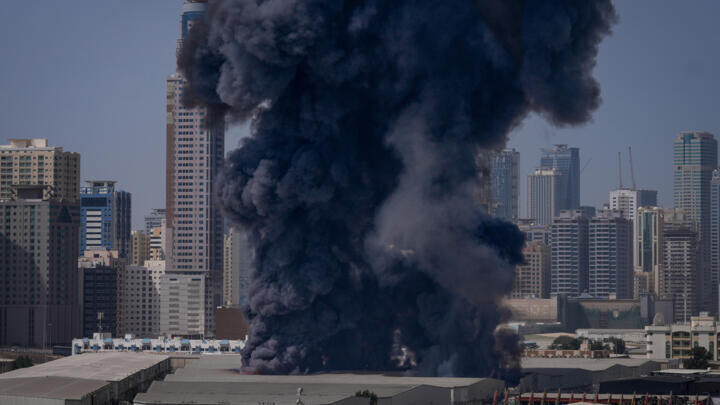
DUBAI — Recent strikes by Iran against U.S. military installations in the Middle East have resulted in damages totaling at least $800 million (approx. 1.2 trillion KRW), according to a new analysis by the Center for Strategic and International Studies (CSIS) and satellite imagery reviewed by the BBC.

The report suggests that the actual scale of destruction has been significantly underestimated. Mark Cancian, a senior adviser at CSIS, noted that while current assessments show massive infrastructure loss, the full extent of the damage will likely increase as more data becomes available.

Precision Strikes on Strategic "Eyes and Ears" The most significant financial and operational blow occurred at a base in Jordan, where the AN/TPY-2 radar—a critical component of the Terminal High Altitude Area Defense (THAAD) system—was severely damaged. This radar system alone is valued at approximately $485 million.

Satellite images also confirmed repeated strikes on key locations including:

-Ali Al Salem Air Base (Kuwait)
-Al Udeid Air Base (Qatar)
-Prince Sultan Air Base (Saudi Arabia)

Experts point out that Iran strategically targeted radomes (protective radar enclosures) and satellite communication hubs. By focusing on these assets, Iran aimed to blind U.S. surveillance and communication capabilities during the initial stages of the conflict.

Soaring Military Costs In response to the escalating conflict, the Pentagon reported to Congress that it incurred $11.3 billion in costs within the first six days of the strikes. Furthermore, the U.S. Department of Defense has officially requested an additional $200 billion in emergency war funding to stabilize the region and repair its crippled defense infrastructure.

[Copyright (c) Global Economic Times. All Rights Reserved.]

  • #globaleconomictimes
  • #micorea
  • #mykorea
  • #nammidonganews
  • #singaporenewsk
  • #Samsung
  • #Daewoo
  • #Hyosung
  • #Apple
  • #korea
Graciela Maria Reporter

Popular articles

  • EU Commission Chief Vows to Honor €90 billion Ukraine Loan Despite Hungarian Veto

  • Fatal Firefight Off Cuban Coast: U.S. Citizens Involved in Stolen Boat Incursion

  • Victorian Surgeon Under Police Investigation for Alleged "Unnecessary" Hysterectomies

I like it
Share
  • Facebook
  • X
  • Kakaotalk
  • LINE
  • BAND
  • NAVER
  • https://www.globaleconomictimes.kr/article/1065568653246232 Copy URL copied.
Comments >

Comments 0

Weekly Hot Issue

  • HP Targets Korea as Strategic Hub for 'Edge AI' Expansion, Seeking Startup Partnerships
  • Pearl Abyss’s 'Crimson Desert' Shatters Records with 2 Million Copies Sold on Day One
  • "BTS Over Books?" Indian Academies Issue Emergency Notices as Students Plot Mass Absences for Comeback Live
  • Naver to Shut Down Men's Fashion Service 'MR.' to Launch Expanded AI-Driven Fashion Platform
  • JBNU and SKKU Researchers Achieve Breakthrough in "Dream Material" MXene, Setting New World Records in Performance
  • Contrasting Fortunes in Petrochemical Restructuring: Yeosu Moves Forward, Ulsan Stalls

Most Viewed

1
An Open Letter to BTS On the Eve of a Historic Performance
2
From Industrial Capital to Tourism Mecca... Ulsan Makes a Bold Move with ‘Experiential Content’ in 2026
3
Ko Sang-goo, President of World Federation of Korean Associations, Elected as First Private Sector Chair of World Korean Community Leaders Convention
4
It is Time for BTS’s Fandom, ARMY, to Step Forward
5
Korean Stock Market Plunges: Circuit Breaker and Sidecar Triggered Amid Geopolitical Crisis
광고문의
임시1
임시3
임시2

Hot Issue

Vishay Unveils Ultra-Compact 0404 RGB LED with Independent Chip Control for Enhanced Color Precision

Coway Clinches Top Honor at "Water Taste Awards" for 7th Consecutive Year

AI Medical Ecosystem in Focus: KIMES 2026 Opens in Seoul as Global Healthcare Hub

Netanyahu Declares Decisive Blow to Iran’s Nuclear and Missile Programs, Signals Early End to War

Let’s recycle the old blankets in Jeju Island’s closet instead of incinerating them.

Global Economic Times
korocamia@naver.com
CEO : LEE YEON-SIL
Publisher : KO YONG-CHUL
Registration number : Seoul, A55681
Registration Date : 2024-10-24
Youth Protection Manager: KO YONG-CHUL
Singapore Headquarters
5A Woodlands Road #11-34 The Tennery. S'677728
Korean Branch
Phone : +82(0)10 4724 5264
#304, 6 Nonhyeon-ro 111-gil, Gangnam-gu, Seoul
Copyright © Global Economic Times All Rights Reserved
  • 에이펙2025
  • APEC2025가이드북TV
  • 독도는우리땅
Search
Category
  • All articles
  • Synthesis
  • World
  • Business
  • Industry
  • ICT
  • Distribution Economy
  • Well+Being
  • Travel
  • Eco-News
  • Education
  • Korean Wave News
  • Opinion
  • Arts&Culture
  • Sports
  • People & Life 
    • 전체
    • International Student Report
    • With Ambassador
  • Column 
    • 전체
    • Cho Kijo Column
    • Cherry Garden Story
    • Ko Yong-chul Column
    • Kim Seul-Ong Column
    • Lee Yeon-sil Column
  • Photo News
  • New Book Guide
  • Multicultural News
  • Jobs & Workers