• 2026.11.10 (Tue)
  • All articles
  • LOGIN
  • JOIN
Global Economic Times
[등록] 2026-09-01 15:48:31
  • Synthesis
  • World
  • Business
  • Industry
  • ICT
  • Distribution Economy
  • Well+Being
    • Pet Life
    • Halal Horizon
  • Travel
  • Eco-News
  • Education
  • Korean Wave News
  • Opinion
  • Arts&Culture
  • Sports
  • People & Life
    • International Student Report
    • With Ambassador
  • Column
    • Cho Kijo Column
    • Cherry Garden Story
    • Ko Yong-chul Column
    • Kim Bong-seon's Photo Column
    • Kim Seul-Ong Column
    • Lee Yeon-sil Column
  • Photo News
  • New Book Guide
MENU
 
Home > Industry

Elon Musk’s Tesla and SpaceX Push Forward with "TeraFab" Semiconductor Plant, Sourcing from Japan

Pedro Espinola Special Correspondent / Updated : 2026-11-09 08:21:54
  • -
  • +
  • Print

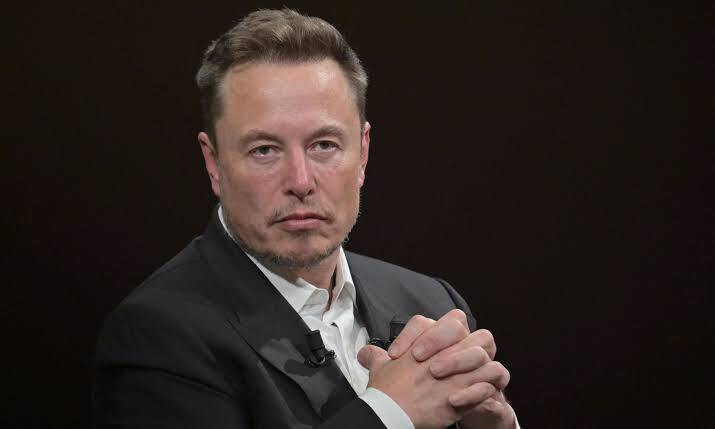
Austin, Texas — In a bold move toward vertical integration, Elon Musk’s automotive and aerospace ventures are laying the groundwork for in-house semiconductor manufacturing. Representatives from "TeraFab"—the ambitious chip fabrication plant being co-developed by Tesla and SpaceX in Grimes County, Texas—have reportedly initiated direct procurement talks with Japanese semiconductor equipment vendors.

According to industry reports, TeraFab procurement teams visited Japan earlier this month to lay out purchasing timelines and negotiate delivery schedules for critical fabrication gear. While specific vendor allocations remain confidential, the project's long-term production target is remarkably aggressive: reaching an output capacity of 1 million silicon wafers per month by 2032.

Targeting Massive In-House Output

The Texas-based TeraFab project is designed to fuel the computing power behind Tesla’s autonomous driving fleet, humanoid robotics initiatives, and SpaceX’s future orbital data centers. Internal projections from SpaceX indicate that the combined computing power required by these ventures will eventually surpass 1 terawatt.

Out of the targeted 1 million monthly 300mm wafer capacity slated for the post-2032 era, approximately 700,000 wafers are reportedly earmarked for data-storage memory chips, while the remaining 300,000 will focus on high-performance logic processors. The multi-billion-dollar project, which has already broken ground with an initial phase investment exceeding $16.8 billion, aims to handle everything from logic and memory production to advanced packaging under one roof.

Implications for Existing Foundry Partners

The aggressive timeline introduces new dynamics for major Asian semiconductor foundries and memory suppliers. Tesla has previously partnered with Samsung Electronics to manufacture its autonomous driving chips, with Samsung slated to build Tesla's next-generation "AI6" chip using its advanced 2-nanometer process at its Taylor, Texas plant by late 2027.

However, once TeraFab achieves operational stability, future iterations beyond AI6 could potentially transition to Tesla’s own facilities. Industry analysts note that while external partnerships will remain crucial in the near term, building proprietary manufacturing capabilities gives Musk's companies greater leverage in pricing and supply chain negotiations.

Furthermore, TeraFab's heavy emphasis on memory—evidenced by recent engineering job postings targeting HBM (High Bandwidth Memory) and LPDDR specialists—signals potential long-term shifts for top-tier memory suppliers like Samsung and SK hynix. Successfully producing advanced memory and executing complex 3D-stacking packaging in-house represents a massive technological hurdle for companies with no prior fabrication background.

Tight Deadlines and Execution Challenges

Despite Musk's stated goal of initiating mass production by the second half of 2028, skepticism lingers across the tech sector. Constructing and scaling a state-of-the-art semiconductor foundry typically requires a minimum of three to five years, leaving little margin for error given TeraFab's compressed timeline. Japanese equipment vendors have reportedly been pressed to fulfill deliveries within a matter of months—a demanding schedule that suppliers are rushing to accommodate despite logistical hurdles.

As TeraFab moves from concept to concrete reality, industry watchers will closely monitor whether Tesla and SpaceX can successfully navigate the complexities of semiconductor fabrication, secure necessary talent, and fill their massive production pipeline.

[Copyright (c) Global Economic Times. All Rights Reserved.]
  • #Cherry Garden
  • #HalalFood
  • #Halal
  • #Petlife
  • #Halalhorizone
  • #Hormuz Impasse
  • #globaleconomictimes
  • #micorea
  • #mykor
Pedro Espinola Special Correspondent

Popular articles

  • Gold Trade Without US Dollars: China's New Channel for Yuan Internationalization

  • China’s First AI-Generated Film Bombs at the Box Office, Failing to Recover Even a Fraction of Its Budget

  • Trump Embracing Russia and China Over Ukraine, Sparking Talk of a '21st-Century Yalta'

I like it
Share
  • Facebook
  • X
  • Kakaotalk
  • LINE
  • BAND
  • NAVER
  • https://www.globaleconomictimes.kr/article/1065568823429040 Copy URL copied.
Comments >

Comments 0

Weekly Hot Issue

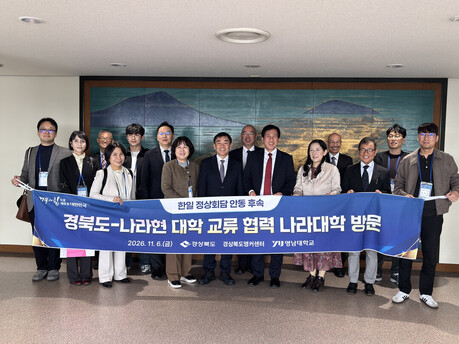
  • Gyeongbuk Province and Nara Prefecture Launch Permanent Academic Partnership
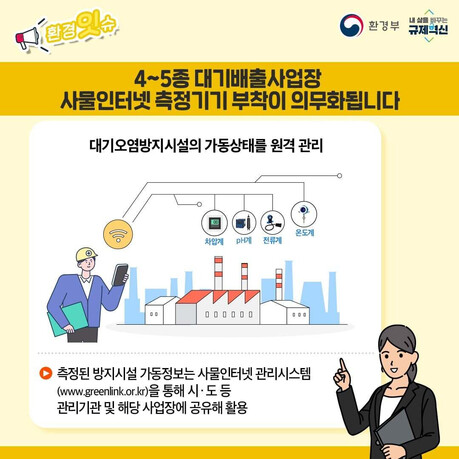
  • Chungnam Urges Class 4 & 5 Facilities to Install IoT Monitors by Year-End, Offering Subsidies
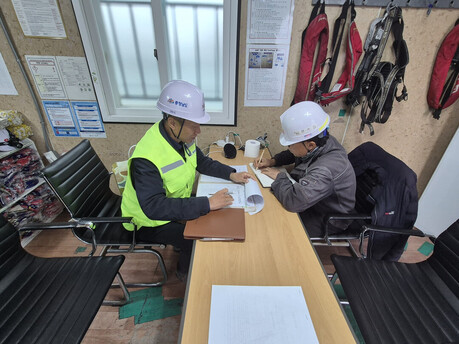
  • Chungnam Province Launches Safety Inspections Across Six Major Port Facilities
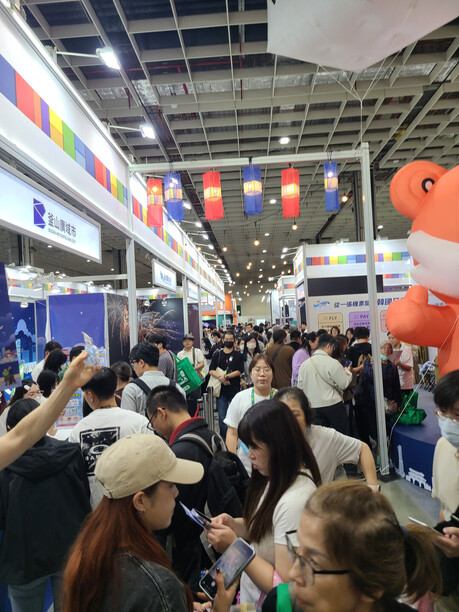
  • Chungnam Province Showcases Global Appeal at Taiwan’s Premier Travel Exhibition
  • "Excellence of Chungnam Tidal Flats" Re-announced Nationwide
  • Chungnam Province Aims to Boost Seocheon’s Marine Bio Industry and Eco-Tourism Competitiveness

Most Viewed

1
Why Can't We Use 'Muse' in Korea?… Zuckerberg Says, "Due to a Lack of Data Centers"
2
US Army Conducts Rare Temporary Burial Drills to Prepare for Worst-Case Large-Scale War Scenarios
3
Eating 100g of Baechu Kimchi Daily Linked to Lower High-Cholesterol Risks
4
World Citizens are Flying Directly to Busan... The Era of 4 Million Foreigners is Just Around the Corner
5
November Shopping Festival Sparks Retail War in South Korea: Where to Find the Best Deals
체리가든 스토리
nutri huevos
로타리
동포저널

Hot Issue

Nvidia Faces Governance Scrutiny as CEO Jensen Huang Admits to Affair Linked to Security Probe 

Police investigating "Air Force One" personal info leak: "Investigating how it was uploaded"

Calls for Reform After Systemic Pressure and Bullying Uncovered at Naju Middle School

Fashion Runway Show 2026

Let’s recycle the old blankets in Jeju Island’s closet instead of incinerating them.

Global Economic Times
korocamia@naver.com
CEO : LEE YEON-SIL
Publisher : KO YONG-CHUL
Registration number : Seoul, A55681
Registration Date : 2024-10-24
Youth Protection Manager: KO YONG-CHUL
Singapore Headquarters
5A Woodlands Road #11-34 The Tennery. S'677728
Korean Branch
Phone : +82(0)10 4724 5264
#304, 6 Nonhyeon-ro 111-gil, Gangnam-gu, Seoul
Copyright © Global Economic Times All Rights Reserved
  • News K
  • 반달곰 프로젝트
  • 광고문의
Search
Category
  • All articles
  • Synthesis
  • World
  • Business
  • Industry
  • ICT
  • Distribution Economy
  • Well+Being 
    • 전체
    • Pet Life
    • Halal Horizon
  • Travel
  • Eco-News
  • Education
  • Korean Wave News
  • Opinion
  • Arts&Culture
  • Sports
  • People & Life 
    • 전체
    • International Student Report
    • With Ambassador
  • Column 
    • 전체
    • Cho Kijo Column
    • Cherry Garden Story
    • Ko Yong-chul Column
    • Kim Bong-seon's Photo Column
    • Kim Seul-Ong Column
    • Lee Yeon-sil Column
  • Photo News
  • New Book Guide
  • Overseas Koreans
  • Multicultural News