• 2026.03.18 (Wed)
  • All articles
  • LOGIN
  • JOIN
Global Economic Times
fashionrunwayshow2026
  • Synthesis
  • World
  • Business
  • Industry
  • ICT
  • Distribution Economy
  • Well+Being
  • Travel
  • Eco-News
  • Education
  • Korean Wave News
  • Opinion
  • Arts&Culture
  • Sports
  • People & Life
    • International Student Report
    • With Ambassador
  • Column
    • Cho Kijo Column
    • Cherry Garden Story
    • Ko Yong-chul Column
    • Kim Seul-Ong Column
    • Lee Yeon-sil Column
  • Photo News
  • New Book Guide
MENU
 
Home > Distribution Economy

Gas Prices See Double-Digit Drop on Second Day of Price Cap; Gap Between Gasoline and Diesel Narrows

KIM YOUNG MIN Specialized Reporter / Updated : 2026-03-15 08:23:28
  • -
  • +
  • Print


SEOUL – South Korea's nationwide average fuel prices continued their sharp descent for the second consecutive day following the implementation of the government’s emergency "Oil Price Cap" system. As of the morning of March 14, 2026, the double-digit drop in retail prices has provided a brief sigh of relief for consumers, even as international crude markets remain turbulent due to geopolitical instability.

Accelerated Decline Under the New Policy
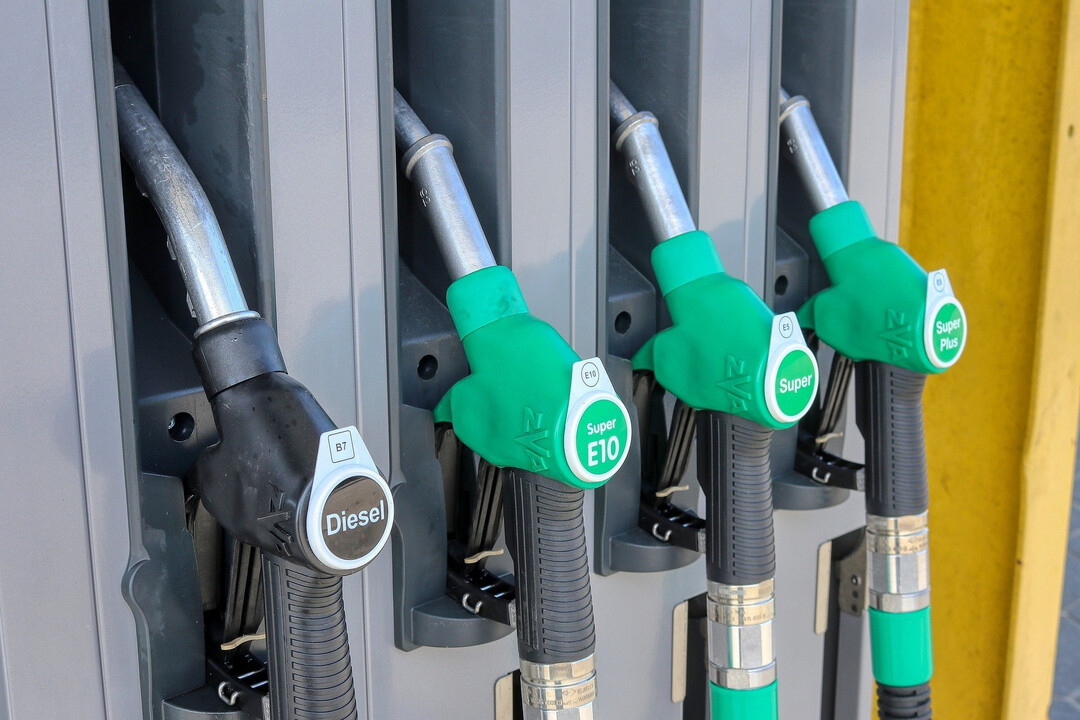
According to Opinet, the oil price information service operated by the Korea National Oil Corporation (KNOC), the average price of gasoline at pumps nationwide stood at 1,851.9 KRW per liter as of 9:00 AM, marking a 12.2 KRW decrease from the previous day. Diesel prices saw an even more significant plunge, falling 16.6 KRW to settle at 1,856.1 KRW per liter.

This trend is particularly noteworthy because it reflects the direct impact of the government’s intervention. Under the newly enforced Oil Price Cap, the maximum supply price for diesel was set lower than that of gasoline, forcing a faster downward adjustment for diesel. Consequently, the price gap between the two fuels—which had widened to over 20 KRW recently—is rapidly narrowing.

In Seoul, traditionally the most expensive region in the country, the downward trend was even more pronounced. Gasoline prices in the capital fell by 16.5 KRW to 1,871.1 KRW per liter, while diesel dropped by 16.2 KRW to 1,863.1 KRW.

The Geopolitical Context: War and Strategic Reserves
The current volatility stems from the outbreak of conflict between the United States and Iran earlier this month. Local pump prices peaked on March 10 before the government stepped in with the price cap.

While domestic prices are currently falling due to policy pressure, the international landscape tells a more complex story. This week, global oil prices faced upward pressure following news of the continued blockade of the Strait of Hormuz and a full-scale production cut by major Middle Eastern oil producers.

However, the rally was somewhat stifled by the International Energy Agency’s (IEA) agreement to release strategic petroleum reserves (SPR) to stabilize the global market. Despite this, the benchmark Dubai crude rose by $34.6 to $123.5 per barrel last week. International gasoline prices climbed by $25.3 to $126.3, while international automotive diesel surged by $37.5 to $176.5.

Uncertainty Looms for the Industry
The discrepancy between rising international costs and falling domestic prices is creating a unique challenge for the refining industry. Typically, changes in international oil prices take about two to three weeks to be reflected at local gas stations. However, the immediate enforcement of the price cap has disrupted this traditional cycle.

"While international prices are on an upward trajectory, the domestic market is being artificially suppressed by the price cap," said an official from the refining industry. "Because the current pricing is dictated by policy rather than market flow, it is extremely difficult to forecast price trends for the coming weeks."

As the nation watches the second week of this emergency measure, the focus remains on whether the government can sustain these lower prices if international crude remains above $120 per barrel, or if the pressure on refiners will eventually lead to supply bottlenecks.

[Copyright (c) Global Economic Times. All Rights Reserved.]

  • #globaleconomictimes
  • #micorea
  • #mykorea
  • #nammidonganews
  • #singaporenewsk
  • #Samsung
  • #Daewoo
  • #Hyosung
  • #Apple
  • #korea
KIM YOUNG MIN Specialized Reporter

Popular articles

  • Jeju Oreum Trail Run Sells Out in 24 Hours, Signaling Global Leap for Sports Tourism

  • South Korean Researchers Crack the Code for "Dream Battery": Solving Lifespan and Fire Risks

  • Galaxy S26 Series Shatters Pre-order Records with 1.35 Million Units Sold in Korea

I like it
Share
  • Facebook
  • X
  • Kakaotalk
  • LINE
  • BAND
  • NAVER
  • https://www.globaleconomictimes.kr/article/1065568903189637 Copy URL copied.
Comments >

Comments 0

Weekly Hot Issue

  • Chungnam Techno Park to Launch 'Hydrogen Industry Council' with 16 Key Organizations Building an Action-Oriented Governance for the Region's Hydrogen Ecosystem
  • LG Electronics Unveils Specialized HVAC Solutions in India, Aiming for B2B Market Leadership
  • BC Card Secures Patent for Blockchain-Based ‘Asset Authentication NFT’ to Protect Wealth in Financial Emergencies
  • Shinil Electronics Eyes KRW 200 Billion Revenue Target Through Product Diversification and Digital Transformation
  • Jeju Bank Leapfrogs into 'Tech-fin' Powerhouse: AI Now Screens Over Half of Corporate Loans
  • Global Food Delivery Giants Hit Record Highs: Subscription and Quick-Commerce Emerge as Key Growth Engines

Most Viewed

1
Adwa’s Echo in Korea: A Shared Story of Dignity and Freedom
2
An Open Letter to BTS On the Eve of a Historic Performance
3
From Industrial Capital to Tourism Mecca... Ulsan Makes a Bold Move with ‘Experiential Content’ in 2026
4
Ko Sang-goo, President of World Federation of Korean Associations, Elected as First Private Sector Chair of World Korean Community Leaders Convention
5
A Street in Cairo in French… From Dakar to Paris!
광고문의
임시1
임시3
임시2

Hot Issue

BTS Live Streaming on Netflix Reignites "Network Free-Ride" Controversy in Korea

LG Electronics Unveils Specialized HVAC Solutions in India, Aiming for B2B Market Leadership

BYD Set to Break Record: Fastest Import Car Brand to Hit 10,000 Sales in Korea

Global Food Delivery Giants Hit Record Highs: Subscription and Quick-Commerce Emerge as Key Growth Engines

Let’s recycle the old blankets in Jeju Island’s closet instead of incinerating them.

Global Economic Times
korocamia@naver.com
CEO : LEE YEON-SIL
Publisher : KO YONG-CHUL
Registration number : Seoul, A55681
Registration Date : 2024-10-24
Youth Protection Manager: KO YONG-CHUL
Singapore Headquarters
5A Woodlands Road #11-34 The Tennery. S'677728
Korean Branch
Phone : +82(0)10 4724 5264
#304, 6 Nonhyeon-ro 111-gil, Gangnam-gu, Seoul
Copyright © Global Economic Times All Rights Reserved
  • 에이펙2025
  • APEC2025가이드북TV
  • 독도는우리땅
Search
Category
  • All articles
  • Synthesis
  • World
  • Business
  • Industry
  • ICT
  • Distribution Economy
  • Well+Being
  • Travel
  • Eco-News
  • Education
  • Korean Wave News
  • Opinion
  • Arts&Culture
  • Sports
  • People & Life 
    • 전체
    • International Student Report
    • With Ambassador
  • Column 
    • 전체
    • Cho Kijo Column
    • Cherry Garden Story
    • Ko Yong-chul Column
    • Kim Seul-Ong Column
    • Lee Yeon-sil Column
  • Photo News
  • New Book Guide
  • Multicultural News
  • Jobs & Workers