• 2026.03.22 (Sun)
  • All articles
  • LOGIN
  • JOIN
Global Economic Times
fashionrunwayshow2026
  • Synthesis
  • World
  • Business
  • Industry
  • ICT
  • Distribution Economy
  • Well+Being
  • Travel
  • Eco-News
  • Education
  • Korean Wave News
  • Opinion
  • Arts&Culture
  • Sports
  • People & Life
    • International Student Report
    • With Ambassador
  • Column
    • Cho Kijo Column
    • Cherry Garden Story
    • Ko Yong-chul Column
    • Kim Seul-Ong Column
    • Lee Yeon-sil Column
  • Photo News
  • New Book Guide
MENU
 
Home > Industry

Cotton Yarn Imports Drive Growth in Textile Industry

Global Economic Times Reporter / Updated : 2025-09-10 08:36:13
  • -
  • +
  • Print


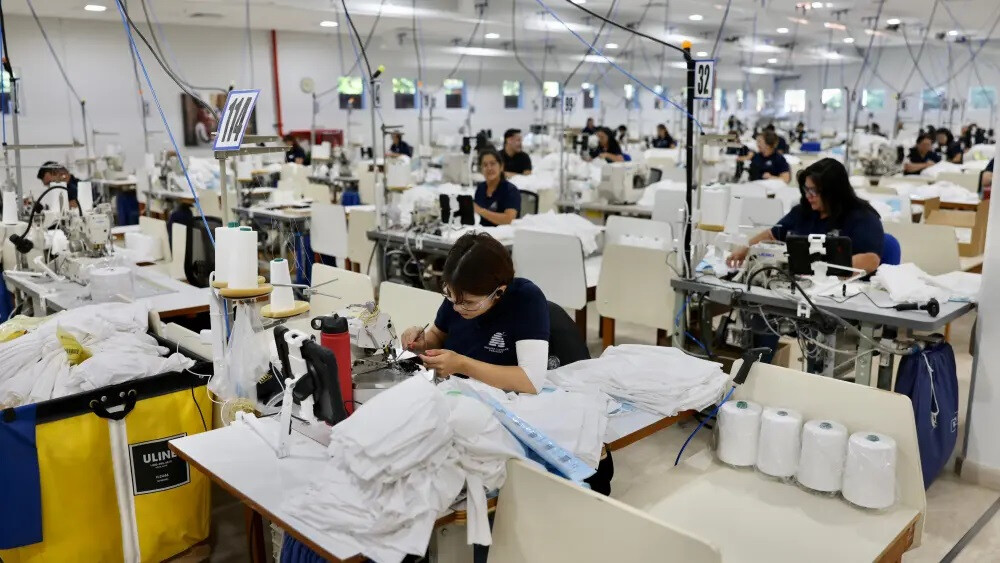
Annual imports of cotton yarn, valued at $3-6 million, are an essential component of Paraguay’s textile and apparel industry, supporting both the domestic market and exports to Brazil and Argentina. This contributes to job creation and generates an added value of up to three times the initial investment.

Santiago Colombino, vice president of the Paraguayan Chamber of the Apparel Industry (AICP), stated that Paraguay consistently imports cotton yarns corresponding to HS codes 5204, 5205, 5206, and 5207, which are crucial for the textile and apparel sector.

Colombino mentioned, “Over the last few years, the value of these yarn imports has fluctuated between $3 million and $6 million annually, with a particular focus on 'HS code 5205' (cotton yarn with a cotton content of 85% or more by weight), which is of great interest to the main buyers.”

He added, “These yarns are essential for manufacturing textiles and apparel, including T-shirts, pants, and underwear, for both domestic and export consumption.”

Colombino emphasized, “While the direct investment in cotton yarn imports is relatively small, it plays a key role in keeping the textile industry active.”

“For every dollar of imported yarn, this sector generates two to three times its value in finished products, increasing industrial jobs and bringing in foreign currency through exports,” he said.

According to the AICP vice president, the import market is dominated by five major companies—Hoahi, Manufactura Pilar, Manufacturas Indutex SA, Lunelli Industria Textil Paraguay SA, and Santa Ana—along with several small and medium-sized enterprises.

Colombino explained that the products made from this yarn are supplied to two main markets. “One is the domestic market, which focuses on basic cotton clothing, and the other is the export market to Brazil, Argentina, and other destinations, where the maquila industry (foreign-owned factories that produce goods for export) plays a significant role,” he stated.

[Copyright (c) Global Economic Times. All Rights Reserved.]

  • #globaleconomictimes
  • #micorea
  • #mykorea
  • #Lifeplaza
  • #nammidonganews
  • #singaporenewsk
  • #Samsung
  • #Daewoo
  • #Hyosung
  • #A
Global Economic Times Reporter
Reporter Page

Popular articles

  • From Industrial Capital to Tourism Mecca... Ulsan Makes a Bold Move with ‘Experiential Content’ in 2026

  • A New Milestone for Ukraine’s Post-War Reconstruction: The Birth of ISVP

  • About mexican food 

I like it
Share
  • Facebook
  • X
  • Kakaotalk
  • LINE
  • BAND
  • NAVER
  • https://www.globaleconomictimes.kr/article/1065569742760226 Copy URL copied.
Comments >

Comments 0

Weekly Hot Issue

  • Coway Clinches Top Honor at "Water Taste Awards" for 7th Consecutive Year
  • HP Targets Korea as Strategic Hub for 'Edge AI' Expansion, Seeking Startup Partnerships
  • Pearl Abyss’s 'Crimson Desert' Shatters Records with 2 Million Copies Sold on Day One
  • "BTS Over Books?" Indian Academies Issue Emergency Notices as Students Plot Mass Absences for Comeback Live
  • Naver to Shut Down Men's Fashion Service 'MR.' to Launch Expanded AI-Driven Fashion Platform
  • JBNU and SKKU Researchers Achieve Breakthrough in "Dream Material" MXene, Setting New World Records in Performance

Most Viewed

1
An Open Letter to BTS On the Eve of a Historic Performance
2
From Industrial Capital to Tourism Mecca... Ulsan Makes a Bold Move with ‘Experiential Content’ in 2026
3
Ko Sang-goo, President of World Federation of Korean Associations, Elected as First Private Sector Chair of World Korean Community Leaders Convention
4
It is Time for BTS’s Fandom, ARMY, to Step Forward
5
Korean Stock Market Plunges: Circuit Breaker and Sidecar Triggered Amid Geopolitical Crisis
광고문의
임시1
임시3
임시2

Hot Issue

Vishay Unveils Ultra-Compact 0404 RGB LED with Independent Chip Control for Enhanced Color Precision

Coway Clinches Top Honor at "Water Taste Awards" for 7th Consecutive Year

AI Medical Ecosystem in Focus: KIMES 2026 Opens in Seoul as Global Healthcare Hub

Netanyahu Declares Decisive Blow to Iran’s Nuclear and Missile Programs, Signals Early End to War

Let’s recycle the old blankets in Jeju Island’s closet instead of incinerating them.

Global Economic Times
korocamia@naver.com
CEO : LEE YEON-SIL
Publisher : KO YONG-CHUL
Registration number : Seoul, A55681
Registration Date : 2024-10-24
Youth Protection Manager: KO YONG-CHUL
Singapore Headquarters
5A Woodlands Road #11-34 The Tennery. S'677728
Korean Branch
Phone : +82(0)10 4724 5264
#304, 6 Nonhyeon-ro 111-gil, Gangnam-gu, Seoul
Copyright © Global Economic Times All Rights Reserved
  • 에이펙2025
  • APEC2025가이드북TV
  • 독도는우리땅
Search
Category
  • All articles
  • Synthesis
  • World
  • Business
  • Industry
  • ICT
  • Distribution Economy
  • Well+Being
  • Travel
  • Eco-News
  • Education
  • Korean Wave News
  • Opinion
  • Arts&Culture
  • Sports
  • People & Life 
    • 전체
    • International Student Report
    • With Ambassador
  • Column 
    • 전체
    • Cho Kijo Column
    • Cherry Garden Story
    • Ko Yong-chul Column
    • Kim Seul-Ong Column
    • Lee Yeon-sil Column
  • Photo News
  • New Book Guide
  • Multicultural News
  • Jobs & Workers