• 2026.11.11 (Wed)
  • All articles
  • LOGIN
  • JOIN
Global Economic Times
[등록] 2026-09-01 15:48:31
  • Synthesis
  • World
  • Business
  • Industry
  • ICT
  • Distribution Economy
  • Well+Being
    • Pet Life
    • Halal Horizon
  • Travel
  • Eco-News
  • Education
  • Korean Wave News
  • Opinion
  • Arts&Culture
  • Sports
  • People & Life
    • International Student Report
    • With Ambassador
  • Column
    • Cho Kijo Column
    • Cherry Garden Story
    • Ko Yong-chul Column
    • Kim Bong-seon's Photo Column
    • Kim Seul-Ong Column
    • Lee Yeon-sil Column
  • Photo News
  • New Book Guide
MENU
 
Home > Well+Being

When Snoring Ends with a Gasp: A Warning Sign of Sleep Apnea in Your 30s

HONG MOON HWA Senior Reporter / Updated : 2026-11-04 09:01:18
  • -
  • +
  • Print


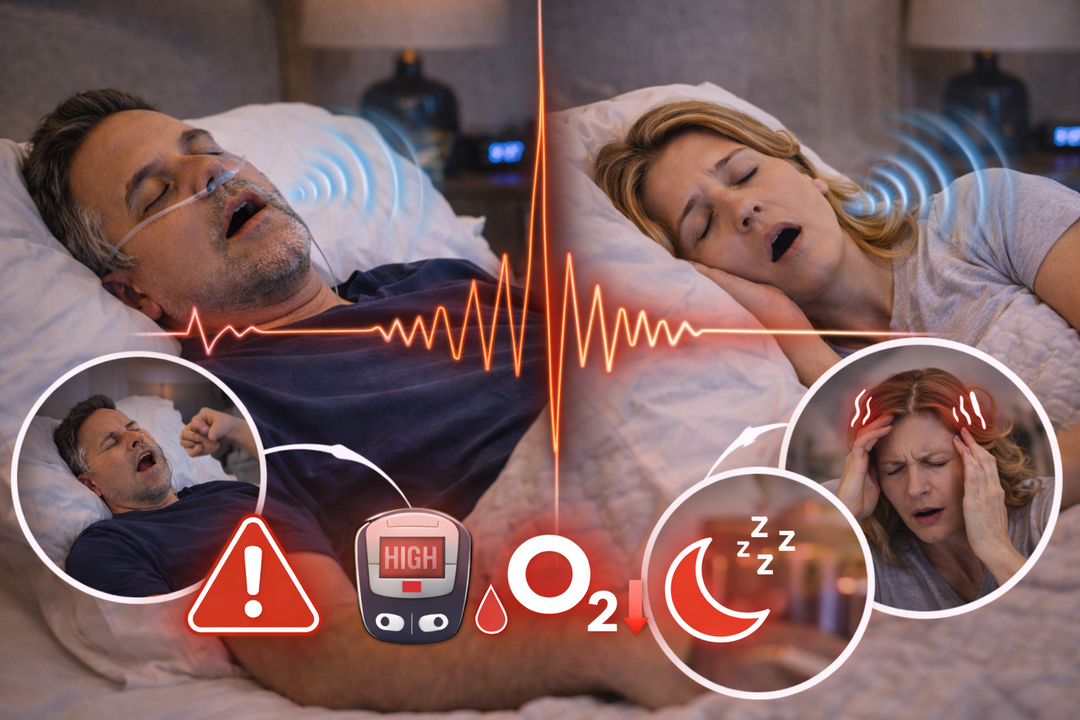
If you feel like you slept enough, yet wake up every morning with a heavy head and find yourself overwhelmed by daytime drowsiness, it might not be simple snoring. Instead, it could be obstructive sleep apnea, a condition where breathing repeatedly stops during sleep. In particular, if family members have ever mentioned that you "stopped breathing in your sleep" or "gasped and started breathing again," it should be viewed as a potential warning sign of sleep apnea. Because snoring and sleep apnea differ significantly in breathing status and overall sleep quality despite similar sounds, experiencing breathing pauses alongside daytime sleepiness warrants professional consultation and examination for safety.

Understanding the Key Differences: Snoring vs. Sleep Apnea

While snoring originates from narrowed airways as air passes through, it generally maintains breathing. When the muscles around the throat relax, the airway space narrows, causing the soft palate and base of the tongue to vibrate with each breath. Although snoring itself can make sleep lighter due to noise, it does not cut off oxygen supply.

In contrast, sleep apnea occurs when the airway becomes completely or partially blocked, causing breathing to stop or weaken for 10 seconds or more repeatedly throughout the night. When breathing halts, blood oxygen levels drop, prompting the brain and heart to detect the oxygen deficit and disrupt sleep stages. If this cycle repeats all night, deep sleep decreases, leaving individuals unrefreshed even after waking up.

According to health authority guidelines, sleep apnea is suspected when snoring is followed by gasping or when family members observe breathing pauses during sleep. Because the sound of snoring alone makes it difficult to distinguish between the two conditions, the key indicators remain whether breathing pauses and daytime fatigue occur together.

Assessing Your Situation: Key Signs to Watch For

Many people easily dismiss these symptoms, assuming "everyone gets tired as they get older" or "it is just daily fatigue." However, even individuals in their 30s can face an increased risk of sleep apnea due to factors such as obesity, an increased neck circumference, alcohol consumption, smoking, or nasal congestion. In particular, recent weight gain or a thickened neck can place extra pressure on tissues surrounding the airway, narrowing the passage.

Signs that point toward potential sleep apnea include:

*Family members reporting that you stop breathing or gasp during sleep.
*Snoring that ends with a sudden gasping sound as breathing resumes.
*Waking up feeling unrefreshed, accompanied by recurrent morning headaches or a dry mouth.
*Persistent daytime sleepiness and difficulty concentrating, which can pose safety hazards while driving or working.

Diagnostic Options and Practical Steps

The presence of sleep apnea can be evaluated through a professional consultation at a sleep clinic, otolaryngology (ENT) department, or pulmonology department, often followed by an in-lab polysomnography or a home sleep apnea test. Polysomnography comprehensively records brain waves, breathing patterns, oxygen levels, heart rates, and muscle movements during sleep to distinguish snoring from sleep apnea and measure the frequency of breathing interruptions per hour.

Before undergoing formal evaluation, medical guidelines generally recommend avoiding alcohol and unprescribed sedatives or sleeping pills. Practical adjustments—such as sleeping on your side, reducing alcohol intake, and addressing nasal congestion with a specialist—can offer temporary relief. However, these lifestyle tweaks should not replace medical care; if breathing pauses and severe daytime fatigue persist, consulting a specialist is the safest course of action.

[Copyright (c) Global Economic Times. All Rights Reserved.]

  • #Cherry Garden
  • #HalalFood
  • #Halal
  • #Petlife
  • #Halalhorizone
  • #Hormuz Impasse
  • #globaleconomictimes
  • #micorea
  • #mykor
HONG  MOON HWA Senior Reporter
HONG MOON HWA Senior Reporter

Popular articles

  • CN Gallery to Host <Nongdam (Shades Capturing Ink): Nonsan Stories of the>

  • South Korea and Ethiopia Sign Trilateral MOU to Introduce Liquid-Based Cytology (LBC) Technology for Cervical Cancer Diagnosis

  • Daejeon City and Local Defense Companies Launch Full-Scale Cooperation to Establish North Texas Defense Cluster

I like it
Share
  • Facebook
  • X
  • Kakaotalk
  • LINE
  • BAND
  • NAVER
  • https://www.globaleconomictimes.kr/article/1065571191722723 Copy URL copied.
Comments >

Comments 0

Weekly Hot Issue

  • Inha University Caught in Campus Culture Clash Over Proposed Rhee Syng-man Statue Revival
  • Honoring a Legacy: Poet Oh Dong-chun Recognized for Lifelong Dedication to Hangul and Sijo Poetry
  • Bongeunsa Temple to Host 2026 Patriotic Buddhism Cultural Festa
  • South Korea Confronts a Growing Health Crisis as Adult Obesity Rates Surge
  • Pain of Chosei Coal Mine Meets Japanese Readers: Moon Young-sook Publishes Japanese Edition of 'Black Sea'
  • Beyond the Trillion-Dollar Mark: China’s Trade Surplus and the Debate Over Global Economic Dominance

Most Viewed

1
US Army Conducts Rare Temporary Burial Drills to Prepare for Worst-Case Large-Scale War Scenarios
2
World Citizens are Flying Directly to Busan... The Era of 4 Million Foreigners is Just Around the Corner
3
Eating 100g of Baechu Kimchi Daily Linked to Lower High-Cholesterol Risks
4
Meeting Christmas Early!… Busan Dessert Sales Event "Daldal The Market" Held
5
November Shopping Festival Sparks Retail War in South Korea: Where to Find the Best Deals
체리가든 스토리
nutri huevos
로타리
동포저널

Hot Issue

Jensen Huang Faces Shareholder Class Action and Leadership Scrutiny Amid Espionage Allegations Involving Former Associate

Disgraced South Korean Scientist Hwang Woo-suk Becomes UAE Citizen

Is South Korea Heading Toward France's Path? Aging Population and Fiscal Pressures Looming Ahead

Fashion Runway Show 2026

Let’s recycle the old blankets in Jeju Island’s closet instead of incinerating them.

Global Economic Times
korocamia@naver.com
CEO : LEE YEON-SIL
Publisher : KO YONG-CHUL
Registration number : Seoul, A55681
Registration Date : 2024-10-24
Youth Protection Manager: KO YONG-CHUL
Singapore Headquarters
5A Woodlands Road #11-34 The Tennery. S'677728
Korean Branch
Phone : +82(0)10 4724 5264
#304, 6 Nonhyeon-ro 111-gil, Gangnam-gu, Seoul
Copyright © Global Economic Times All Rights Reserved
  • News K
  • 반달곰 프로젝트
  • 광고문의
Search
Category
  • All articles
  • Synthesis
  • World
  • Business
  • Industry
  • ICT
  • Distribution Economy
  • Well+Being 
    • 전체
    • Pet Life
    • Halal Horizon
  • Travel
  • Eco-News
  • Education
  • Korean Wave News
  • Opinion
  • Arts&Culture
  • Sports
  • People & Life 
    • 전체
    • International Student Report
    • With Ambassador
  • Column 
    • 전체
    • Cho Kijo Column
    • Cherry Garden Story
    • Ko Yong-chul Column
    • Kim Bong-seon's Photo Column
    • Kim Seul-Ong Column
    • Lee Yeon-sil Column
  • Photo News
  • New Book Guide
  • Overseas Koreans
  • Multicultural News