![[등록] 2026-09-01 15:48:31](/support/_updata/banner2/tl181982910_6749.png)


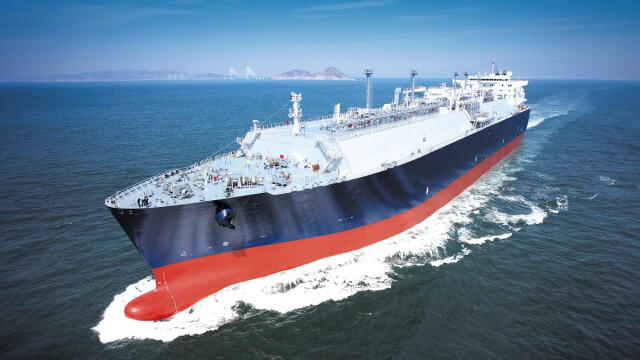
As U.S. President Donald Trump's trade pressure intensifies, importing U.S. liquefied natural gas (LNG) has emerged as a key bargaining chip. India and Japan have already pledged to increase U.S. LNG imports, and LNG cooperation was on the agenda at the recent South Korea-U.S. foreign ministers' meeting.
The Korea Gas Corporation (KOGAS) has selected U.S. LNG companies as preferred bidders and is considering signing long-term import contracts. While domestic refiners are also considering expanding imports of U.S. crude oil and LNG, they are calling for government support due to high shipping costs and the need to modify facilities.
"Up to $4.6 Billion More U.S. LNG Imports Possible"
According to relevant ministries on the 16th, KOGAS has recently selected several U.S. LNG companies as preferred bidders for long-term import contracts and is preparing for bidding. KOGAS accounts for about 80% of Korea's total LNG imports. If all existing Middle Eastern LNG is replaced with U.S. LNG, imports would reach $4.647 billion (about 6.7 trillion won). This is equivalent to 8.3% of last year's trade surplus with the U.S. ($55.7 billion), which could reduce the trade surplus with the U.S. by that much. KOGAS's long-term contracts with Qatar and Oman, which have been in place since the 1990s and total 8.98 million tons annually, expired at the end of last year.
The government is also actively considering importing U.S. LNG. Starting this year, it will receive about 1.58 million tons of LNG from BP, a British oil company, much of which will be from the U.S. An official from the Ministry of Trade, Industry and Energy explained, "No other country in the world is as actively pursuing production expansion as the U.S. in the global LNG market."
Following the U.S.-Japan summit, the Japanese government announced that it would expand purchases of U.S. LNG and discuss cooperation on the U.S.-Japan joint Alaska oil and gas field project.
However, unlike KOGAS, it is expected that it will be difficult for private companies to immediately change their LNG import region from the Middle East to the U.S. An official from a domestic energy company expressed concern, saying, "Since LNG cannot be stored, increasing U.S. supplies while existing contracts are not over will lead to oversupply."
Refiners Consider Changing Crude Oil Import Sources to U.S.
Korea has been expanding energy imports such as U.S. gas and crude oil at the public-private level since the first Trump administration. According to the Korea International Trade Association, Korea's share of U.S. gas and crude oil imports was only 0.2% and 0.1% respectively in 2016, before Trump took office, but it increased significantly during the first Trump administration, reaching 13.5% and 11.6% in 2023. In particular, last year's U.S. LNG imports amounted to 5.71 million tons, accounting for 12% of total imports.
As the Trump-led trade war intensifies, domestic refiners are also considering changing their crude oil import sources to the U.S. It is also speculated that GS Caltex, which has partnered with U.S. oil company Chevron, and SK Energy, which is leading the diversification of import sources, could increase imports of U.S. crude oil depending on the situation.
However, U.S. crude oil is classified as light oil, which costs more to refine compared to Middle Eastern crude oil, which is heavy oil, due to differences in refining methods. An official from the refinery industry said, "Changing heavy oil facilities to light oil requires a lot of refining costs," adding, "It is difficult to make a decision (to change import sources) immediately unless the government provides subsidies."
Increased government support could lead to backlash from Middle Eastern countries. In the meantime, Middle Eastern countries have expressed dissatisfaction with the government's support system for diversifying crude oil import sources, claiming it is unfair support.
[Copyright (c) Global Economic Times. All Rights Reserved.]