• 2026.03.22 (Sun)
  • All articles
  • LOGIN
  • JOIN
Global Economic Times
fashionrunwayshow2026
  • Synthesis
  • World
  • Business
  • Industry
  • ICT
  • Distribution Economy
  • Well+Being
  • Travel
  • Eco-News
  • Education
  • Korean Wave News
  • Opinion
  • Arts&Culture
  • Sports
  • People & Life
    • International Student Report
    • With Ambassador
  • Column
    • Cho Kijo Column
    • Cherry Garden Story
    • Ko Yong-chul Column
    • Kim Seul-Ong Column
    • Lee Yeon-sil Column
  • Photo News
  • New Book Guide
MENU
 
Home > Distribution Economy

South Korea's National Pension System Faces Sustainability Concerns as Younger Generations Face Lower Retirement Benefits

ONLINE TEAM / Updated : 2025-01-26 09:21:51
  • -
  • +
  • Print


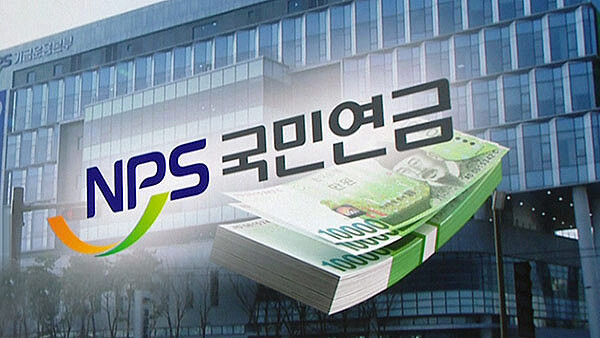
Seoul, South Korea – A recent government projection reveals a bleak outlook for South Koreans born in the mid-1990s, who are set to receive significantly lower national pension benefits than their predecessors. According to data obtained by Democratic Party lawmaker Kang Sun-woo, a 30-year-old earning 3 million won per month can expect to receive only 800,000 won in monthly pension benefits at age 65—less than 60% of the estimated minimum living cost for a single person in retirement.

These findings are based on the assumption that the current national pension system, with a 9% contribution rate and a 40% replacement rate, remains unchanged. While the nominal monthly pension amount at age 65 is projected to be 3.04 million won, when adjusted for inflation, the real value drops to a mere 802,000 won.

Moreover, the situation worsens as individuals age. Those born in 1995 can anticipate further reductions in their monthly pension to 675,000 won at age 75 and 569,000 won at age 85. Similarly, individuals born in 2005 and 1985 are projected to receive even lower benefits.

Experts warn that the current pension system is inadequate to provide a secure retirement for younger generations. Nam Chan-seob, a professor of social welfare at Dong-a University, emphasized the need for a replacement rate of at least 50% to ensure that pensions meet basic living expenses. He suggested several measures to improve the system, including increasing the contribution period, providing additional credits for childbirth, military service, and unemployment, and offering greater financial support for low-income individuals.

Lawmaker Kang Sun-woo expressed concerns about the erosion of public trust in the national pension system, stating that "a pension system that cannot guarantee a decent retirement is unlikely to win the confidence of young people." She called for comprehensive pension reforms to strengthen retirement income security.

The findings of this study highlight the growing challenges facing South Korea's aging society and the need for urgent policy changes to ensure the long-term sustainability of the national pension system.

[Copyright (c) Global Economic Times. All Rights Reserved.]

ONLINE TEAM
ONLINE TEAM
Reporter Page

Popular articles

  • Over 1,800 Companies Sue Trump Administration for $129 Billion in Tariff Refunds

  • Samsung Doubles DRAM Prices in Q1 Amid Unprecedented AI Demand Surge

  • Yujin Robot Evolves Industrial Automation: Integrating Autonomous Mobility and Collaborative Robotics

I like it
Share
  • Facebook
  • X
  • Kakaotalk
  • LINE
  • BAND
  • NAVER
  • https://www.globaleconomictimes.kr/article/1065572421684746 Copy URL copied.
Comments >

Comments 0

Weekly Hot Issue

  • Coway Clinches Top Honor at "Water Taste Awards" for 7th Consecutive Year
  • HP Targets Korea as Strategic Hub for 'Edge AI' Expansion, Seeking Startup Partnerships
  • Pearl Abyss’s 'Crimson Desert' Shatters Records with 2 Million Copies Sold on Day One
  • "BTS Over Books?" Indian Academies Issue Emergency Notices as Students Plot Mass Absences for Comeback Live
  • Naver to Shut Down Men's Fashion Service 'MR.' to Launch Expanded AI-Driven Fashion Platform
  • JBNU and SKKU Researchers Achieve Breakthrough in "Dream Material" MXene, Setting New World Records in Performance

Most Viewed

1
An Open Letter to BTS On the Eve of a Historic Performance
2
From Industrial Capital to Tourism Mecca... Ulsan Makes a Bold Move with ‘Experiential Content’ in 2026
3
Ko Sang-goo, President of World Federation of Korean Associations, Elected as First Private Sector Chair of World Korean Community Leaders Convention
4
It is Time for BTS’s Fandom, ARMY, to Step Forward
5
Korean Stock Market Plunges: Circuit Breaker and Sidecar Triggered Amid Geopolitical Crisis
광고문의
임시1
임시3
임시2

Hot Issue

Vishay Unveils Ultra-Compact 0404 RGB LED with Independent Chip Control for Enhanced Color Precision

Coway Clinches Top Honor at "Water Taste Awards" for 7th Consecutive Year

AI Medical Ecosystem in Focus: KIMES 2026 Opens in Seoul as Global Healthcare Hub

Netanyahu Declares Decisive Blow to Iran’s Nuclear and Missile Programs, Signals Early End to War

Let’s recycle the old blankets in Jeju Island’s closet instead of incinerating them.

Global Economic Times
korocamia@naver.com
CEO : LEE YEON-SIL
Publisher : KO YONG-CHUL
Registration number : Seoul, A55681
Registration Date : 2024-10-24
Youth Protection Manager: KO YONG-CHUL
Singapore Headquarters
5A Woodlands Road #11-34 The Tennery. S'677728
Korean Branch
Phone : +82(0)10 4724 5264
#304, 6 Nonhyeon-ro 111-gil, Gangnam-gu, Seoul
Copyright © Global Economic Times All Rights Reserved
  • 에이펙2025
  • APEC2025가이드북TV
  • 독도는우리땅
Search
Category
  • All articles
  • Synthesis
  • World
  • Business
  • Industry
  • ICT
  • Distribution Economy
  • Well+Being
  • Travel
  • Eco-News
  • Education
  • Korean Wave News
  • Opinion
  • Arts&Culture
  • Sports
  • People & Life 
    • 전체
    • International Student Report
    • With Ambassador
  • Column 
    • 전체
    • Cho Kijo Column
    • Cherry Garden Story
    • Ko Yong-chul Column
    • Kim Seul-Ong Column
    • Lee Yeon-sil Column
  • Photo News
  • New Book Guide
  • Multicultural News
  • Jobs & Workers