• 2025.12.11 (Thu)
  • All articles
  • LOGIN
  • JOIN
Global Economic Times
APEC2025KOREA가이드북
  • Synthesis
  • World
  • Business
  • Industry
  • ICT
  • Distribution Economy
  • Well+Being
  • Travel
  • Eco-News
  • Education
  • Korean Wave News
  • Opinion
  • Arts&Culture
  • Sports
  • People & Life
  • Column
    • Cho Kijo Column
    • Lee Yeon-sil Column
    • Ko Yong-chul Column
    • Cherry Garden Story
  • Photo News
  • New Book Guide
MENU
 
Home > People & Life

South Korea's Elderly Face Severe Poverty Despite High Employment Rates

KO YONG-CHUL Reporter / Updated : 2025-01-13 09:23:26
  • -
  • +
  • Print


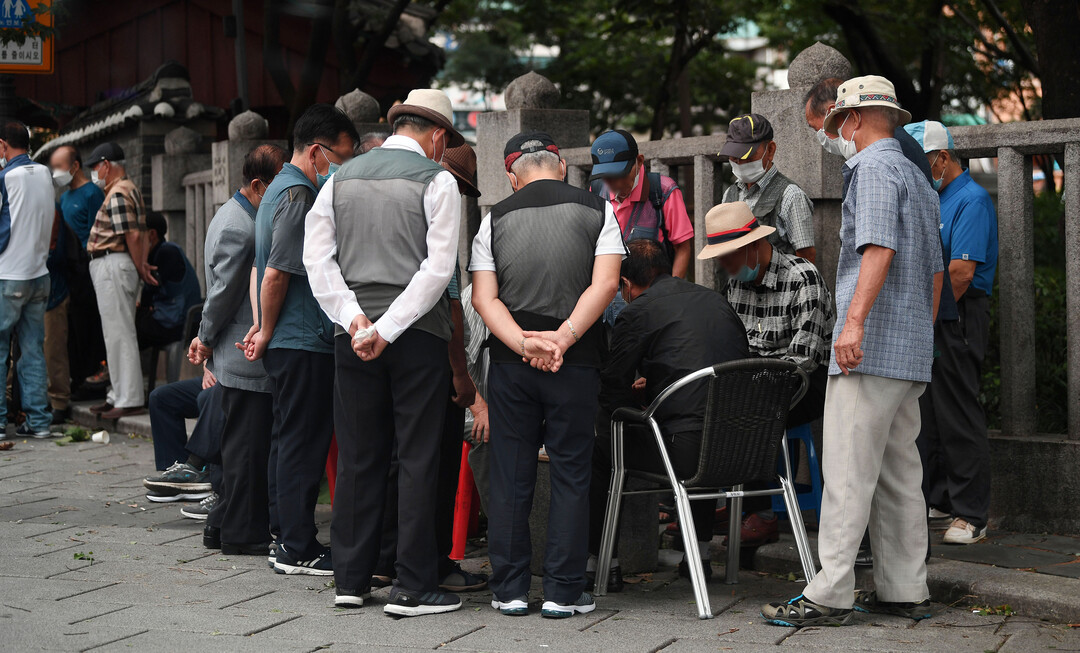
Seoul, South Korea – South Korea’s elderly population is grappling with a paradox: despite having the highest employment rate among OECD countries, they also suffer from the highest poverty rates. A 2020 survey revealed that 40.4% of South Koreans aged 65 and over live below the poverty line, with this figure rising to 52% for those aged 75 and above.

The primary reason behind this alarming situation is the country’s inadequate public pension system. Unlike many Western nations, South Korea only introduced a national pension system in 1988, leaving many elderly individuals with insufficient pension benefits. Consequently, a significant portion of the elderly population is forced to continue working in low-paying and unstable jobs to make ends meet.

Key Issues:

Low public pension benefits: South Korean seniors receive significantly lower public pension benefits compared to the OECD average.
High reliance on labor income: Many elderly individuals rely heavily on income from labor, often working in low-paying and precarious jobs.
Pension gaps: Elderly individuals with shorter national pension insurance periods receive lower or no benefits, creating significant pension gaps.
Internal disparities among the baby boomer generation: Self-employed individuals and those with regional insurance status receive significantly lower pension benefits compared to wage earners.

Solutions:

Expanding basic pension: The government should increase basic pension benefits for vulnerable elderly individuals to ensure a minimum standard of living.
Reforming the national pension system: The national pension system should operate based on the principle of income proportionality, and additional measures should be implemented to support individuals with shorter insurance periods.
Improving the quality of elderly employment: The government should create more high-quality jobs for the elderly to reduce their reliance on low-paying and unstable work.
Experts predict that the elderly poverty rate may improve slightly in the next decade as the baby boomer generation reaches old age. However, they emphasize the urgent need for fundamental reforms to the pension system to address this pressing issue.

[Copyright (c) Global Economic Times. All Rights Reserved.]

  • #globaleconomictimes
  • #seoulkorea
  • #periodicoeconomico
  • #글로벌이코노믹타임즈
  • #GET
  • #GETtv
  • #대한민국
  • #중기청
  • #재외동포청
  • #외교부
  • #micorea
  • #my
KO YONG-CHUL Reporter
Reporter Page

Popular articles

  • A Garden Where the City's Rhythm Stops: Dongdaemun's 'Cherry Garden', Cooking Consideration and Diversity

  • Dayone Company Achieves Record Performance in Adult Education Market

  • Illegal Vehicle Crackdown: Korea Intensifies Enforcement Against Unsafe Cars and Bikes

I like it
Share
  • Facebook
  • X
  • Kakaotalk
  • LINE
  • BAND
  • NAVER
  • https://www.globaleconomictimes.kr/article/1065572472544197 Copy URL copied.
Comments >

Comments 0

Weekly Hot Issue

  • ZTE Faces Massive US Fine Over Alleged Foreign Bribery; Potential Settlement Could Exceed $2 Billion
  • Mexico Hikes Tariffs on 'Strategic Goods' from South Korea, China, and Other Non-FTA Nations
  • From Air to Plastic: A Female Scientist's Carbon Neutral Revolution
  • Rising Resentment: Uncensored Voices Expose China's Surveillance State
  • US Proposes Mandatory Social Media Disclosure for ESTA and Visa Applicants, Citing Enhanced Security
  • Concert Halls Struggle to Silence 'Phone Nuisance' Amidst Growing Concerns Over Performance Etiquette

Most Viewed

1
Korean War Ally, Reborn as an 'Economic Alliance' Across 70 Years: Chuncheon's 'Path of Reciprocity,' a Strategic
2
A Garden Where the City's Rhythm Stops: Dongdaemun's 'Cherry Garden', Cooking Consideration and Diversity
3
The Sudden Halt of Ayumi Hamasaki's Shanghai Concert: Unpacking the Rising Sino-Japanese Tensions
4
Alliance in a Dilemma: The Fallout of Trump's Advice to Takaichi Not to 'Provoke Taiwan' 
5
The Paradox of the 'Juvenile Offender' (Chokbeop Sonyeon): Impunity or Unfinished Rehabilitation?
광고문의
임시1
임시3
임시2

Hot Issue

Mexico Hikes Tariffs on 'Strategic Goods' from South Korea, China, and Other Non-FTA Nations

Tech Tensions Flare: DeepSeek Allegedly Smuggles Banned NVIDIA Blackwell Chips for New AI Model

Netflix Stock Plummets 10% on Credit Downgrade Fears Following Blockbuster Warner Bros. Acquisition

LG Innotek Develops Eco-Friendly Next-Gen Smart IC Substrate, Reducing Carbon Emissions by Half

Let’s recycle the old blankets in Jeju Island’s closet instead of incinerating them.

Global Economic Times
korocamia@naver.com
CEO : LEE YEON-SIL
Publisher : KO YONG-CHUL
Registration number : Seoul, A55681
Registration Date : 2024-10-24
Youth Protection Manager: KO YONG-CHUL
Singapore Headquarters
5A Woodlands Road #11-34 The Tennery. S'677728
Korean Branch
Phone : +82(0)10 4724 5264
#304, 6 Nonhyeon-ro 111-gil, Gangnam-gu, Seoul
Copyright © Global Economic Times All Rights Reserved
  • 에이펙2025
  • APEC2025가이드북TV
  • 독도는우리땅
Search
Category
  • All articles
  • Synthesis
  • World
  • Business
  • Industry
  • ICT
  • Distribution Economy
  • Well+Being
  • Travel
  • Eco-News
  • Education
  • Korean Wave News
  • Opinion
  • Arts&Culture
  • Sports
  • People & Life
  • Column 
    • 전체
    • Cho Kijo Column
    • Lee Yeon-sil Column
    • Ko Yong-chul Column
    • Cherry Garden Story
  • Photo News
  • New Book Guide
  • Multicultural News
  • Jobs & Workers