![[등록] 2026-09-01 15:48:31](/support/_updata/banner2/tl181982910_6749.png)


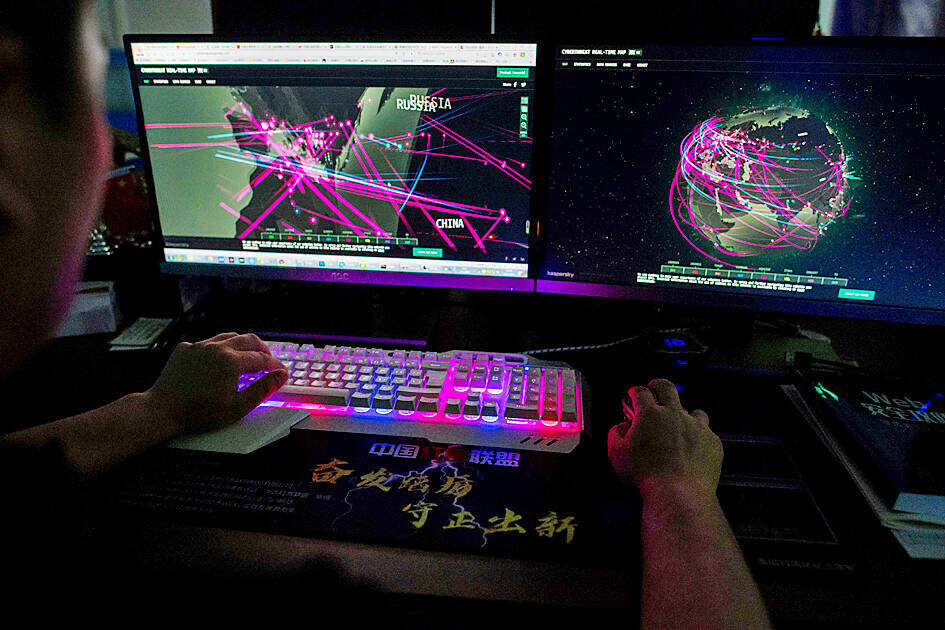
To counter the Chinese Communist Party's (CCP) increasingly sophisticated cyber infiltrations and gray-zone threats, Taiwan's Ministry of National Defense has allocated NT$95.93 million (approximately $3.03 million) in its upcoming fiscal budget, officially formalizing the creation of an elite 'military cyber hunt team.' This initiative is included in the central government's general budget proposal for the next fiscal year and will be promoted under the Information, Communications and Electronic Force Command, directly under the Ministry of National Defense.
This initiative signifies that Taiwan's military cyber warfare paradigm has completely shifted from a passive "defense-oriented security" strategy reliant on building firewalls to an "offensive-defense integrated" strategy that actively seeks out and eliminates blind spots in the network. The training program being prepared by the command focuses on active cyber threat hunting techniques, which require the highest level of cybersecurity expertise, and has drawn intense interest from military and cybersecurity communities.
Traditionally, military security has primarily relied on anomaly alerts, rushing to patch vulnerabilities only after a breach has occurred. However, the new training program operates on the premise that "the system has already been breached." Practical adaptation training led by foreign instructors borrows the model of the US military’s "Cyber Flag" exercises. The core objective is to cultivate the capability of Taiwanese military personnel to meticulously analyze billions of system logs and network traffic like detectives, in order to ferret out hostile hackers who have bypassed defense networks to infiltrate peacetime military networks and critical infrastructure.
According to a government official speaking on condition of anonymity, Lieutenant General Mao Chien-chiu, commander of the force, is prioritizing the establishment of this team to counter Chinese cyber units' tactics of "long-term latency" and "continuous engagement." State-sponsored hackers are adept at Advanced Persistent Threat (APT) attacks, infiltrating Taiwan's military systems and hiding for months or even years to steal secrets or quietly await the opportune moment to execute sabotage in the event of a contingency.
Members of the 'Military Cyber Hunt Team' will serve as digital "sweepers," tasked with completely excising these dormant ghosts and backdoors before a full-scale enemy attack is launched. This project also aligns with international standards and serves to further deepen the combined defense posture between Taiwan and the United States. The US military has consistently emphasized the importance of the "persistent engagement" and "defend forward" cyber strategies, maintaining that rather than waiting passively for an attack, they must actively engage hostile forces in the gray zone.
Based on cooperation with foreign instructors possessing superior practical experience, the command plans to accelerate its structural transformation into an "elite cyber tactical unit." Through this, it is expected that in peacetime, the resilience of core civilian infrastructure and military command systems can be maintained, and in wartime, shared technical protocols can be utilized to swiftly engage in cross-border joint cyber defense with allies sharing common values.
This budget allocation demonstrates a profound turning point in the strategic thinking of the Taiwanese military on the digital battlefield. In modern warfare, cyber warfare and electronic warfare function as core means to paralyze an enemy's command system before the first missile flies. The establishment of this cyber hunt team is projected to bring hostile forces hiding in the shadows into the light, reclaim dominance in the digital domain, ensure the stable operation of military command and communications systems in the event of an armed conflict, and serve as a robust shield defending national security.
[Copyright (c) Global Economic Times. All Rights Reserved.]