


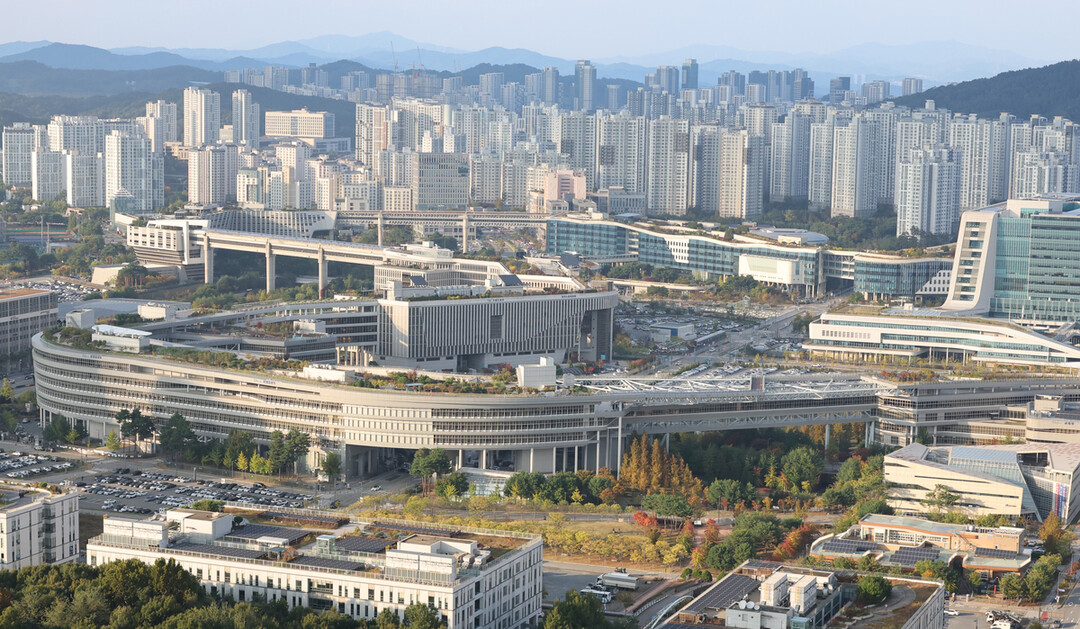
As the Financial Services Commission (FSC) faces an imminent relocation to the administrative city of Sejong by the second half of 2027, anxiety and confusion are running high at its headquarters in Gwanghwamun, Seoul.
Under the Ministry of the Interior and Safety's second phase of central government relocation plans, approximately 420 personnel from the FSC and the Financial Intelligence Unit (FIU) are slated to pack their bags for a leased private building in Sejong next year.
With presidential approval and final notification pending, internal sources reveal that the organization has been pushed to the absolute brink. FSC Chairman Lee Eok-won reportedly made a direct personal plea to the President during a closed-door cabinet meeting to reconsider the relocation. "I heard the Chairman formally requested the President to halt or review the transfer plan," an FSC official noted.
As of the 18th, the atmosphere within the commission is near panic. With pressing market issues piling up—including heightened stock market volatility, household debt management, and the soft landing of real estate project financing (PF)—officials warn that uprooting the agency entirely from Seoul could sever real-time communication with financial markets and paralyze crisis response systems.
Concerns are widespread that administrative efficiency will plummet. While execution agencies like the Financial Supervisory Service (FSS), major financial holding companies, the Korea Exchange, and the National Assembly will all remain in Seoul, only the policy control tower would move to Sejong, dramatically increasing wasted transit and travel time.
To curb internal unrest, the leadership has scrambled into damage control. Immediately following the announcement, Chairman Lee ordered the formation of a task force to gather staff grievances. Vice Chairman Shin Jin-chang held emergency town halls with roughly 100 working-level officials—ranging from section chiefs to administrative officers—continuing a series of listening sessions initiated by his predecessor.
Despite senior officials hosting individual lunch meetings with senior managers and experienced junior officers to soothe staff sentiment, these efforts have fallen short of healing bruised morale.
Younger FSC staffers express deep disappointment. While none plan to quit overnight, the prospect of working in Sejong next year has brought heavy practical inconveniences into sharp focus.
The flight of talent is already materializing. Over the past six months, a growing number of mid-level officials—who built their family lives and children's education plans around being stationed in Seoul—have sought transfers to other ministries remaining in the capital or have jumped ship to private financial institutions. Fear of organizational erosion driven by the exodus of top-tier talent is palpable.
What these working-level bureaucrats voice most urgently is "housing stability and realistic compensation." During the first wave of government relocations between 2012 and 2014, early movers like the Ministry of Economy and Finance (MOEF) received sweeping settlement incentives, including special housing supply allocations (known as teukgong), acquisition and registration tax exemptions, and low-interest housing loans.
Conversely, following the abolition of the special housing allocation system in July 2001 (due to real estate speculative controversies), latecomers like FSC employees are forced to relocate to Sejong barehanded, lacking any meaningful safety net.
"Whether we choose to live as 'wild geese fathers' separated from our families or pack up and move everyone while already settled in Seoul, we are facing unbearable housing costs and financial strain," one FSC official lamented. "If we cannot stop the move altogether, we at least need guaranteed housing allocations or tax cuts—just like our seniors at the Ministry of Economy and Finance received—to ease this overwhelming anxiety."
The government and Sejong City are currently reviewing a plan to selectively reintroduce special housing allocations for relocating agency personnel, starting with approximately 1,300 units in Dasom-dong scheduled for pre-sale next March. The Ministry of the Interior and Safety is also discussing moving stipends, early relocation allowances, and temporary Seoul-Sejong commuter buses.
However, skepticism remains deep on the ground. Fairness disputes loom large with existing public servants who arrived in Sejong after the special housing system was scrapped in late 2021. Furthermore, even if employees secure a pre-sale housing unit next March, actual occupancy will not be possible until late 2029 or later, leaving FSC staff slated to move in late 2027 to face severe short-term jeonse and monthly rent crunches.
"With even Chairman Lee appealing for the necessity of remaining in Seoul to maintain market stability, organizational anxiety has peaked," an FSC official emphasized. "If the relocation is forced through, the inter-ministerial negotiation process must guarantee aggressive and substantial settlement measures, including housing allocations and tax benefits."
At the same time, some working-level staff are resigning themselves to reality. "I am accepting the move to Sejong as a given and trying to mentally prepare," one official shared. "Complaining isn't going to help."
Nevertheless, observers in government circles warn that failing to guarantee basic living conditions for elite young professionals—who chose public service and gave up the lucrative salaries of private finance—will inevitably accelerate a brain drain.
If the senior leadership's successive listening sessions and dinner meetings are to avoid being dismissed as mere cosmetic appeasement, they must deliver tangible results through rigorous consultations with relevant ministries. All eyes in the bureaucracy are now fixed on whether the Sejong relocation will truly elevate state administration efficiency—or backfire.
[Copyright (c) Global Economic Times. All Rights Reserved.]