• 2026.03.22 (Sun)
  • All articles
  • LOGIN
  • JOIN
Global Economic Times
fashionrunwayshow2026
  • Synthesis
  • World
  • Business
  • Industry
  • ICT
  • Distribution Economy
  • Well+Being
  • Travel
  • Eco-News
  • Education
  • Korean Wave News
  • Opinion
  • Arts&Culture
  • Sports
  • People & Life
    • International Student Report
    • With Ambassador
  • Column
    • Cho Kijo Column
    • Cherry Garden Story
    • Ko Yong-chul Column
    • Kim Seul-Ong Column
    • Lee Yeon-sil Column
  • Photo News
  • New Book Guide
MENU
 
Home > World

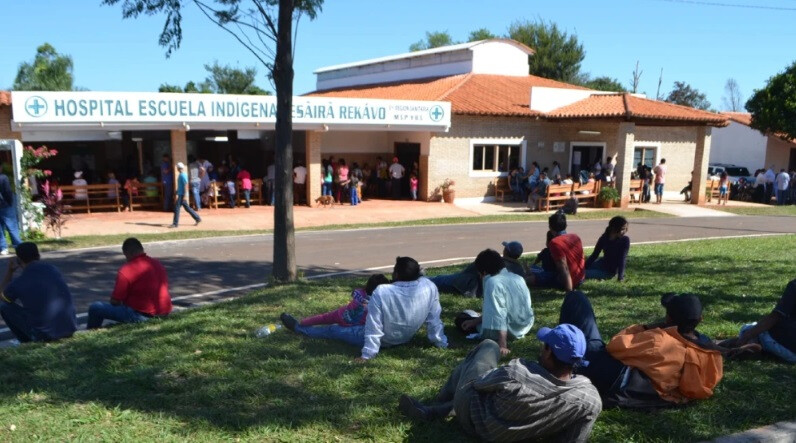
Paraguay's Healthcare System Grapples with Stark Regional Disparities

Ana Fernanda Reporter / Updated : 2025-03-17 09:41:24
  • -
  • +
  • Print

ASUNCIÓN — A recent report by the National Council for Higher Education (Cones) has unveiled a critical imbalance within Paraguay's healthcare system, highlighting a severe concentration of medical professionals in urban centers at the expense of rural populations.

The study reveals that a staggering 50% of Paraguay's doctors are based in Asunción and the Central Department, leaving vast rural areas critically underserved. Regions like Alto Paraguay and Boquerón suffer from alarmingly low doctor-to-population ratios, with fewer than 5 physicians per 10,000 residents, compared to Asunción's 50 per 10,000.

This stark disparity, coupled with inadequate medical infrastructure, poses a significant threat to the health and well-being of rural communities. The report also sheds light on the issue of overworked medical personnel, with 41% of public sector doctors holding multiple jobs due to insufficient compensation and poor working conditions. This trend is prevalent among various medical specialties, including anesthesiology, hemodialysis technology, and biochemistry.

Furthermore, a shortage of key specialists, such as internal medicine and general surgery practitioners, forces rural patients to seek treatment in Asunción, exacerbating the strain on already overburdened urban hospitals.

Data discrepancies within the medical personnel registration system further complicate matters, with official databases reporting conflicting figures on the total number of doctors in the country.

To address these critical issues, the report calls for:

Incentivizing graduate education to encourage specialization.
Modernizing and integrating medical personnel databases for improved planning.
Implementing strategies to attract and retain medical professionals in rural areas, including enhanced compensation and career development opportunities.
The Paraguayan government and relevant institutions face an urgent task in rectifying these imbalances and ensuring equitable access to healthcare for all citizens.

[Copyright (c) Global Economic Times. All Rights Reserved.]

  • #globaleconomictimes
  • #글로벌이코노믹타임즈
  • #한국
  • #중기청
  • #재외동포청
  • #외교부
  • #micorea
  • #mykorea
  • #newsk
  • #nammidonganews
  • #singaporenewsk
Ana Fernanda Reporter

Popular articles

  • Tehran on the Brink: Scenarios of a U.S. Strike and the Looming Global Fallout

  • Google Unveils ‘Nano Banana 2’: Pro-Level Image AI Now Free for All

  • Samsung Display Resumes Development of Next-Gen 'QNED' Technology

I like it
Share
  • Facebook
  • X
  • Kakaotalk
  • LINE
  • BAND
  • NAVER
  • https://www.globaleconomictimes.kr/article/1065573643510205 Copy URL copied.
Comments >

Comments 0

Weekly Hot Issue

  • Coway Clinches Top Honor at "Water Taste Awards" for 7th Consecutive Year
  • HP Targets Korea as Strategic Hub for 'Edge AI' Expansion, Seeking Startup Partnerships
  • Pearl Abyss’s 'Crimson Desert' Shatters Records with 2 Million Copies Sold on Day One
  • "BTS Over Books?" Indian Academies Issue Emergency Notices as Students Plot Mass Absences for Comeback Live
  • Naver to Shut Down Men's Fashion Service 'MR.' to Launch Expanded AI-Driven Fashion Platform
  • JBNU and SKKU Researchers Achieve Breakthrough in "Dream Material" MXene, Setting New World Records in Performance

Most Viewed

1
An Open Letter to BTS On the Eve of a Historic Performance
2
From Industrial Capital to Tourism Mecca... Ulsan Makes a Bold Move with ‘Experiential Content’ in 2026
3
Ko Sang-goo, President of World Federation of Korean Associations, Elected as First Private Sector Chair of World Korean Community Leaders Convention
4
It is Time for BTS’s Fandom, ARMY, to Step Forward
5
Korean Stock Market Plunges: Circuit Breaker and Sidecar Triggered Amid Geopolitical Crisis
광고문의
임시1
임시3
임시2

Hot Issue

Vishay Unveils Ultra-Compact 0404 RGB LED with Independent Chip Control for Enhanced Color Precision

Coway Clinches Top Honor at "Water Taste Awards" for 7th Consecutive Year

AI Medical Ecosystem in Focus: KIMES 2026 Opens in Seoul as Global Healthcare Hub

Netanyahu Declares Decisive Blow to Iran’s Nuclear and Missile Programs, Signals Early End to War

Let’s recycle the old blankets in Jeju Island’s closet instead of incinerating them.

Global Economic Times
korocamia@naver.com
CEO : LEE YEON-SIL
Publisher : KO YONG-CHUL
Registration number : Seoul, A55681
Registration Date : 2024-10-24
Youth Protection Manager: KO YONG-CHUL
Singapore Headquarters
5A Woodlands Road #11-34 The Tennery. S'677728
Korean Branch
Phone : +82(0)10 4724 5264
#304, 6 Nonhyeon-ro 111-gil, Gangnam-gu, Seoul
Copyright © Global Economic Times All Rights Reserved
  • 에이펙2025
  • APEC2025가이드북TV
  • 독도는우리땅
Search
Category
  • All articles
  • Synthesis
  • World
  • Business
  • Industry
  • ICT
  • Distribution Economy
  • Well+Being
  • Travel
  • Eco-News
  • Education
  • Korean Wave News
  • Opinion
  • Arts&Culture
  • Sports
  • People & Life 
    • 전체
    • International Student Report
    • With Ambassador
  • Column 
    • 전체
    • Cho Kijo Column
    • Cherry Garden Story
    • Ko Yong-chul Column
    • Kim Seul-Ong Column
    • Lee Yeon-sil Column
  • Photo News
  • New Book Guide
  • Multicultural News
  • Jobs & Workers