![[등록] 2026-09-01 15:48:31](/support/_updata/banner2/tl181982910_6749.png)


(C) YOUTUBE
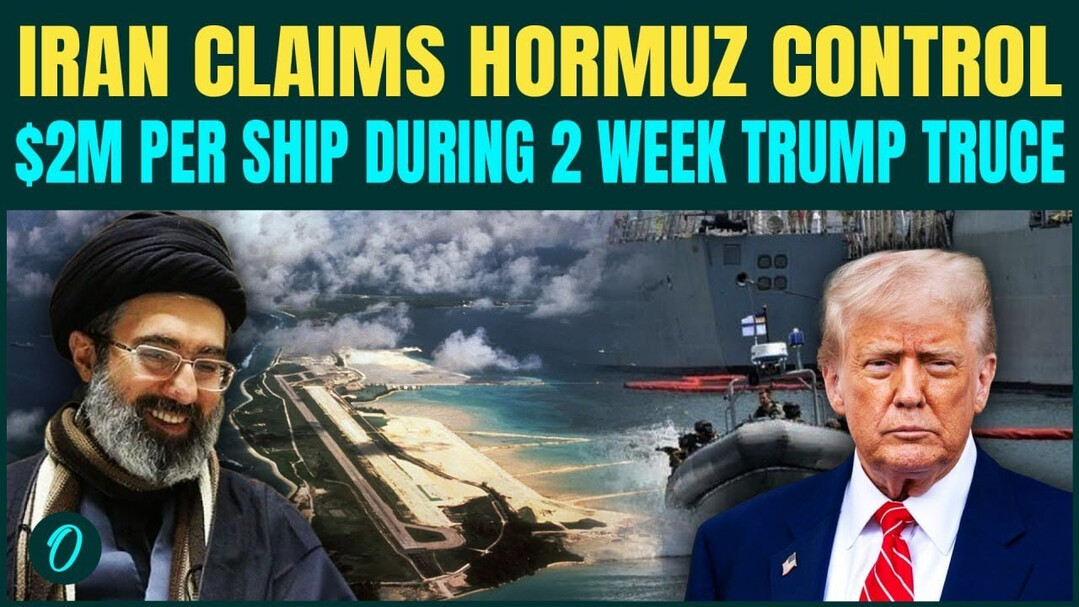
TEHRAN — In a defiant move that threatens the stability of the recently brokered ceasefire, Iran’s newly appointed Supreme Leader, Ayatollah Sayyid Mojtaba Khamenei, issued a stern warning to the international community, vowing to elevate Iran's control over the Strait of Hormuz to a "new dimension."
The statement, released on Thursday (local time), coincided with the 40th day of mourning for his father and predecessor, Ayatollah Ali Khamenei, who was killed during joint U.S. and Israeli airstrikes on February 28. The message, broadcast via state-run IRIB and Press TV, marks Mojtaba’s most aggressive rhetoric since assuming power, casting a shadow over the fragile diplomatic efforts led by the United States.
A Hardline Stance on the Global Oil Vein
The Strait of Hormuz, a narrow waterway through which approximately 20% of the world’s petroleum passes, has long been a geopolitical flashpoint. Mojtaba Khamenei’s declaration that Iran would raise the "management and control level" of the strait to a "new stage" suggests a potential shift toward permanent militarization or restricted access, despite the ongoing two-week ceasefire agreement.
"We will never overlook the aggressors who attacked our nation," the Supreme Leader stated. "We will hold them accountable to the very end for their actions. We will demand not only reparations for the war’s damages but also a heavy price for the blood of our martyrs."
The mention of "blood money" or "price for blood" is interpreted by analysts as a direct threat of retaliatory strikes or long-term financial and territorial demands against Washington and Jerusalem.
The "Invisible" Leader Claims Victory
While the conflict—initially described by U.S. President Donald Trump as a "four-week campaign"—has battered Iran’s infrastructure and economy, Mojtaba Khamenei remarkably claimed that Iran emerged victorious in the war against the U.S. and Israel.
However, despite the bold proclamations, the Supreme Leader remains an enigma. Since his appointment following his father's death, Mojtaba has never appeared in public. Expectations were high that he would attend the 40th-day memorial services in Tehran, yet he remained behind closed doors, opting for a televised statement instead. This continued absence has fueled intense speculation regarding his security concerns, health, or a highly calculated strategy of "leadership from the shadows."
Ceasefire Under Pressure
The timing of the statement is particularly precarious. It comes just 24 hours after President Masoud Pezeshkian announced that Iran had accepted a U.S.-led ceasefire. Pezeshkian emphasized that the decision to halt hostilities was reached through a unanimous vote by the Iranian leadership and received the explicit "approval" of Mojtaba Khamenei.
The discrepancy between the President's diplomatic compliance and the Supreme Leader's bellicose rhetoric highlights a complex internal dynamic within Tehran. While the executive branch seeks to reopen the Strait of Hormuz to alleviate the economic "suffocation" warned of by the Asian Development Bank (ADB), the clerical leadership appears focused on maintaining ideological dominance and leverage through threats.
Economic Implications
The international markets have reacted with renewed volatility to the news. While the reopening of Hormuz is expected to release trapped oil supplies, Mojtaba's threat to "upgrade" control of the waterway introduces a high risk premium. If the "new level of control" includes more aggressive boardings of tankers or sophisticated electronic warfare, the ceasefire may do little to lower the mounting inflation and energy costs currently battering the Asia-Pacific region.
As the two-week deadline approaches, the world watches to see if Mojtaba Khamenei will finally step into the light—or if his first major policy "upgrade" will be the spark that reignites a global energy crisis.
[Copyright (c) Global Economic Times. All Rights Reserved.]