• 2026.03.22 (Sun)
  • All articles
  • LOGIN
  • JOIN
Global Economic Times
fashionrunwayshow2026
  • Synthesis
  • World
  • Business
  • Industry
  • ICT
  • Distribution Economy
  • Well+Being
  • Travel
  • Eco-News
  • Education
  • Korean Wave News
  • Opinion
  • Arts&Culture
  • Sports
  • People & Life
    • International Student Report
    • With Ambassador
  • Column
    • Cho Kijo Column
    • Cherry Garden Story
    • Ko Yong-chul Column
    • Kim Seul-Ong Column
    • Lee Yeon-sil Column
  • Photo News
  • New Book Guide
MENU
 
Home > Synthesis

Soaring Housing Hurdle: Seoul's Unprecedented Rise in 30-Something Houseless Households

Global Economic Times Reporter / Updated : 2025-11-24 09:51:30
  • -
  • +
  • Print


 (C) The Japan Times


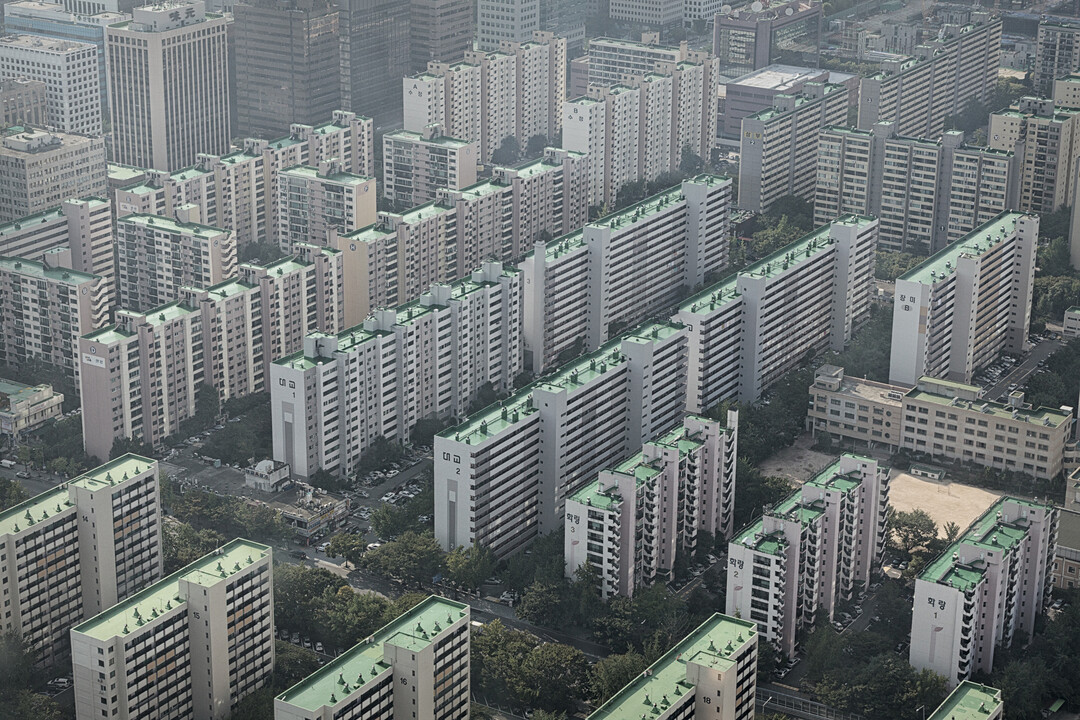
SEOUL — The struggle for homeownership in South Korea’s capital has reached a critical juncture, with the number of houseless households led by those in their 30s in Seoul hitting an all-time high last year. This development underscores a deepening crisis for young professionals attempting to enter the housing market, a trend exacerbated by skyrocketing property prices and insufficient housing supply.

According to the latest housing ownership statistics from the National Data Agency (formerly Statistics Korea), the number of 30-something household heads in Seoul without their own home reached 527,729 last year. This figure, marking the largest since the statistics began in 2015, represents an increase of 17,215 households from the previous year.

Widening Disparity in Housing Ownership 

In stark contrast to the burgeoning number of houseless households, the count of 30-something homeowners in Seoul has been on a three-year decline. Last year, the number of households in this age bracket who owned a home dropped to 183,456, a reduction of 7,893 from the year prior, reaching its lowest level on record.

This divergence has resulted in a massive gap: the number of houseless households is now 2.9 times that of home-owning households—the widest disparity ever recorded. This is a significant slide from 2015, when approximately 237,000 households in their 30s owned a home. After a brief uptick in 2021, the number of homeowners fell below the 200,000 mark in 2023, settling at 191,349 before the most recent decline.

As a result, the homeownership rate for 30-somethings in Seoul—the proportion of households in this age group that own a home—plunged to just 25.8% last year. This rate has steadily fallen from 33.3% in 2015, briefly recovering in 2021 (31.2%) before a sharper drop to 29.3% in 2022, culminating in the current low of 25%.

Seoul vs. the Nation: A 10-Point Gap 

While the national homeownership rate for 30-somethings has also hit a record low, standing at 36.0% after six consecutive years of decline, Seoul’s rate lags behind by more than 10 percentage points.

Analysts attribute this substantial difference to several compounding factors: the intense concentration of population in the capital region, the dramatic surge in Seoul’s home prices—with the Korea Real Estate Board reporting a 1.19% rise in October, the highest in 7 years and 1 month—and the societal trend of delayed employment and marriage. The challenge of securing a home has been amplified by the unique demographic characteristics of Seoul, particularly its high concentration of single-person households, and the effect of the government's strengthened real estate policies, which some argue have inadvertently raised the barriers to market entry.

A Strong Desire for Homeownership Amid Difficulties 

Despite the daunting market realities, the aspiration for homeownership remains strong among young people. A survey conducted by the Land and Housing Research Institute last year on 700 single-person, houseless youths nationwide found that a vast majority—83.2%—believed that securing their own home was necessary for residential stability and asset formation.

When asked about necessary support policies, respondents prioritized financial assistance for home purchases (24.3%) and jeonse (long-term deposit) loans (22.3%). These were followed by public rental housing (18.6%) and public housing subscriptions (14.4%). The findings underscore the critical need for targeted policy interventions to support the younger generation in navigating the increasingly inaccessible path to their first home in Seoul.

[Copyright (c) Global Economic Times. All Rights Reserved.]

  • #globaleconomictimes
  • #micorea
  • #mykorea
  • #Lifeplaza
  • #nammidonganews
  • #singaporenewsk
  • #Samsung
  • #Daewoo
  • #Hyosung
  • #A
Global Economic Times Reporter
Reporter Page

Popular articles

  • From Industrial Capital to Tourism Mecca... Ulsan Makes a Bold Move with ‘Experiential Content’ in 2026

  • A New Milestone for Ukraine’s Post-War Reconstruction: The Birth of ISVP

  • About mexican food 

I like it
Share
  • Facebook
  • X
  • Kakaotalk
  • LINE
  • BAND
  • NAVER
  • https://www.globaleconomictimes.kr/article/1065574152248529 Copy URL copied.
Comments >

Comments 0

Weekly Hot Issue

  • Coway Clinches Top Honor at "Water Taste Awards" for 7th Consecutive Year
  • HP Targets Korea as Strategic Hub for 'Edge AI' Expansion, Seeking Startup Partnerships
  • Pearl Abyss’s 'Crimson Desert' Shatters Records with 2 Million Copies Sold on Day One
  • "BTS Over Books?" Indian Academies Issue Emergency Notices as Students Plot Mass Absences for Comeback Live
  • Naver to Shut Down Men's Fashion Service 'MR.' to Launch Expanded AI-Driven Fashion Platform
  • JBNU and SKKU Researchers Achieve Breakthrough in "Dream Material" MXene, Setting New World Records in Performance

Most Viewed

1
An Open Letter to BTS On the Eve of a Historic Performance
2
From Industrial Capital to Tourism Mecca... Ulsan Makes a Bold Move with ‘Experiential Content’ in 2026
3
Ko Sang-goo, President of World Federation of Korean Associations, Elected as First Private Sector Chair of World Korean Community Leaders Convention
4
It is Time for BTS’s Fandom, ARMY, to Step Forward
5
Korean Stock Market Plunges: Circuit Breaker and Sidecar Triggered Amid Geopolitical Crisis
광고문의
임시1
임시3
임시2

Hot Issue

Vishay Unveils Ultra-Compact 0404 RGB LED with Independent Chip Control for Enhanced Color Precision

Coway Clinches Top Honor at "Water Taste Awards" for 7th Consecutive Year

AI Medical Ecosystem in Focus: KIMES 2026 Opens in Seoul as Global Healthcare Hub

Netanyahu Declares Decisive Blow to Iran’s Nuclear and Missile Programs, Signals Early End to War

Let’s recycle the old blankets in Jeju Island’s closet instead of incinerating them.

Global Economic Times
korocamia@naver.com
CEO : LEE YEON-SIL
Publisher : KO YONG-CHUL
Registration number : Seoul, A55681
Registration Date : 2024-10-24
Youth Protection Manager: KO YONG-CHUL
Singapore Headquarters
5A Woodlands Road #11-34 The Tennery. S'677728
Korean Branch
Phone : +82(0)10 4724 5264
#304, 6 Nonhyeon-ro 111-gil, Gangnam-gu, Seoul
Copyright © Global Economic Times All Rights Reserved
  • 에이펙2025
  • APEC2025가이드북TV
  • 독도는우리땅
Search
Category
  • All articles
  • Synthesis
  • World
  • Business
  • Industry
  • ICT
  • Distribution Economy
  • Well+Being
  • Travel
  • Eco-News
  • Education
  • Korean Wave News
  • Opinion
  • Arts&Culture
  • Sports
  • People & Life 
    • 전체
    • International Student Report
    • With Ambassador
  • Column 
    • 전체
    • Cho Kijo Column
    • Cherry Garden Story
    • Ko Yong-chul Column
    • Kim Seul-Ong Column
    • Lee Yeon-sil Column
  • Photo News
  • New Book Guide
  • Multicultural News
  • Jobs & Workers