![[등록] 2026-09-01 15:48:31](/support/_updata/banner2/tl181982910_6749.png)


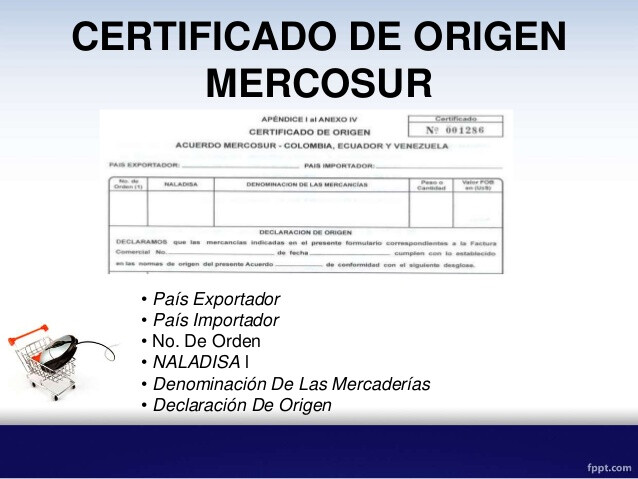
The Southern Common Market, Mercosur (Mercado Común del Sur), stands as a significant economic bloc in South America, comprising Argentina, Brazil, Paraguay, and Uruguay as full members, alongside several associate countries. A cornerstone of this regional economic integration lies in the various agreements and institutional mechanisms designed to foster intra-regional trade. Among these, the "Mercosur Certificate of Origin" plays a pivotal role in the trade dynamics between member states. For countries like Paraguay, which are actively seeking to cultivate their manufacturing base and enhance export competitiveness within the Mercosur framework, this certificate transcends its function as a mere trade document.
As previously noted, the Mercosur Certificate of Origin officially attests that goods being traded originate from a Mercosur member country. This certification enables exporting companies to benefit from reduced or eliminated tariffs when their products are shipped to other member states. Consequently, this directly translates to enhanced price competitiveness, significantly boosting export volumes. For Paraguay's Maquila (overseas production outsourcing) enterprises, characterized by lower labor costs and proactive government efforts to attract foreign investment, the Mercosur Certificate of Origin serves as a crucial instrument in gaining an edge over competitors from other economic blocs such as the European Union (EU) or the North American Free Trade Agreement (NAFTA), now the United States-Mexico-Canada Agreement (USMCA).
The Maquila system involves foreign companies establishing production facilities within a host country to manufacture goods for subsequent export. Paraguay, leveraging its low corporate tax rates, liberal foreign exchange policies, and its membership in Mercosur, has successfully attracted a substantial number of foreign firms under this regime. When products manufactured by these Maquila companies are exported within the Mercosur region, utilizing the Certificate of Origin mitigates tariff burdens, thereby enhancing profitability. This, in turn, further incentivizes foreign direct investment and contributes to a virtuous cycle of expanding Paraguay's manufacturing base.
Mercosur's rules of origin are not solely based on where a product undergoes its final assembly. Instead, they encompass a comprehensive evaluation of the origin of the raw materials used in production and whether a substantial transformation of the product occurs during the manufacturing process. The intricate regulations, such as the "wholly obtained" criteria, the requirement for a change in the Harmonized System (HS) code at the four-digit level, or the value-added criterion for non-originating materials, are designed to promote regional production and prevent origin fraud through simple assembly or packaging operations.
Notably, Paraguay benefits from a higher threshold for the permissible proportion of non-originating materials compared to other Mercosur members. This preferential treatment can be interpreted as a deliberate measure by Mercosur to support the industrial development of Paraguay, which historically had a less robust manufacturing sector. This special dispensation, slated to remain in effect until 2038, provides Paraguayan Maquila companies with greater flexibility in sourcing raw materials and enables them to produce a wider array of products for entry into the Mercosur market.
However, to effectively leverage the Mercosur Certificate of Origin, Maquila companies in Paraguay must undertake thorough preparation and possess a comprehensive understanding of the regulations. Simply obtaining the certificate is insufficient; they must accurately trace the origin of all raw materials used in their production processes and strictly adhere to Mercosur's complex rules of origin. This necessitates securing personnel with specialized knowledge and experience, as well as establishing robust origin management systems.
Furthermore, continuous monitoring of the evolving political and economic landscape within Mercosur is essential. Shifts in trade policies among member states and the negotiation of new agreements can impact the rules of origin and the procedures for obtaining the certificate. Consequently, Maquila companies must remain agile in their responses to these changes and adapt their export strategies accordingly to maintain their competitiveness within the Mercosur market.
In conclusion, the Mercosur Certificate of Origin is more than just a trade document for Paraguay's Maquila enterprises; it is a vital instrument for enhancing export competitiveness and facilitating market expansion. By accurately understanding and effectively utilizing Mercosur's rules of origin, Paraguay can solidify its position as a burgeoning manufacturing hub within the region. Simultaneously, Mercosur stands to strengthen its identity as a cohesive economic community through the promotion of robust intra-regional trade. The strategic utilization of the Certificate of Origin by Paraguay's Maquila sector exemplifies the symbiotic relationship between regional trade agreements and national industrial development. As Paraguay continues to attract foreign investment and expand its manufacturing capabilities, the Mercosur Certificate of Origin will undoubtedly remain a critical engine driving its export competitiveness and contributing to the overall economic dynamism of the Southern Common Market. The ongoing commitment to understanding and adhering to the nuances of the origin rules will be paramount for Paraguayan businesses seeking to maximize the benefits of this significant regional trade mechanism.
[Copyright (c) Global Economic Times. All Rights Reserved.]