• 2026.03.22 (Sun)
  • All articles
  • LOGIN
  • JOIN
Global Economic Times
fashionrunwayshow2026
  • Synthesis
  • World
  • Business
  • Industry
  • ICT
  • Distribution Economy
  • Well+Being
  • Travel
  • Eco-News
  • Education
  • Korean Wave News
  • Opinion
  • Arts&Culture
  • Sports
  • People & Life
    • International Student Report
    • With Ambassador
  • Column
    • Cho Kijo Column
    • Cherry Garden Story
    • Ko Yong-chul Column
    • Kim Seul-Ong Column
    • Lee Yeon-sil Column
  • Photo News
  • New Book Guide
MENU
 
Home > Column > Ko Yong-chul Column

The Rising Sun Flag: The Unfading War Flag, The Shadow of Japanese Imperialism

KO YONG-CHUL Reporter / Updated : 2025-02-24 10:00:56
  • -
  • +
  • Print

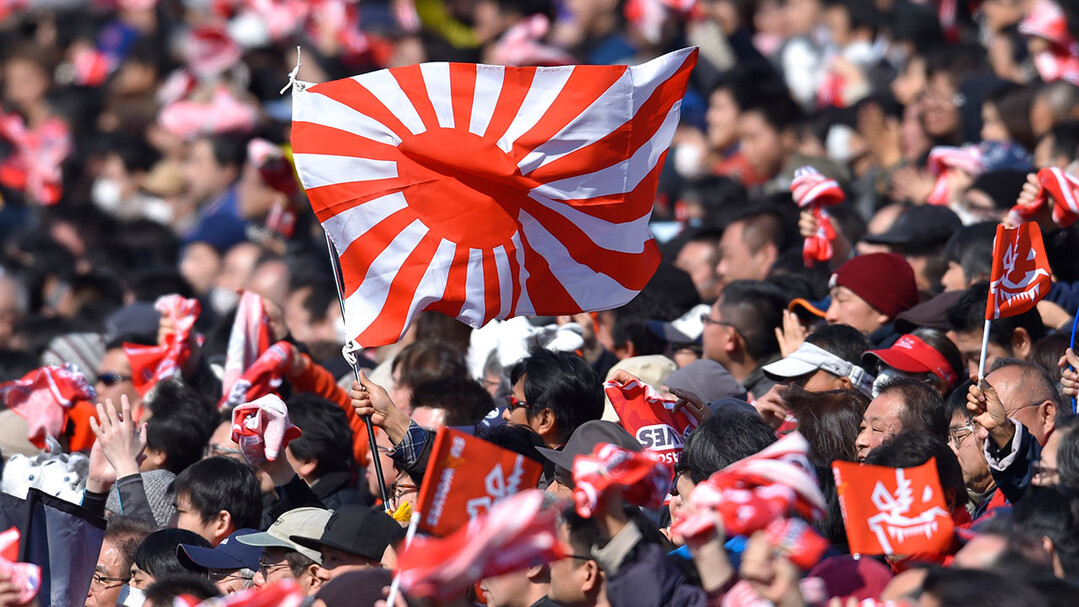
The Rising Sun Flag is a symbol of Japanese imperialism and a war flag. Originating as a flag with 16 rays of sunlight, it was used as a symbol of Japanese militarism and the Japanese army during World War II. The Rising Sun Flag is a flag that evokes memories of Japan's imperialist aggression and war crimes, causing pain and hurt to many people to this day.

Nevertheless, Japan has not stopped using the Rising Sun Flag. The Japanese government claims that the Rising Sun Flag is a traditional Japanese pattern and has no political meaning. However, for countries that were invaded by Japanese imperialism in the past, the Rising Sun Flag is still a symbol that brings back painful memories.

International criticism of the use of the Rising Sun Flag has been constant. Japan regards the Rising Sun Flag as part of its history, but Koreans say that this flag is related to Japanese war crimes and is similar to the Nazi's swastika.

The Imperial Japanese Navy used the flag while Japan colonized the Korean peninsula in the early 20th century and invaded and occupied China and other Asian countries until its defeat in World War II in 1945.

The anti-Rising Sun Flag movement in South Korea began in earnest in 2011. South Korean soccer player Ki Sung-yueng was criticized for making a racist gesture in a soccer match against Japan, causing anger in Japan. Ki Sung-yueng said that he intended to highlight the racism he experienced at Celtic FC, and replied, "My heart was in tears" after seeing the Rising Sun Flag at the game.

On the other hand, there are many claims in Japan that the Rising Sun Flag was not in the stadium. For this reason, the prevailing view in Japan is that Ki Sung-yueng justified racism by using the excuse of seeing the Rising Sun Flag.

This flag was banned by FIFA, and Japan was sanctioned by the Asian Football Confederation (AFC) after Japanese fans flew the flag at the 2017 AFC Champions League game.

Since 2012, Koreans who oppose the Rising Sun Flag have begun to call it the 'war flag'. According to political scientist Kimura Kan, following Ki Sung-yueng's remarks in 2012, Koreans living in New York formed a political group called "Citizens Against War Symbolism" and launched a campaign equating the Rising Sun Flag with the Nazi's swastika.

In the 2013 EAFF East Asian Cup, banners with slogans about historical issues with Japan appeared in the Korean cheering squad. As these incidents were frequently reported in the Korean media, the international political movement to equate the Rising Sun Flag with the Nazi's swastika and ban it intensified among Koreans.

According to Koichi Nakano, a professor of politics at Sophia University, "Those who use the Rising Sun Flag in Japan do not use it for any other purpose than to glorify and rewrite the horrific human rights abuses committed under the Japanese Empire." He suggests that the Confederate flag, used by the Confederate States of America in the American Civil War, who wanted to maintain slavery, would be a better comparison than the Nazi Germany swastika.

According to critics, the Confederate flag is not banned, but it is a symbol of racism and perceived superiority. However, Japan insists on using the Rising Sun Flag despite these criticisms. This shows that Japan is not repenting for the mistakes of the past imperial era.

The Rising Sun Flag is not just a flag, but a symbol that casts a shadow of Japanese imperialism. In order for Japan to be truly reborn as a member of the international community, it must stop using the Rising Sun Flag and show true remorse for its past history.

[Copyright (c) Global Economic Times. All Rights Reserved.]

  • #globaleconomictimes
  • #글로벌이코노믹타임즈
  • #한국
  • #중기청
  • #재외동포청
  • #외교부
  • #micorea
  • #mykorea
  • #newsk
  • #nammidonganews
  • #singaporenewsk
KO YONG-CHUL Reporter
Reporter Page

Popular articles

  • Ko Sang-goo, President of World Federation of Korean Associations, Elected as First Private Sector Chair of World Korean Community Leaders Convention

  • Revised and Expanded Edition of ‘Failure of Negotiations with North Korea: Truth and Solutions’ Published

  • Commentary That Douses the Joy of Victory: A Twisted Perspective

I like it
Share
  • Facebook
  • X
  • Kakaotalk
  • LINE
  • BAND
  • NAVER
  • https://www.globaleconomictimes.kr/article/1065574756104459 Copy URL copied.
Comments >

Comments 0

Weekly Hot Issue

  • Appellate Court Begins Review of Kakao Founder’s Acquittal in SM Entertainment Stock Rigging Case
  • AI Supercycle Propels Global Semiconductor Market Toward $1 Trillion Milestone
  • Naver Suspends Election Comments to Combat Cyberbullying and Misinformation Ahead of June Polls
  • Lotte Town Myeongdong Lights Up with 'Welcome Light' to Greet Global K-Pop Fans
  • K-Beauty SMEs Join Forces with Distributors: A New Paradigm for Global Expansion through Strategic Consortiums
  • BMW ‘The New i3’ Next-Gen EV: 900km Range 

Most Viewed

1
An Open Letter to BTS On the Eve of a Historic Performance
2
From Industrial Capital to Tourism Mecca... Ulsan Makes a Bold Move with ‘Experiential Content’ in 2026
3
Ko Sang-goo, President of World Federation of Korean Associations, Elected as First Private Sector Chair of World Korean Community Leaders Convention
4
It is Time for BTS’s Fandom, ARMY, to Step Forward
5
Korean Stock Market Plunges: Circuit Breaker and Sidecar Triggered Amid Geopolitical Crisis
광고문의
임시1
임시3
임시2

Hot Issue

Netflix Declares BTS Comeback Live “ARIRANG” as the Year’s Biggest Global Event

AI Medical Ecosystem in Focus: KIMES 2026 Opens in Seoul as Global Healthcare Hub

Netanyahu Declares Decisive Blow to Iran’s Nuclear and Missile Programs, Signals Early End to War

Intel Announces 10% Price Hike on CPUs: PC Manufacturers Bracing for Massive Production Cost Spikes

Let’s recycle the old blankets in Jeju Island’s closet instead of incinerating them.

Global Economic Times
korocamia@naver.com
CEO : LEE YEON-SIL
Publisher : KO YONG-CHUL
Registration number : Seoul, A55681
Registration Date : 2024-10-24
Youth Protection Manager: KO YONG-CHUL
Singapore Headquarters
5A Woodlands Road #11-34 The Tennery. S'677728
Korean Branch
Phone : +82(0)10 4724 5264
#304, 6 Nonhyeon-ro 111-gil, Gangnam-gu, Seoul
Copyright © Global Economic Times All Rights Reserved
  • 에이펙2025
  • APEC2025가이드북TV
  • 독도는우리땅
Search
Category
  • All articles
  • Synthesis
  • World
  • Business
  • Industry
  • ICT
  • Distribution Economy
  • Well+Being
  • Travel
  • Eco-News
  • Education
  • Korean Wave News
  • Opinion
  • Arts&Culture
  • Sports
  • People & Life 
    • 전체
    • International Student Report
    • With Ambassador
  • Column 
    • 전체
    • Cho Kijo Column
    • Cherry Garden Story
    • Ko Yong-chul Column
    • Kim Seul-Ong Column
    • Lee Yeon-sil Column
  • Photo News
  • New Book Guide
  • Multicultural News
  • Jobs & Workers