• 2026.08.12 (Wed)
  • All articles
  • LOGIN
  • JOIN
Global Economic Times
fashionrunwayshow2026
  • Synthesis
  • World
  • Business
  • Industry
  • ICT
  • Distribution Economy
  • Well+Being
  • Travel
  • Eco-News
  • Education
  • Korean Wave News
  • Opinion
  • Arts&Culture
  • Sports
  • People & Life
    • International Student Report
    • With Ambassador
  • Column
    • Cho Kijo Column
    • Cherry Garden Story
    • Ko Yong-chul Column
    • Kim Seul-Ong Column
    • Lee Yeon-sil Column
  • Photo News
  • New Book Guide
MENU
 
Home > World

Trump Postpones Reciprocal Tariffs Until August 1st, "Subject to Change Based on Negotiations"

Desk / Updated : 2025-07-08 10:03:17
  • -
  • +
  • Print


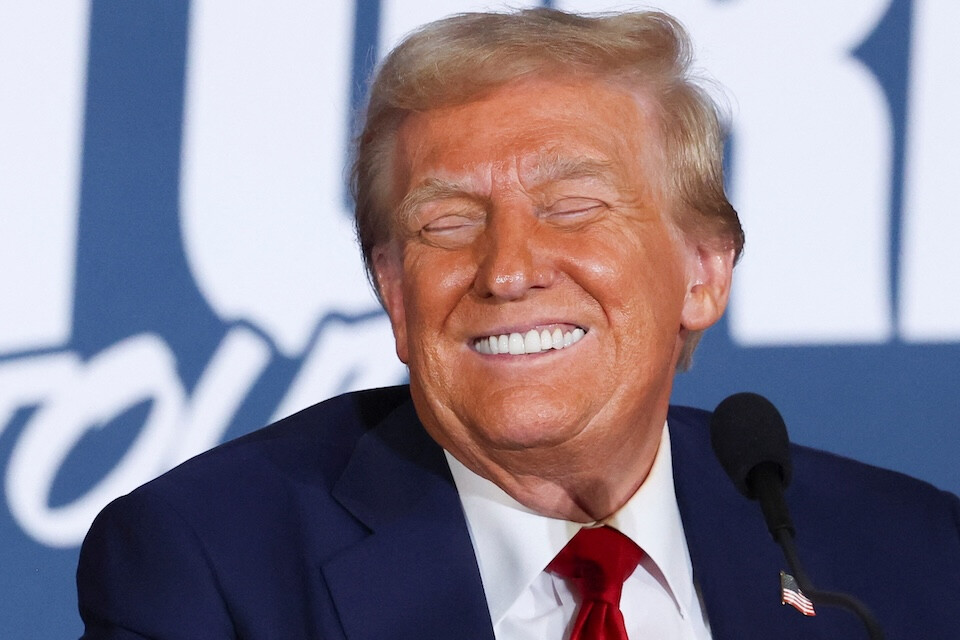
On July 7th (local time), U.S. President Donald Trump signed an executive order extending the imposition of reciprocal tariffs until August 1st. The White House announced that the grace period has been extended to 'August 1st, 00:01 AM,' pushing back the original expiration date of July 9th by approximately three weeks.

In the executive order, President Trump explained, "Based on additional information and recommendations received from various senior officials, including information on the status of negotiations with trading partners, I have determined that it is necessary and appropriate to extend the suspension period." This is interpreted as a sign of the U.S.'s intention to grant more time for ongoing trade negotiations with major trading partners and to seek mutual agreement.

Background and Targets of Reciprocal Tariffs 

The Trump administration's concept of 'Reciprocal Tariffs' asserts that if the U.S. levies a certain tariff rate on imported goods, the other country should impose an equivalent tariff on U.S. exports. This is part of the 'fair trade' principle that President Trump has long advocated, stemming from the perception that the U.S. is at a disadvantage due to high tariffs imposed by other nations.

Previously, President Trump sent letters specifying reciprocal tariff rates to 14 countries, including South Korea and Japan. In these letters, it was stated that South Korea would face a 25% tariff, the same as before, with imposition scheduled for August 1st. While the specific items subject to reciprocal tariffs were not clearly disclosed, it was widely believed that they would primarily include existing trade dispute items like steel and aluminum tariffs, potentially affecting overall trade relations.

Signaling Negotiation Possibilities: Grace Period Not 100% Firm 

President Trump made it clear that this waiver is not final. At a dinner with Israeli Prime Minister Benjamin Netanyahu at the White House that day, when asked by reporters if the letter sent today was the U.S.'s final offer, he replied, "It's the final offer," but added, "It's subject to negotiation. If they (negotiating partners) make a different offer and I like it, we'll do that (change)."

Furthermore, when asked if the tariff imposition date of August 1st was firm, he stated, "It's firm, but it's not 100% firm," emphasizing, "If they call and say, 'We want to do something in a different way,' we'll be open to that." These remarks are interpreted as indicating that the U.S. is using reciprocal tariffs as a strong bargaining chip and is prepared to flexibly adjust its policy through further negotiations with other countries.

This waiver is expected to prompt major trading nations, including South Korea, to focus on negotiations with the U.S. until August 1st. Each country will need to meticulously analyze U.S. demands and seek ways to respond to U.S. trade pressure while preserving their economic interests as much as possible. The imposition of reciprocal tariffs will ultimately depend on the agreements each country reaches in negotiations with the United States.

[Copyright (c) Global Economic Times. All Rights Reserved.]

  • #globaleconomictimes
  • #micorea
  • #mykorea
  • #Lifeplaza
  • #nammidonganews
  • #singaporenewsk
  • #Taiwanpost
  • #Samsung
  • #Doosa
Desk
Desk

Popular articles

  • South Korea to Tighten Rules on Single-Stock Leveraged Products; Minimum Deposit Raised to 30 Million Won

  • Rising Tide of 'AI Nationalism' and 'National Dividend': All Eyes on U.S. Political Moves

  • BTS Partners with the British Museum to Illuminate Korean Heritage Through 'Arirang' Gallery Trail

I like it
Share
  • Facebook
  • X
  • Kakaotalk
  • LINE
  • BAND
  • NAVER
  • https://www.globaleconomictimes.kr/article/1065574956504164 Copy URL copied.
Comments >

Comments 0

Weekly Hot Issue

  • Riot Games Hosts Largest-Ever TFT Festival at The Hyundai Seoul to Launch 'Sylvan Secrets' Set
  • MINISTRY OF EMPLOYMENT AND LABOR DIRECTS IMMEDIATE EXPANSION OF REST FACILITIES AT GIMPO AIRPORT AFTER UNANNOUNCED HEATWAVE INSPECTION
  • XAVIS Secures Contract to Supply Advanced X-Ray Inspection Systems to European Lines of Global Food Sauce Brand
  • Emma Expands Collaboration with Interior Design Experts to Present Sleep Space Solutions
  • Trump Criticizes U.S. Congressional AI Regulations as Threat to Tech Industry
  • Memory Chips Become Dominant Force in Global Semiconductor Industry, Expected to Account for 60% of Total Market This Year

Most Viewed

1
Planting Hope: Ethiopia’s Green Legacy and the Power of National Transformation
2
Japan Estimated to Have Spent ¥6–7 Trillion in Fresh Yen-Buying Intervention as US Joint Action Hints Emerge
3
The 16th Ethiopia-gil World Festival & Meskel Festival
4
South Korea’s July Exports Hit Record $98.9 Billion as Semiconductor Supercycle Powers Surge
5
Lube Base Oil Emerges as Export Lifesaver for South Korean Refiners Amid Middle East Conflict
광고문의
임시1
임시3
임시2

Hot Issue

MINISTRY OF EMPLOYMENT AND LABOR DIRECTS IMMEDIATE EXPANSION OF REST FACILITIES AT GIMPO AIRPORT AFTER UNANNOUNCED HEATWAVE INSPECTION

Riot Games Hosts Largest-Ever TFT Festival at The Hyundai Seoul to Launch 'Sylvan Secrets' Set

Nable Communications Secures 5G Private Network Upgrade Deal with LG Uplus

Ansan City Pay-as-You-Throw Trash Bag Abandoned in Japan Sparks Controversy in Kamikochi

Fashion Runway Show 2026

Global Economic Times
korocamia@naver.com
CEO : LEE YEON-SIL
Publisher : KO YONG-CHUL
Registration number : Seoul, A55681
Registration Date : 2024-10-24
Youth Protection Manager: KO YONG-CHUL
Singapore Headquarters
5A Woodlands Road #11-34 The Tennery. S'677728
Korean Branch
Phone : +82(0)10 4724 5264
#304, 6 Nonhyeon-ro 111-gil, Gangnam-gu, Seoul
Copyright © Global Economic Times All Rights Reserved
  • 향기네무료급식
  • BCB부천방송
  • 반달곰 프로젝트
Search
Category
  • All articles
  • Synthesis
  • World
  • Business
  • Industry
  • ICT
  • Distribution Economy
  • Well+Being
  • Travel
  • Eco-News
  • Education
  • Korean Wave News
  • Opinion
  • Arts&Culture
  • Sports
  • People & Life 
    • 전체
    • International Student Report
    • With Ambassador
  • Column 
    • 전체
    • Cho Kijo Column
    • Cherry Garden Story
    • Ko Yong-chul Column
    • Kim Seul-Ong Column
    • Lee Yeon-sil Column
  • Photo News
  • New Book Guide
  • Multicultural News
  • Jobs & Workers