• 2026.11.19 (Thu)
  • All articles
  • LOGIN
  • JOIN
Global Economic Times
한인동포뉴스(상단)
  • Synthesis
  • World
  • Business
  • Industry
  • ICT
  • Distribution Economy
  • Well+Being
    • Pet Life
    • Halal Horizon
  • Travel
  • Eco-News
  • Education
  • Korean Wave News
  • Opinion
  • Arts&Culture
  • Sports
  • People & Life
    • International Student Report
    • With Ambassador
  • Column
    • Cho Kijo Column
    • Cherry Garden Story
    • Ko Yong-chul Column
    • Kim Bong-seon's Photo Column
    • Kim Seul-Ong Column
    • Lee Yeon-sil Column
    • Professor Lee Soo-young’s Life Essays
  • Photo News
  • New Book Guide
MENU
 
Home > Synthesis

Optimism Among South Korean Youth Slumps to 41%, Lagging Behind Wealthy Nations

Yongwon Ko Senior Reporter / Updated : 2026-11-18 10:03:44
  • -
  • +
  • Print

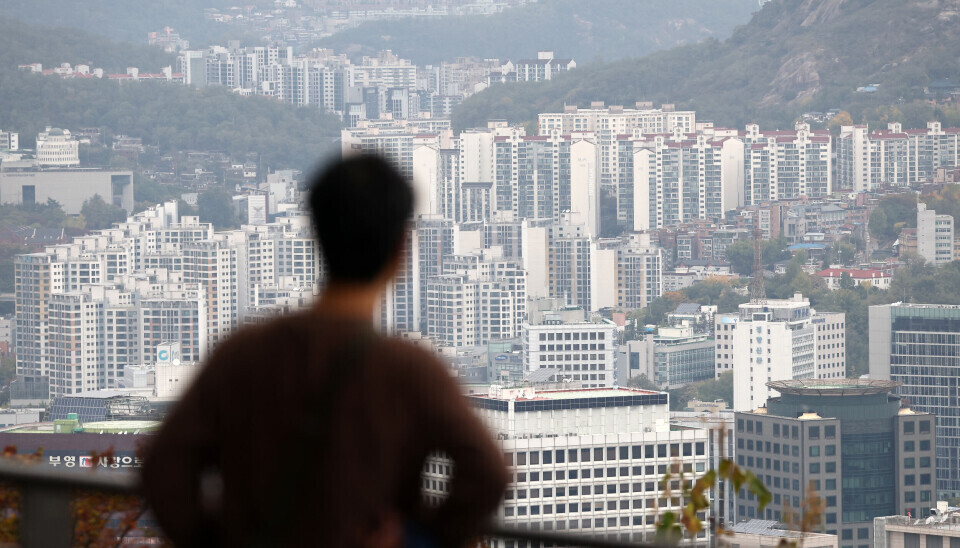
SEOUL — A new global demographic study reveals that less than half of South Korean youth maintain an optimistic outlook for their personal futures, placing the nation well behind global and high-income country benchmarks.

The findings were unveiled on Tuesday during the 10th International Symposium on Low Fertility and Aging, hosted in Seoul under the theme "A Low-Fertility Society and Demographic Future: From Evidence to Policy."

Data from the "Population Future Survey," administered by the United Nations Population Fund (UNFPA) across 73 countries and territories, surveyed nearly 109,000 internet users aged 18 to 39. Among South Korean participants, only 41% described their outlook for the future as "somewhat" or "very" positive—falling short of the global average and trailing the 58% average recorded across high-income nations.

Most notably, just 10% of Korean respondents labeled their future as "very positive," less than half of the 21% average seen in other developed economies.

Economic Strain Over Tech Anxiety

Financial worries heavily dominate the anxieties of South Korean youth. Economic instability and inequality emerged as the leading concern at 73%, followed by global health and environmental issues (66%) and international security conflicts (62%).

In contrast, apprehensions regarding the proliferation of artificial intelligence ranked the lowest at 46%. Analysts note this demonstrates that everyday living conditions and socio-economic unpredictability weigh far more heavily on young Koreans than the fast-paced advancement of technology.

Shifting Lifestyle Preferences and Family Gaps

The UNFPA study also highlighted evolving social values among South Koreans. While marriage remains viewed as an ideal life path, the preference for living alone has climbed to 28%, significantly higher than the 16% average for high-income countries.

Additionally, among unmarried adults aged 25 to 39 who expressed a desire to marry or cohabitate, 39% reported currently not having a romantic partner (45% of men and 32% of women), well above the global average of 25%.

The report points to general life instability and financial burdens as major bottlenecks preventing youth from making major life decisions. While young South Koreans (ages 18–39) reported a desired family size of 1.80 children on average, actual data for those aged 35 to 39 showed an average of just 0.43 children.

The childlessness rate for domestic respondents aged 35–39 hit 71% for women and 72% for men—substantially higher than global averages of 30% and 41%, respectively. Nevertheless, the desire to parent remains robust: among childless respondents, 82% of women and 88% of men stated they still hope to have children in the future.

Policy Implications

The report emphasizes that the gap between parental aspirations and reality stems from structural hurdles rather than personal choice. Participants cited economic and housing constraints (73%) as the primary obstacle to childbearing, with financial stability (86%) and stable employment (82%) viewed as mandatory prerequisites for parenthood.

Experts suggest that tackling these challenges requires comprehensive, rights-based population policies—including the creation of quality jobs, easing housing cost pressures, expanding childcare infrastructure, and advancing gender equality—to ensure youth can start families when and how they plan.

The international survey received joint backing from the National Statistics Office of Korea, Japan's Children and Families Agency, and the Gates Foundation.

[Copyright (c) Global Economic Times. All Rights Reserved.]
  • #Cherry Garden
  • #HalalFood
  • #Halal
  • #Petlife
  • #Halalhorizone
  • #Hormuz Impasse
  • #Joseon
  • #globaleconomictimes
  • #micore
Yongwon Ko Senior Reporter

Popular articles

  • Why Can't We Use 'Muse' in Korea?… Zuckerberg Says, "Due to a Lack of Data Centers"

  • Meeting Christmas Early!… Busan Dessert Sales Event "Daldal The Market" Held

  • Gyeongbuk Agricultural Research and Extension Services' 'Gloristar' Begins Export to China and Enters Domestic Premium Distribution Network

I like it
Share
  • Facebook
  • X
  • Kakaotalk
  • LINE
  • BAND
  • NAVER
  • https://www.globaleconomictimes.kr/article/1065574962240816 Copy URL copied.
Comments >

Comments 0

Weekly Hot Issue

  • AI Music Tops Melon Chart: Is the K-Pop Production Formula Changing?
  • Beyond the Crossroads: How South Korea Can Forge a New Order in an Age of Global Upheaval
  • Pohang Struggles to Safeguard Its Hanji Heritage Amid Aging Artisans and Shifting Markets
  • KOGAS Chief Calls for Gas Price Adjustments to Clear Massive Backlog of Unpaid Bills
  • South Korea and China Reach Landmark Service and Investment FTA Agreement Translation
  • KDI Forecasts "Nearing 4% Growth" Next Year Despite Export Slowdown—Here’s Why

Most Viewed

1
South Korea and Ethiopia Sign Trilateral MOU to Introduce Liquid-Based Cytology (LBC) Technology for Cervical Cancer Diagnosis
2
Meeting Christmas Early!… Busan Dessert Sales Event "Daldal The Market" Held
3
World Citizens are Flying Directly to Busan... The Era of 4 Million Foreigners is Just Around the Corner
4
Eating 100g of Baechu Kimchi Daily Linked to Lower High-Cholesterol Risks
5
First Snow and Freeze Hit Korea as Winter Officially Begins on 'Ipdeong'
체리가든 스토리
nutri huevos
로타리
동포저널

Hot Issue

ASEAN Summit Wraps Up: Trump Holds Back-to-Back Talks with Quad and Southeast Asian Leaders

"Chilean Wine is More Than Just Cabernet Sauvignon"… Cono Sur Bets Big on Pinot Noir

"Semiconductor Boom Drives Exceptional Growth": IMF Lifts South Korea’s 2026 Growth Outlook to 3.9%

Fashion Runway Show 2026

Let’s recycle the old blankets in Jeju Island’s closet instead of incinerating them.

Global Economic Times
korocamia@naver.com
CEO : LEE YEON-SIL
Publisher & Editor : KO YONG-CHUL
Registration number : Seoul, A55681
Registration Date : 2024-10-24
Youth Protection Manager: KO YONG-CHUL
Singapore Headquarters
5A Woodlands Road #11-34 The Tennery. S'677728
Korean Branch
Phone : +82(0)10 4724 5264
#304, 6 Nonhyeon-ro 111-gil, Gangnam-gu, Seoul
Copyright © Global Economic Times All Rights Reserved
  • News K
  • 반달곰 프로젝트
  • 광고문의
Search
Category
  • All articles
  • Synthesis
  • World
  • Business
  • Industry
  • ICT
  • Distribution Economy
  • Well+Being 
    • 전체
    • Pet Life
    • Halal Horizon
  • Travel
  • Eco-News
  • Education
  • Korean Wave News
  • Opinion
  • Arts&Culture
  • Sports
  • People & Life 
    • 전체
    • International Student Report
    • With Ambassador
  • Column 
    • 전체
    • Cho Kijo Column
    • Cherry Garden Story
    • Ko Yong-chul Column
    • Kim Bong-seon's Photo Column
    • Kim Seul-Ong Column
    • Lee Yeon-sil Column
    • Professor Lee Soo-young’s Life Essays
  • Photo News
  • New Book Guide
  • Overseas Koreans
  • Multicultural News