![[등록] 2026-09-01 15:48:31](/support/_updata/banner2/tl181982910_6749.png)


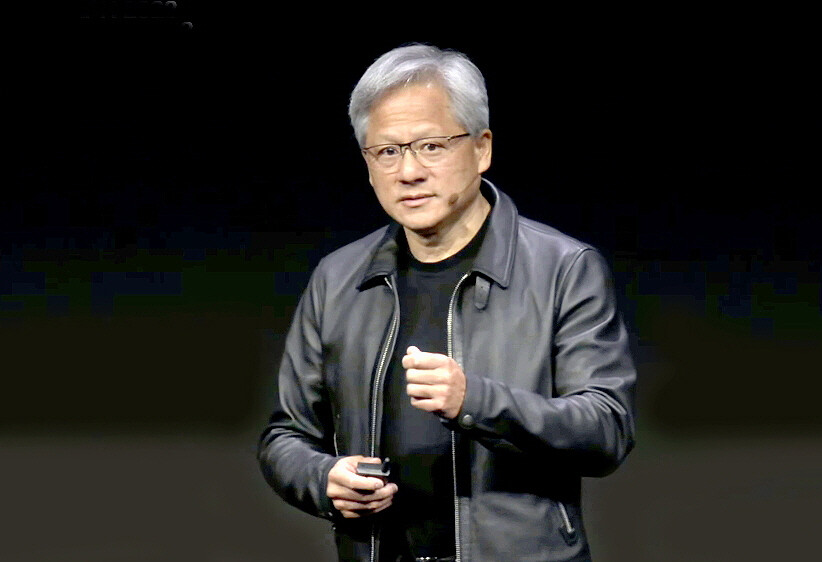
In a landmark announcement signaling a significant realignment of the global technology supply chain, American artificial intelligence (AI) semiconductor behemoth Nvidia has committed to a monumental investment of up to $500 billion (USD) over the ensuing four years to establish a robust AI hardware manufacturing ecosystem within the United States. This strategic undertaking, forged in collaboration with Taiwanese manufacturing powerhouses Taiwan Semiconductor Manufacturing Company (TSMC) and Foxconn Technology Group, aims to indigenize the production of cutting-edge AI infrastructure, encompassing advanced AI chips and high-performance supercomputers. The announcement, disseminated via Nvidia’s official blog on April 14th, follows closely on the heels of a pivotal meeting between Nvidia Chief Executive Officer Jensen Huang and U.S. President Donald Trump on April 4th, thereby fueling speculation that this initiative is a calculated response to potential semiconductor tariffs and intensified export restrictions on China under a prospective second Trump administration.
Nvidia’s visionary blueprint entails the establishment of its inaugural domestic facility dedicated to the fabrication of AI supercomputers, marking a watershed moment in the company’s operational strategy. The collaborative framework envisions TSMC undertaking the manufacturing of Nvidia’s next-generation Blackwell AI chips within its burgeoning facilities in Arizona. Concurrently, Foxconn, in partnership with fellow Taiwanese contract electronics manufacturer Wistron Corporation, will spearhead the production of Nvidia’s advanced supercomputing platforms in the state of Texas. Demonstrating the advanced stage of planning, Nvidia has confirmed the acquisition of requisite spatial resources to accommodate these ambitious production lines. Notably, the supercomputer manufacturing plant situated in Texas is slated to achieve full-scale mass production within an expedited timeframe of 12 to 15 months, underscoring the urgency and strategic importance of this endeavor. Nvidia projects that this substantial domestic investment will serve as a catalyst for economic growth, generating hundreds of thousands of high-value jobs and bolstering national economic security by trillions of dollars over the coming decades.
The timing and scale of Nvidia’s commitment have been widely interpreted as a preemptive maneuver to mitigate the potential repercussions of semiconductor tariffs that President Trump has publicly indicated his intention to enact. Furthermore, this initiative is also perceived as a strategic gambit to potentially influence the prevailing export control regime governing advanced AI semiconductors destined for China, a policy that gained momentum under the preceding Biden administration. Investigative reporting by National Public Radio (NPR) on April 9th revealed that following CEO Huang’s pledge of substantial U.S. investment during a private dinner held at the Mar-a-Lago resort in Florida on April 4th, the Trump administration purportedly rescinded its nascent plans to impose stringent export limitations on Nvidia’s H20 AI semiconductor specifically targeted for the Chinese market. The exclusive Mar-a-Lago dinner, hosted by the ‘Make America Great Again’ (MAGA) super political action committee (PAC), reportedly drew the attendance of approximately twenty influential business magnates and philanthropists, each contributing a substantial $1 million to the organization.
In the aftermath of Nvidia’s announcement, President Trump publicly lauded the investment as a direct consequence of his administration’s tariff policies, exclaiming, "Tariffs are the most beautiful word." The White House swiftly capitalized on this development, issuing an official press release bearing the assertive title ‘The Trump Effect,’ unequivocally declaring, "The Trump effect is real." The White House further asserted that the repatriation of this strategically critical industry to American soil would yield significant benefits for American laborers, the national economy, and overall national security, concluding with an optimistic pronouncement that "the best is yet to come."
This strategic alliance between Nvidia and the Taiwanese manufacturing giants underscores the intricate geopolitical dynamics shaping the future of the semiconductor industry. Taiwan's pivotal role in global semiconductor manufacturing, particularly TSMC's dominance in advanced node fabrication, necessitates such international collaborations to realize ambitious domestic production goals within the United States. Foxconn and Wistron’s extensive experience in large-scale electronics manufacturing further complements Nvidia’s expertise in AI chip design and supercomputing architecture, creating a formidable partnership poised to reshape the landscape of AI hardware production.
The implications of this initiative extend beyond mere economic considerations, encompassing critical aspects of national security and technological sovereignty. By establishing domestic production capabilities for advanced AI hardware, the United States aims to reduce its reliance on foreign entities for strategically vital technologies, thereby bolstering its competitive edge in the rapidly evolving field of artificial intelligence. This move also aligns with broader government initiatives aimed at revitalizing American manufacturing and fostering technological innovation within its borders.
While the immediate catalyst for this investment appears to be the potential imposition of tariffs and the existing export control regime, the long-term ramifications are far-reaching. A robust domestic AI hardware manufacturing base could spur further innovation, create high-skilled employment opportunities, and attract additional investment in related sectors. Moreover, it could provide greater resilience against global supply chain disruptions and geopolitical uncertainties.
However, the success of this ambitious undertaking hinges on several critical factors, including the seamless integration of complex manufacturing processes, the availability of a skilled workforce, and the long-term stability of government policies and incentives. The sheer scale of the projected investment, $500 billion over four years, underscores the magnitude of the challenge and the long-term commitment required from all stakeholders.
In conclusion, Nvidia's bold initiative to establish a significant AI hardware manufacturing presence in the United States, in close collaboration with Taiwanese industry leaders TSMC and Foxconn, represents a pivotal moment in the quest for technological leadership and economic security. While the specter of tariffs and export controls may have served as an immediate impetus, the long-term strategic implications of this move are profound, promising to reshape the landscape of AI hardware production and potentially redefine the global technology supply chain for decades to come. The realization of this ambitious vision will require sustained collaboration, strategic foresight, and unwavering commitment from both the public and private sectors.
소스 및 관련 콘텐츠
[Copyright (c) Global Economic Times. All Rights Reserved.]