![[등록] 2026-09-01 15:48:31](/support/_updata/banner2/tl181982910_6749.png)


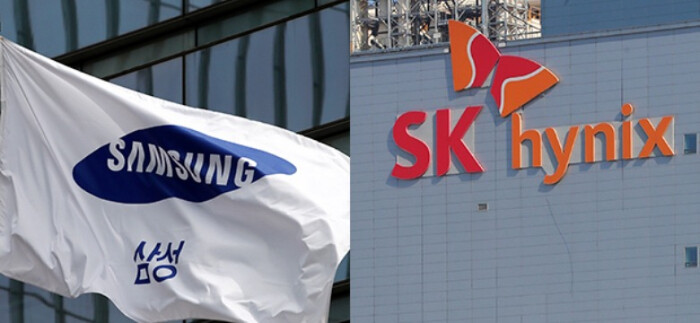
SEOUL — As of February 2026, the global semiconductor industry has transcended the traditional "silicon cycle" and entered a phase of structural transformation. Driven by an insatiable appetite for Artificial Intelligence (AI) infrastructure, industry titans Samsung Electronics and SK hynix are currently operating at 100% capacity. However, even with production lines running at full tilt, supply remains precariously thin, prompting a massive wave of capital expenditure and facility expansion.
The Supply-Demand Imbalance: A 50% Shortfall
According to Chang-wook Kim, Managing Director and Partner at Boston Consulting Group (BCG), the current market is grappling with a severe supply deficit. "We are seeing a quality of demand that we have never experienced before," Kim noted in a recent interview. He highlighted that for high-performance memory such as HBM (High Bandwidth Memory) and advanced D-RAM, manufacturers can currently meet only about 50% of client requirements.
The lead time—the duration between order placement and delivery—has ballooned to 6–9 months, compared to the pre-shortage average of 3 months. This logistical bottleneck has created a crisis for consumer electronics giants like Apple, who operate on rigid annual product launch cycles. The shortage is no longer a mere "memory issue"; it is a systemic threat to the global hardware roadmap.
From B2C to B2B: A New Market Structure
Historically, the semiconductor market was dictated by consumer sentiment (B2C), with smartphones and PCs accounting for over 60% of demand. This made the industry highly volatile and sensitive to interest rates. Today, data centers (B2B) have claimed 50% of the market share, a figure projected to rise to 70% by the end of the decade.
"Enterprise investment in AI is non-negotiable," Kim asserts. "Even in a high-interest-rate environment, corporations cannot afford to stall their AI integration because it directly correlates with their long-term survival and competitiveness." This shift provides a sturdy floor for semiconductor prices, shielding the industry from the "price crashes" of the past.
The Expansion Race: P5, P6, and the Yongin Cluster
To address the shortage, South Korean leaders are aggressively expanding their domestic footprints:
Samsung Electronics: Resumed construction on the P5 and P6 fabs at its Pyeongtaek Campus. Despite a temporary halt in 2024, the company is now utilizing "process efficiency" to shave months off the typical three-year construction timeline.
SK hynix: Accelerating the completion of its "Yongin Semiconductor Cluster," aiming to bring new fabs online ahead of schedule to secure dominance in the HBM and HBF (High Bandwidth Flash) markets.
Debunking the 'AI Bubble' Theory
Despite skepticism regarding the massive capital expenditures (CAPEX) of "Hyper-scalers" (Meta, Google, Amazon, etc.), BCG’s analysis suggests the investment is sustainable. In 2023, the top five hyper-scalers invested approximately $100 billion. By 2029, this is expected to soar to $500–$600 billion.
However, Kim argues this is not a bubble. "This is foundational infrastructure investment, akin to building a national power grid," he explained. The $500 billion projected for 2029 represents only 2% of the combined operating profits of the world’s top 200 companies when depreciated over five years. Furthermore, it constitutes only 7–10% of total corporate IT spending, suggesting significant room for further growth.
The Next Frontier: High Bandwidth Flash (HBF)
A new narrative emerged at CES 2026, where NVIDIA CEO Jensen Huang emphasized the critical role of storage. While HBM handles immediate computational data, the vast datasets required for AI training (e.g., millions of high-resolution images) require massive NAND Flash capacity.
The industry is now pivoting toward HBF (High Bandwidth Flash) and advanced SSDs to bridge the speed gap between GPU processing and data storage. Samsung and SK hynix are reportedly in the advanced stages of developing HBF to meet NVIDIA’s future architectural requirements.
Conclusion: A Decade of Growth
The consensus among experts is clear: the semiconductor industry is no longer just a component provider; it is the bedrock of the robotic and AI-driven future. With the vision of "one robot per person" within the next decade, the demand for sophisticated silicon will only intensify. For South Korea’s tech giants, the challenge is no longer finding buyers—it is building the cathedrals of silicon fast enough to keep the AI revolution alive.
[Copyright (c) Global Economic Times. All Rights Reserved.]