![[등록] 2026-09-01 15:48:31](/support/_updata/banner2/tl181982910_6749.png)


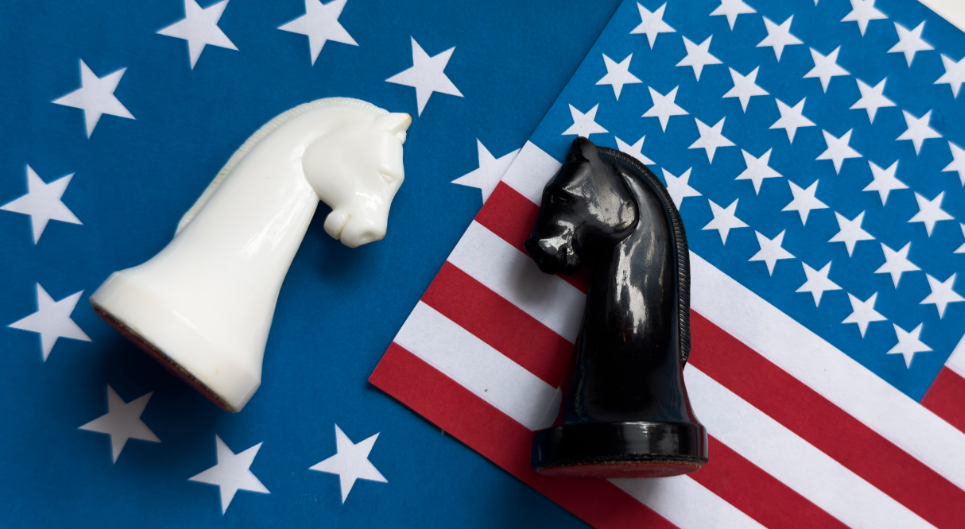
The deepening points of contention between the two pillars of the Western bloc, the United States and Europe, including trade wars, the Ukraine war, and issues of cultural progressivism and censorship, are intensifying. European nations, long compliant with Washington's demands and under American "guardianship," now face the possibility of a "divorce" in the Atlantic Alliance due to President Donald Trump's abrasive foreign policy.
Europe's Limits to Self-Reliance and American Intervention
The perception that Europe cannot solve its own problems has a long history. On November 21, 1995, in Dayton, Ohio, the United States, Serbia, Croatia, and Bosnia concluded the 'Dayton Peace Accords' led by Washington, ending the Bosnian War that had lasted for over three years. The fact that the Bosnian War ended on American soil is a clear example of how essential US intervention was in resolving European issues.
At the time, Dan Rather, the prominent CBS anchor, questioned US intervention in the conflict, stating, "For years, we heard 'Bosnia is a European problem, and Europe must solve it.' But what's happening now?" Reporter Bob Simon replied, "Dan, if the 20th century taught us anything, it's that Europeans can't solve their own problems. That's why the US had to intervene in World War I and World War II, and it seems this century is ending the way it began. Once again, the US has come to save Europe." This starkly illustrates Europe's geopolitical reality, where the phrase "All Quiet on the Western Front" no longer applies.
Deepening Cracks in the Trump Era
Donald Trump's "America First" policy served as a catalyst, accelerating the cracks in this Atlantic Alliance. Trump strongly demanded increased defense spending from NATO member states, even suggesting the possibility of reviewing US security commitments to nations with insufficient contributions. This spurred European nations to take greater responsibility for their own defense and recognize the need to strengthen their independent security capabilities.
Trade conflicts were also constant. The Trump administration engaged in trade wars, imposing high tariffs on steel and aluminum from the European Union (EU), creating tension in the traditional alliance. Furthermore, a firm stance on issues like the Airbus subsidy dispute brought to the surface economic clashes between the two sides.
The Ukraine War and Europe's Dilemma
Russia's invasion of Ukraine presented a new test for the Atlantic Alliance. In the early stages of the war, the US led large-scale military and economic aid to Ukraine, encouraging active participation from European allies. While European nations also joined sanctions against Russia and supported Ukraine, they sometimes showed subtle differences in their stance on the US's hawkish policy toward Russia due to their energy dependence and geopolitical location.
In particular, some European countries, such as Germany and France, showed movements to concurrently seek diplomatic solutions with Russia, which exposed disagreements in coordinating Russia strategy with the US. Thus, the Ukraine war reconfirmed Europe's need to strengthen its independent foreign and security capabilities, while deepening its dilemma between reliance on American leadership and pursuing autonomous actions.
Cultural Progressivism and Censorship Debates
Issues of cultural progressivism and censorship are also serving as new points of friction within the Atlantic Alliance. Differences in perceptions of freedom of expression and cultural values can lead to social tensions beyond political debate. Especially, the spread of information through digital platforms and censorship issues create divergent interpretations of universal Western values like democracy and individual liberty, amplifying the conflict.
While the United States strongly champions individual freedom of expression, some European countries apply strict regulations to prevent the spread of hate speech or misinformation. Such differing viewpoints lead to debates over regulating global tech companies and online content censorship standards, revealing the cultural and legal divide across the Atlantic.
The Path to Divorce, or the Search for New Cooperation?
The possibility of President Donald Trump's re-election further amplifies uncertainty about the future of the Atlantic Alliance. If his "America First" stance is revived, Europe will face even stronger pressure for self-reliance, which could fundamentally alter the nature of the alliance.
However, the history of the Atlantic Alliance is not just one of subordination but also of interdependent cooperation. During the Cold War, they built common security against the Soviet threat and, as major pillars of the global economy, upheld free trade and democratic values. Although the current points of contention are increasing, both sides still face common threats and challenges, and the need for cooperation remains unchanged.
The future of the Atlantic Alliance is likely to move towards exploring new forms of cooperation based on mutual understanding and respect, rather than heading towards the extreme conclusion of "divorce." Europe will need to strengthen its independent capabilities and secure "strategic autonomy," while the US will need to re-recognize the importance of traditional alliance relationships and redefine its partnership with Europe. This will be a crucial turning point, not merely to reclaim past glory, but to re-establish the leadership of the Western bloc in a changing world order.
[Copyright (c) Global Economic Times. All Rights Reserved.]