• 2026.03.23 (Mon)
  • All articles
  • LOGIN
  • JOIN
Global Economic Times
fashionrunwayshow2026
  • Synthesis
  • World
  • Business
  • Industry
  • ICT
  • Distribution Economy
  • Well+Being
  • Travel
  • Eco-News
  • Education
  • Korean Wave News
  • Opinion
  • Arts&Culture
  • Sports
  • People & Life
    • International Student Report
    • With Ambassador
  • Column
    • Cho Kijo Column
    • Cherry Garden Story
    • Ko Yong-chul Column
    • Kim Seul-Ong Column
    • Lee Yeon-sil Column
  • Photo News
  • New Book Guide
MENU
 
Home > Synthesis

Why scratching makes you itchier: Unraveling the mystery of itch and inflammation

Graciela Maria Reporter / Updated : 2025-02-25 11:12:59
  • -
  • +
  • Print

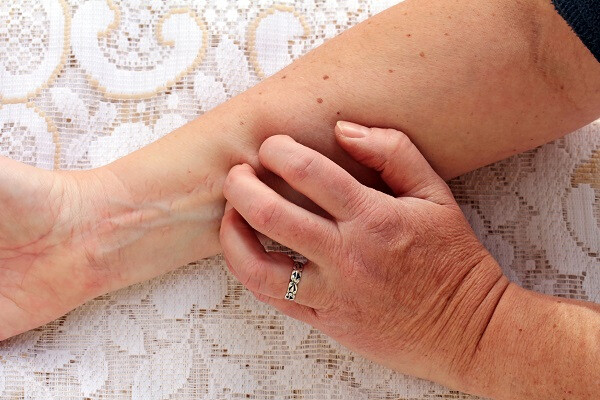
Itching is an unpleasant sensation that triggers the urge to scratch. It is often caused by substances or inflammation that irritate the skin.

It is well known that scratching the skin in response to irritation worsens inflammation at the site of the wound. Yet, many people cannot resist the urge to scratch an itch. Why is this?

The most classic explanation is that it is an act of removing irritants or insects. Another is that it provides a temporary relief from the itch at the irritated area.

Scientists have discovered a clue to the hidden inflammatory response system in that cool feeling. They found that scratching has a dual function: it can worsen inflammation, but it can also protect the skin from further infection.

According to a study published in the international journal Science, researchers at the University of Pittsburgh found that scratching induces an antibacterial effect in mice.

The researchers divided mice that had allergens applied to their ears to induce itching into three groups. The first group was allowed to scratch the itchy area as they pleased, the second group was prevented from scratching by wearing a cone around their necks, and the third group had the neurons that sense itching removed. The researchers applied allergens to these mice and observed the changes that occurred in their skin.

The results showed that the ears of the mice that were allowed to scratch were swollen and filled with inflammatory immune cells called neutrophils. On the other hand, the mice that were not allowed to scratch had much less swelling and inflammation. The same was true for the mice that had no itch-sensing neurons. This means that scratching worsened the skin condition.

The researchers then discovered that scratching releases a compound called P from the pain-sensing neurons, which in turn activates white blood cells called mast cells. Mast cells, which are abundant in the dermis, are a type of immune cell that attracts other immune cells called neutrophils, which cause itching and inflammation.

The researchers explained, "In the case of contact dermatitis, scratching an itchy area can lead to more inflammation due to the 'direct pathway' in which mast cells are activated by allergens, and the 'indirect pathway' in which mast cells are activated by a substance called P."

Reduces Staphylococcus aureus levels

The researchers also discovered another role of mast cells. Activated mast cells reduced the levels of Staphylococcus aureus, a bacteria involved in skin infections in mice. Staphylococcus aureus is a bacteria that causes skin inflammation.

"The fact that scratching increases the defense against Staphylococcus aureus suggests that scratching may be beneficial," the researchers said. This is related to the researchers' motivation for this study.

This study began with the question of why the 'itch-scratching behavior' naturally occurs in humans and many other animals, even though scratching worsens inflammation. The reduction in Staphylococcus aureus levels partially resolved this question.

However, the researchers emphasized that in chronic itching, the harm of worsening inflammation from scratching outweighs the benefits of reducing Staphylococcus aureus.

Based on the results of this study, the researchers are developing a treatment that targets mast cell receptors to suppress skin inflammation.

[Copyright (c) Global Economic Times. All Rights Reserved.]

  • #globaleconomictimes
  • #글로벌이코노믹타임즈
  • #한국
  • #중기청
  • #재외동포청
  • #외교부
  • #micorea
  • #mykorea
  • #newsk
  • #nammidonganews
  • #singaporenewsk
Graciela Maria Reporter

Popular articles

  • EU Commission Chief Vows to Honor €90 billion Ukraine Loan Despite Hungarian Veto

  • Fatal Firefight Off Cuban Coast: U.S. Citizens Involved in Stolen Boat Incursion

  • Victorian Surgeon Under Police Investigation for Alleged "Unnecessary" Hysterectomies

I like it
Share
  • Facebook
  • X
  • Kakaotalk
  • LINE
  • BAND
  • NAVER
  • https://www.globaleconomictimes.kr/article/1065579085037461 Copy URL copied.
Comments >

Comments 0

Weekly Hot Issue

  • Coway Clinches Top Honor at "Water Taste Awards" for 7th Consecutive Year
  • HP Targets Korea as Strategic Hub for 'Edge AI' Expansion, Seeking Startup Partnerships
  • Pearl Abyss’s 'Crimson Desert' Shatters Records with 2 Million Copies Sold on Day One
  • "BTS Over Books?" Indian Academies Issue Emergency Notices as Students Plot Mass Absences for Comeback Live
  • Naver to Shut Down Men's Fashion Service 'MR.' to Launch Expanded AI-Driven Fashion Platform
  • JBNU and SKKU Researchers Achieve Breakthrough in "Dream Material" MXene, Setting New World Records in Performance

Most Viewed

1
An Open Letter to BTS On the Eve of a Historic Performance
2
From Industrial Capital to Tourism Mecca... Ulsan Makes a Bold Move with ‘Experiential Content’ in 2026
3
Ko Sang-goo, President of World Federation of Korean Associations, Elected as First Private Sector Chair of World Korean Community Leaders Convention
4
It is Time for BTS’s Fandom, ARMY, to Step Forward
5
Korean Stock Market Plunges: Circuit Breaker and Sidecar Triggered Amid Geopolitical Crisis
광고문의
임시1
임시3
임시2

Hot Issue

Vishay Unveils Ultra-Compact 0404 RGB LED with Independent Chip Control for Enhanced Color Precision

Coway Clinches Top Honor at "Water Taste Awards" for 7th Consecutive Year

AI Medical Ecosystem in Focus: KIMES 2026 Opens in Seoul as Global Healthcare Hub

Netanyahu Declares Decisive Blow to Iran’s Nuclear and Missile Programs, Signals Early End to War

Let’s recycle the old blankets in Jeju Island’s closet instead of incinerating them.

Global Economic Times
korocamia@naver.com
CEO : LEE YEON-SIL
Publisher : KO YONG-CHUL
Registration number : Seoul, A55681
Registration Date : 2024-10-24
Youth Protection Manager: KO YONG-CHUL
Singapore Headquarters
5A Woodlands Road #11-34 The Tennery. S'677728
Korean Branch
Phone : +82(0)10 4724 5264
#304, 6 Nonhyeon-ro 111-gil, Gangnam-gu, Seoul
Copyright © Global Economic Times All Rights Reserved
  • 에이펙2025
  • APEC2025가이드북TV
  • 독도는우리땅
Search
Category
  • All articles
  • Synthesis
  • World
  • Business
  • Industry
  • ICT
  • Distribution Economy
  • Well+Being
  • Travel
  • Eco-News
  • Education
  • Korean Wave News
  • Opinion
  • Arts&Culture
  • Sports
  • People & Life 
    • 전체
    • International Student Report
    • With Ambassador
  • Column 
    • 전체
    • Cho Kijo Column
    • Cherry Garden Story
    • Ko Yong-chul Column
    • Kim Seul-Ong Column
    • Lee Yeon-sil Column
  • Photo News
  • New Book Guide
  • Multicultural News
  • Jobs & Workers