![[등록] 2026-09-01 15:48:31](/support/_updata/banner2/tl181982910_6749.png)


The recent discourse between Washington and Tokyo concerning the consolidation of the Korean Peninsula, the East China Sea, and the South China Sea into a unified 'One Theater' of operations presents a significant challenge to South Korea's strategic autonomy and national interests. While the concept, ostensibly aimed at bolstering regional security against perceived threats, carries the inherent risk of embroiling South Korea in a broader geopolitical contest, potentially compromising its security and economic stability in profound ways. The rationale behind this integration, while perhaps strategically coherent from a US-Japan perspective, warrants a critical examination of its implications for Seoul.
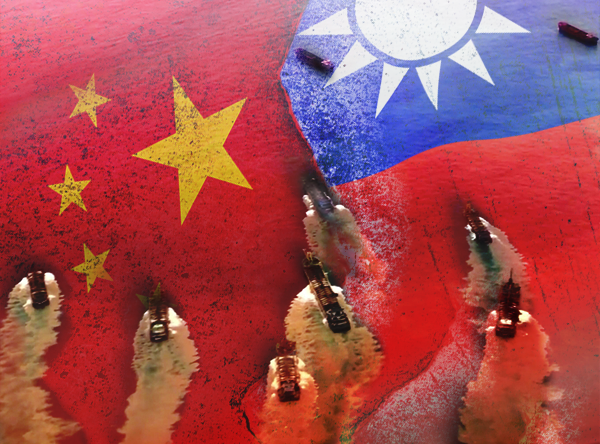
The primary concern stems from the potential for South Korea to be designated a de facto belligerent in the event of a Sino-US conflict over Taiwan. As Professor Park Won-gon astutely points out, a shift in US strategic focus under a potential second Trump administration could prioritize countering China, potentially at the expense of a singular focus on the North Korean threat. Should China undertake military action against Taiwan, the 'One Theater' framework could provide Beijing with a pretext to target US military installations on the Korean Peninsula, viewing them as integral to the US's broader containment strategy. This scenario inevitably places South Korea in a precarious position, vulnerable to direct military retaliation and economic coercion from its largest trading partner. The specter of a 'second THAAD retaliation,' as some analysts fear, looms large, potentially inflicting severe damage on South Korea's economy, particularly its crucial high-tech sectors reliant on Chinese supply chains, including rare earth elements.
Furthermore, the integration of the Korean Peninsula into a broader operational theater raises serious questions about the deployment and role of the 28,500 US troops stationed in South Korea. If these forces are redeployed or tasked with missions related to a Taiwan contingency, a security vacuum could emerge on the peninsula, emboldening North Korea to undertake provocative actions against the South. The delicate balance of deterrence that has maintained a fragile peace could be disrupted, increasing the risk of localized conflicts escalating into a full-scale inter-Korean war. Seoul would then face the dual challenge of managing a resurgent North Korean threat while potentially being entangled in a distant conflict with China.
The 'One Theater' concept also carries the contentious implication of potentially legitimizing the intervention of the Japan Self-Defense Forces (JSDF) on the Korean Peninsula in the event of a North Korean provocation leading to a major conflict. While the US-Japan alliance is a cornerstone of regional security, the prospect of Japanese military involvement in Korean affairs remains a sensitive issue due to historical grievances. Framing the peninsula as part of a unified operational space could provide a justification for Japan to deploy forces under the guise of regional security, a scenario that could inflame domestic tensions in South Korea and complicate the already complex geopolitical landscape.
The initiative for the 'One Theater' concept appears to originate, at least in part, from Japan's strategic objectives. As noted, Tokyo has proposed an upgrade of US Forces Japan to a joint military command, reflecting its desire for a more prominent role in regional security and a greater integration of its military capabilities with those of the US. This aligns with Japan's recent establishment of a unified Joint Operations Command for its Self-Defense Forces, signaling a more assertive security posture. While closer US-Japan security cooperation can contribute to regional stability in certain contexts, its extension to encompass the Korean Peninsula without explicit and robust consultation with Seoul raises concerns about the potential erosion of South Korea's strategic autonomy and the prioritization of US-Japan interests over those of South Korea.
The US rationale for a 'One Theater' strategy likely stems from a desire to optimize its military resources and present a unified front against China's growing assertiveness across the Indo-Pacific. By linking the security of the Korean Peninsula, the East China Sea, and the South China Sea, Washington aims to create a more coherent and integrated defense posture. The recent maritime exercises with Japan and the Philippines, and the reported interest in South Korean shipbuilding capabilities to bolster US naval power, underscore this strategy of building a network of alliances to contain China's influence. However, this approach risks treating allied nations as mere components in a larger strategic game, potentially overlooking their unique security concerns and national interests.
As Professor Ban Gil-joo warns, conflating the Korean Peninsula with the East and South China Seas could lead to South Korea becoming ensnared in the "trap of entanglement," losing the ability to conduct differentiated operations tailored to the specific security challenges it faces. The security dynamics of the Korean Peninsula, with the ever-present threat from North Korea, are distinct from the maritime disputes in the South China Sea or the potential conflict over Taiwan. A 'One Theater' approach risks blurring these distinctions and potentially diverting resources and attention away from the immediate security needs of the Korean Peninsula.
The potential for a power dynamic shift within the US military presence in Northeast Asia is another valid concern raised by analysts like Yang Uk. With US Forces Japan already possessing a larger troop contingent than US Forces Korea, the 'One Theater' concept could provide a rationale for prioritizing the command structure in Japan, potentially diminishing the influence and strategic importance of US Forces Korea. This could have implications for the US commitment to the defense of South Korea and Seoul's ability to effectively coordinate with its primary security ally.
In conclusion, the proposed 'One Theater' strategy, while seemingly offering a unified approach to regional security, carries significant risks for South Korea. It threatens to entangle Seoul in the complexities of the US-China rivalry, potentially making it a target of Chinese retaliation, increasing the risk of North Korean aggression, and even creating a justification for unwanted Japanese military involvement. South Korea's Ministry of Foreign Affairs and Ministry of National Defense must engage proactively and assertively with both the United States and Japan to ensure that any regional security framework adequately addresses South Korea's unique security challenges and respects its strategic autonomy. The pursuit of a 'One Theater' strategy without robust consultation and consideration of South Korean interests could ultimately undermine the very security and stability it purports to enhance.
[Copyright (c) Global Economic Times. All Rights Reserved.]