![[등록] 2026-09-01 15:48:31](/support/_updata/banner2/tl181982910_6749.png)


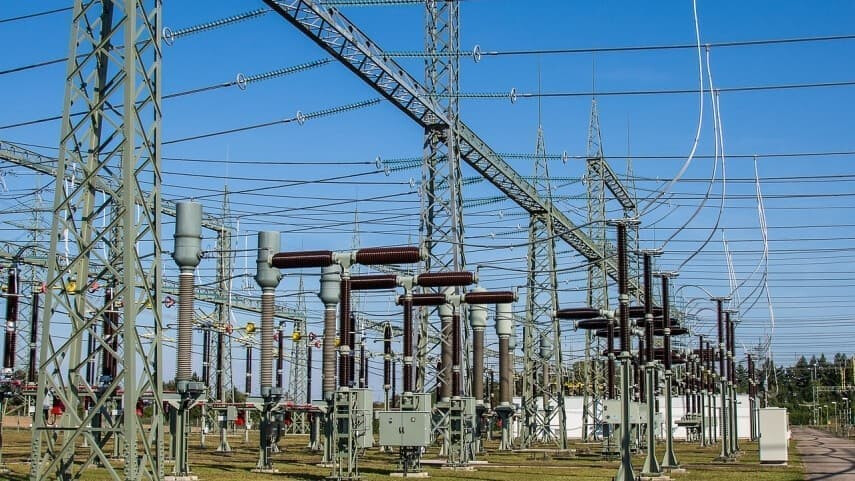
In a recent analysis piece titled "Taiwan's Energy Crisis Could Become an Existential Threat," published by the U.S. energy news outlet Oilprice.com, columnist Haley Zaremba warned of the severe energy security threats facing Taiwan. The article points out that a combination of factors, including an isolated power grid, high dependence on fossil fuels, and intensifying Chinese military pressure, has left Taiwan's energy system extremely vulnerable.
Zaremba's article provides a detailed diagnosis of Taiwan's energy supply situation. Home to 23 million people, similar to Australia, and possessing a world-leading energy-intensive high-tech industry, Taiwan operates an isolated power grid, making energy self-sufficiency difficult. The island relies on imported fossil fuels for most of its energy needs. In this context, China's repeated military exercises pose a direct threat to Taiwan's energy security. The Chinese military has conducted live-fire simulations targeting ports and energy facilities off the coast of Taiwan and drills to blockade key maritime transport routes to the island, openly demonstrating its intent to potentially cut off energy supplies.
James I-pan Chen, an international relations expert, emphasized the importance of energy security in an interview with German public broadcaster DW, warning that "If the power supply is cut off, it will also affect the water supply, paralyze the communication network, and render military operations impossible." The Chinese government considers Taiwan a breakaway territory that must be unified with the mainland under the "One China" principle, openly stating its willingness to use force if necessary to achieve this goal. In recent years, cross-strait relations have deteriorated further, and experts fear that these tensions may soon reach a peak. If China were to launch a full-scale invasion of Taiwan, energy supply chains would very likely be primary targets.
Professor Chen pointed out that "Taiwan is more vulnerable than Ukraine," emphasizing that Taiwan's power grid is an isolated system not connected to those of neighboring countries, and its fuel storage capacity is also extremely limited. Even the most optimistic projections estimate that Taiwan's gas reserves would only last about 40 days in a complete blockade scenario, with some experts estimating it to be closer to two weeks. The French Institute of International Relations (IFRI) also assessed Taiwan's energy supply chain as the "Achilles' heel of national security," highlighting its serious vulnerability.
In its report, IFRI noted that "the Taiwanese government is aware of these threats and is making efforts to strengthen energy independence by promoting the development of renewable energy, diversifying fossil fuel supply chains, expanding fuel storage capacity, and strengthening power grid security." However, it added that "the government is facing difficulties in formulating energy policies that explicitly meet national security requirements," pointing out policy limitations.
If Taiwan's energy supply chain is attacked and paralyzed, it could lead to a devastating blow to the national economy. Colonel Zhang Chi of China's People's Liberation Army National Defense University stated last year that the goal of the Chinese military exercises conducted after the Taiwanese presidential election was to "create a 'dead island' by cutting off energy supplies" and to "induce economic collapse." This reveals China's intention to strategically exploit Taiwan's energy security vulnerabilities to maximize the effectiveness of its military pressure.
Attacks on Taiwan's energy facilities would not only inflict extreme suffering on the Taiwanese people but also have severe repercussions for the global economy. Taiwan is a leading player in the global semiconductor industry, accounting for a staggering 68% of global semiconductor production. In particular, Taiwan Semiconductor Manufacturing Company (TSMC) alone is responsible for over 90% of the world's most advanced computer chip production. This clearly demonstrates the critical position of Taiwan's semiconductor industry in the global supply chain. Therefore, if Taiwan's energy system collapses, a global shortage of semiconductors would occur, inevitably leading to disruptions in electronics production and paralysis across various industries, causing severe economic chaos.
The Council on Foreign Relations warned that "many foreign policy analysts worry that a Chinese attack on Taiwan could draw the United States into a war with China that would entail immense destruction and costs." Taiwan's energy crisis is not merely an economic issue but a potential trigger that could deepen security instability in the East Asian region and even lead to a global military conflict.
Taiwan's Efforts for Energy Independence and the Increasing Need for International Cooperation
Amid growing international concern over Taiwan's energy threats, the Taiwanese government is making multifaceted efforts to strengthen its energy security. Key measures include increasing the proportion of renewable energy generation, expanding fuel storage capacity through the construction of liquefied natural gas (LNG) terminals, and strengthening energy cooperation with friendly nations such as the United States. In particular, Taiwan aims to achieve a carbon-neutral society by 2050 and is actively expanding the proportion of renewable energy sources such as solar and wind power. However, due to the intermittent nature of these energy sources and the challenges of stabilizing the power grid, it is difficult to drastically reduce dependence on fossil fuels in the short term.
Furthermore, Taiwan is working to diversify its energy supply chains. In addition to traditional energy-importing countries, it is securing new suppliers such as the United States and Australia and seeking to establish a stable energy supply environment by signing long-term energy supply contracts. Expanding fuel storage facilities is also a crucial task. To prepare for the possibility of a Chinese blockade, Taiwan is seeking to increase its reserves of major energy sources such as oil and gas and strengthen its strategic reserve system.
However, despite these efforts by Taiwan, the prevailing analysis suggests that the fundamental energy security threat will not be easily resolved as long as China's military pressure continues. Taiwan's energy crisis is not just an issue for Taiwan alone; it is directly linked to the peace and stability of the East Asian region and the soundness of the global economic system. Therefore, active interest and cooperation from the international community are essential.
Major allies, including the United States, should expand technical and policy support for strengthening Taiwan's energy security and urge China to cease military threats and ease regional tensions through dialogue and cooperation. Furthermore, international cooperative frameworks such as the International Energy Agency (IEA) should be utilized to make joint efforts to stabilize Taiwan's energy system.
In conclusion, Taiwan's energy crisis is a serious issue that goes beyond a single nation's energy supply problems and could trigger geopolitical tensions and instability in the global economic system. Through Taiwan's own efforts, as well as responsible actions and constructive cooperation from the international community, Taiwan's energy security must be strengthened, ultimately promoting peace and prosperity in the East Asian region.
[Copyright (c) Global Economic Times. All Rights Reserved.]