• 2026.03.22 (Sun)
  • All articles
  • LOGIN
  • JOIN
Global Economic Times
fashionrunwayshow2026
  • Synthesis
  • World
  • Business
  • Industry
  • ICT
  • Distribution Economy
  • Well+Being
  • Travel
  • Eco-News
  • Education
  • Korean Wave News
  • Opinion
  • Arts&Culture
  • Sports
  • People & Life
    • International Student Report
    • With Ambassador
  • Column
    • Cho Kijo Column
    • Cherry Garden Story
    • Ko Yong-chul Column
    • Kim Seul-Ong Column
    • Lee Yeon-sil Column
  • Photo News
  • New Book Guide
MENU
 
Home > Industry

Qatar Embarks on Construction of World's Largest 3D-Printed School

Graciela Maria Reporter / Updated : 2025-07-20 13:02:36
  • -
  • +
  • Print


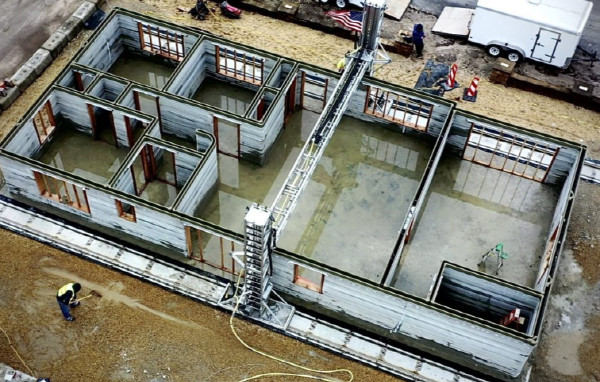
The Middle Eastern nation of Qatar is set to house the world's largest 3D-printed building, spanning the size of six football fields. Qatar's Public Works Authority (Ashghal), local construction company UCC Holding, and Danish 3D construction specialist COBOD have announced that two public schools will be built using 3D printing in the middle of the Qatari desert. This project is part of a larger plan to construct 14 schools in total.

Each school will have a built area of 20,000 square meters, bringing the total area for both schools to an impressive 40,000 square meters. This is an overwhelming scale, approximately 43 times larger than the current world's largest 3D-printed building, which measures 929 square meters in Florida, USA. Completion is scheduled for the end of this year.

For this construction, two customized BODXL printers from COBOD, measuring 50m long, 30m wide, and 15m high, will be deployed. These are the world's largest construction 3D printers and utilize a material extrusion method, building walls by layering a viscous mixture similar to cement. Notably, printing is being conducted during nighttime hours to avoid high temperatures and optimize material performance.

3D printing in construction offers environmental, economic, and aesthetic advantages. It minimizes concrete usage, reducing carbon emissions, and facilitates the creation of curved walls inspired by the desert landscape. Furthermore, it can shorten construction periods compared to traditional methods. The COBOD team conducted over 100 full-scale tests to develop concrete mixtures and customized nozzles suitable for the local climate conditions.

These two-story school buildings, each to be built on a 100m x 100m plot, are expected to set a precedent for future educational infrastructure in Qatar and the wider Middle East region.

[Copyright (c) Global Economic Times. All Rights Reserved.]

  • #globaleconomictimes
  • #micorea
  • #mykorea
  • #Lifeplaza
  • #nammidonganews
  • #singaporenewsk
  • #Taiwanpost
  • #Samsung
  • #Doosa
Graciela Maria Reporter

Popular articles

  • EU Commission Chief Vows to Honor €90 billion Ukraine Loan Despite Hungarian Veto

  • Fatal Firefight Off Cuban Coast: U.S. Citizens Involved in Stolen Boat Incursion

  • Victorian Surgeon Under Police Investigation for Alleged "Unnecessary" Hysterectomies

I like it
Share
  • Facebook
  • X
  • Kakaotalk
  • LINE
  • BAND
  • NAVER
  • https://www.globaleconomictimes.kr/article/1065585715244835 Copy URL copied.
Comments >

Comments 0

Weekly Hot Issue

  • Coway Clinches Top Honor at "Water Taste Awards" for 7th Consecutive Year
  • HP Targets Korea as Strategic Hub for 'Edge AI' Expansion, Seeking Startup Partnerships
  • Pearl Abyss’s 'Crimson Desert' Shatters Records with 2 Million Copies Sold on Day One
  • "BTS Over Books?" Indian Academies Issue Emergency Notices as Students Plot Mass Absences for Comeback Live
  • Naver to Shut Down Men's Fashion Service 'MR.' to Launch Expanded AI-Driven Fashion Platform
  • JBNU and SKKU Researchers Achieve Breakthrough in "Dream Material" MXene, Setting New World Records in Performance

Most Viewed

1
An Open Letter to BTS On the Eve of a Historic Performance
2
From Industrial Capital to Tourism Mecca... Ulsan Makes a Bold Move with ‘Experiential Content’ in 2026
3
Ko Sang-goo, President of World Federation of Korean Associations, Elected as First Private Sector Chair of World Korean Community Leaders Convention
4
It is Time for BTS’s Fandom, ARMY, to Step Forward
5
Korean Stock Market Plunges: Circuit Breaker and Sidecar Triggered Amid Geopolitical Crisis
광고문의
임시1
임시3
임시2

Hot Issue

Vishay Unveils Ultra-Compact 0404 RGB LED with Independent Chip Control for Enhanced Color Precision

Coway Clinches Top Honor at "Water Taste Awards" for 7th Consecutive Year

AI Medical Ecosystem in Focus: KIMES 2026 Opens in Seoul as Global Healthcare Hub

Netanyahu Declares Decisive Blow to Iran’s Nuclear and Missile Programs, Signals Early End to War

Let’s recycle the old blankets in Jeju Island’s closet instead of incinerating them.

Global Economic Times
korocamia@naver.com
CEO : LEE YEON-SIL
Publisher : KO YONG-CHUL
Registration number : Seoul, A55681
Registration Date : 2024-10-24
Youth Protection Manager: KO YONG-CHUL
Singapore Headquarters
5A Woodlands Road #11-34 The Tennery. S'677728
Korean Branch
Phone : +82(0)10 4724 5264
#304, 6 Nonhyeon-ro 111-gil, Gangnam-gu, Seoul
Copyright © Global Economic Times All Rights Reserved
  • 에이펙2025
  • APEC2025가이드북TV
  • 독도는우리땅
Search
Category
  • All articles
  • Synthesis
  • World
  • Business
  • Industry
  • ICT
  • Distribution Economy
  • Well+Being
  • Travel
  • Eco-News
  • Education
  • Korean Wave News
  • Opinion
  • Arts&Culture
  • Sports
  • People & Life 
    • 전체
    • International Student Report
    • With Ambassador
  • Column 
    • 전체
    • Cho Kijo Column
    • Cherry Garden Story
    • Ko Yong-chul Column
    • Kim Seul-Ong Column
    • Lee Yeon-sil Column
  • Photo News
  • New Book Guide
  • Multicultural News
  • Jobs & Workers