![[등록] 2026-09-01 15:48:31](/support/_updata/banner2/tl181982910_6749.png)


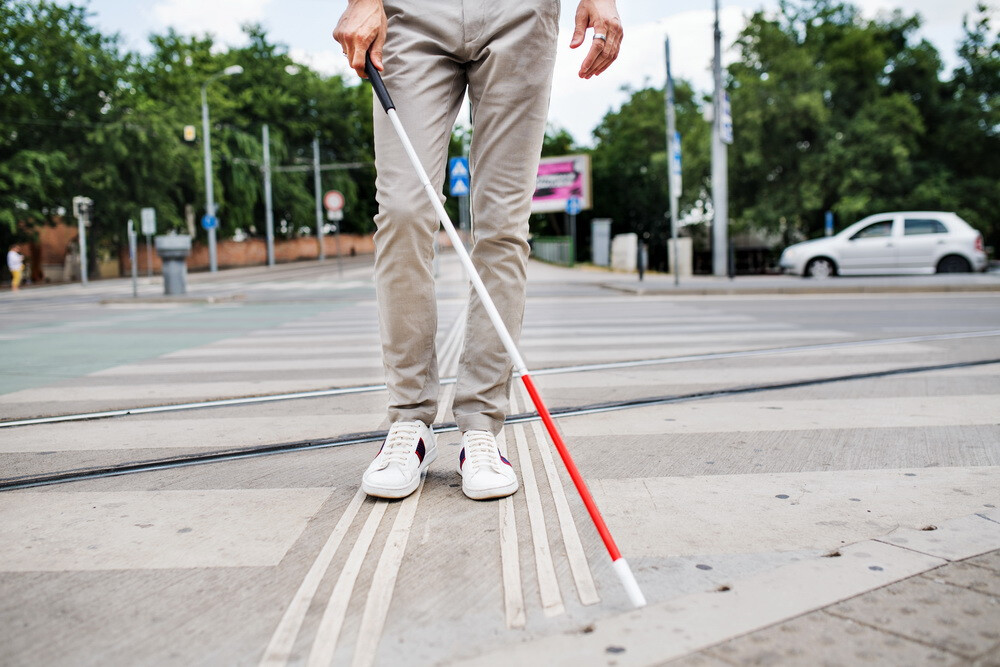
LG Uplus, a leading South Korean telecommunications company, has unveiled a groundbreaking communication technology poised to significantly enhance the accessibility of public transportation for visually impaired individuals. The company announced the successful completion of a pilot program in collaboration with Hyundai Motor and Kia, centered around the innovative 'Daisy (Day-Easy)' technology. This system, which garnered the top prize at the 2023 Hyundai Motor and Kia Idea Festival, ingeniously integrates a visually impaired person's traditional white cane with their smartphone to provide seamless bus boarding assistance.
The development of Daisy addresses a critical need within the visually impaired community. According to a 2021 study by the South Korean Ministry of Land, Infrastructure and Transport, titled 'Study on the Actual Conditions of Transportation Convenience for the Transportation Disadvantaged,' the utilization rate of city buses among visually impaired individuals stands at a mere 34.6%. This figure starkly contrasts with the usage rates of other transportation-disadvantaged groups, highlighting the significant barriers they face in accessing this essential public service. The study further illuminated the key challenges contributing to this low adoption rate, including ambiguous voice announcements on buses, the difficulty in identifying the correct bus amidst multiple arrivals at a single stop, the challenge of locating the bus boarding door, and communication hurdles with bus drivers.
The newly engineered bus boarding solution by LG Uplus tackles these pain points head-on by establishing a dynamic link between real-time bus information and a dedicated application on the user's smartphone. A visually impaired individual intending to board a specific bus route can utilize the app to make a boarding reservation. As the designated bus approaches, the app provides real-time location updates through clear voice prompts. Simultaneously, the Daisy system transmits subtle vibrations through the user's white cane. The varying intensity and patterns of these vibrations intuitively convey crucial information such as the bus's precise location, its sequence in the arrival queue at the bus stop, and its relative distance from the user. This multi-sensory feedback mechanism empowers visually impaired individuals with a heightened awareness of their surroundings and the approaching vehicle.
Furthermore, the innovative solution incorporates a digital "stop request" or hailing bell function. Through the smartphone application, visually impaired passengers can discreetly signal their intention to disembark at a particular stop, directly alerting the bus driver. On the driver's side, a dedicated Daisy notification unit, installed on the dashboard, provides real-time alerts regarding visually impaired passengers waiting to board or requesting to alight at each subsequent stop. This feature streamlines the boarding and alighting process, fostering smoother and more efficient interactions between visually impaired passengers and bus operators, thereby enhancing the overall commuting experience.
The collaborative effort between LG Uplus and the automotive giants underscores a growing recognition of the importance of inclusive design and the potential of technology to bridge accessibility gaps. The Daisy project exemplifies a user-centric approach, directly addressing the needs and challenges articulated by the visually impaired community. By leveraging the ubiquity of smartphones and integrating them with a familiar assistive tool like the white cane, the solution offers a practical and user-friendly approach to enhancing mobility.
Looking ahead, LG Uplus envisions further expanding the capabilities and reach of the Daisy technology. A company representative stated, "We are also considering future pilot projects that explore integration with local government transportation management systems." This potential integration could unlock even more sophisticated features, such as optimized route planning for visually impaired individuals and real-time updates on potential delays or disruptions. The representative further emphasized the transformative potential of the technology, stating, "We aim to evolve Daisy into a comprehensive transportation assistant service that seamlessly integrates into the daily commutes of visually impaired individuals, fostering greater independence and confidence in their mobility."
The successful completion of this pilot program marks a significant step forward in leveraging telecommunications technology to promote inclusivity and accessibility in public transportation. By addressing the specific challenges faced by visually impaired individuals, LG Uplus is not only enhancing their commuting experience but also contributing to a more equitable and accessible society for all. The Daisy technology holds the promise of empowering visually impaired individuals with greater autonomy and independence in their daily lives, opening up new opportunities for social participation and economic engagement. As LG Uplus explores further integration and expansion of this innovative solution, the future of accessible public transportation for the visually impaired in South Korea looks significantly brighter. The project serves as a compelling example of how collaborative innovation, driven by a deep understanding of user needs, can create tangible and meaningful improvements in the lives of marginalized communities.
[Copyright (c) Global Economic Times. All Rights Reserved.]