![[등록] 2026-09-01 15:48:31](/support/_updata/banner2/tl181982910_6749.png)


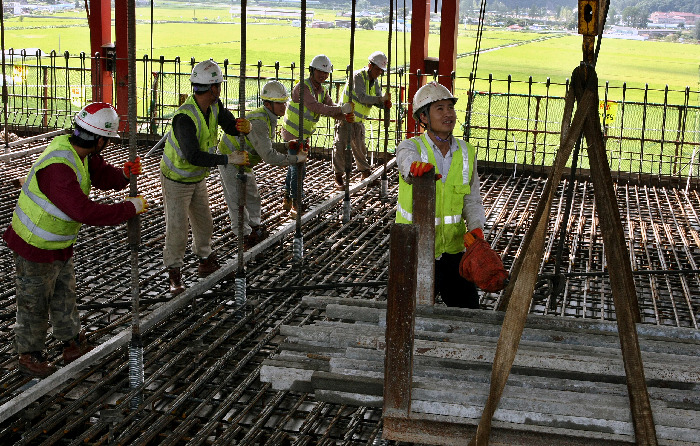
SEOUL, South Korea – Foreign workers now account for one out of every seven laborers on South Korean construction sites, a significant shift in the nation's labor landscape. This demographic change is largely driven by an overwhelming presence of ethnic Koreans from China (Joseonjok), according to a recent report by the Construction Workers Mutual Aid Association (CWMAA). The 'Construction Site Report,' released on the 20th, reveals that out of approximately 1.56 million construction workers in South Korea last year, 229,541 were foreign nationals, making up about 14.7% of the total workforce.
Shifting Demographics: A Deep Dive into Foreign Labor
The CWMAA's analysis of foreign construction worker data, specifically from those enrolled in the retirement provident fund system, offers a detailed look at the nationalities involved. Among those with confirmed nationality and visa status, ethnic Koreans from China (Joseonjok) comprise a dominant 83.7%. This highlights the critical role of ethnic Korean diaspora in the domestic construction sector. Other significant nationalities include mainland Chinese (5.9%), Vietnamese (2.2%), ethnic Koreans from Russia (Koryo-saram, 1.7%), Uzbeks (1.6%), Myanmarese (1.3%), Cambodians (1.1%), and Kazakhs (0.9%). This concentration underscores a targeted demand for labor from specific regions and ethnic groups.
Visa Status and Systemic Gaps
In terms of visa types, F-4 (Overseas Korean) visa holders represent more than half (50.4%) of the foreign construction workforce. This is followed by F-5 (Permanent Residency) and H-2 (Working Visit) visa holders. The F-4 visa is granted to foreign nationals who previously held South Korean nationality or whose parents or grandparents were South Korean nationals, as per Article 2, Paragraph 2 of the Overseas Koreans Act.
The CWMAA points out a critical discrepancy: "Despite the F-4 visa not allowing employment in simple labor, the reality of many F-4 visa holders working on construction sites illustrates a gap between policy and reality." This indicates that the current visa system may not adequately reflect the actual labor demands of the construction sector, necessitating reforms to ensure legal working environments for foreign laborers and to address the industry's ongoing labor shortages. This issue has been a long-standing point of contention, with industry stakeholders frequently calling for more flexible visa regulations to meet the practical needs of construction sites.
Continuous Growth and Future Implications
The proportion of foreign workers within the total construction workforce has shown a steady increase over the past five years. From 169,340 workers (11.8%) in 2020, the numbers rose to 176,220 (12.2%) in 2021, 201,348 (12.7%) in 2022, and reached 236,549 (14.2%) in 2023. This consistent rise is a clear indicator of the deepening reliance on foreign labor, driven by South Korea's low birth rate, an aging population, and a growing reluctance among younger South Koreans to enter the construction industry. Ensuring a stable supply and effective management of foreign labor is becoming an indispensable task for the sustained growth of South Korea's construction sector.
Characteristics of the Foreign Workforce and Regional Concentrations
The report also highlights key characteristics of foreign construction workers. Their average age of entry into the workforce is 42.5 years, younger than their South Korean counterparts. While this helps alleviate the aging issue within the construction sector, it also reflects the continued lack of young South Koreans entering the industry. Furthermore, over 66% of foreign workers are employed in the Seoul metropolitan area, indicating a clear concentration of labor in specific regions and types of construction projects. This suggests that while large-scale development and redevelopment projects in the capital region are driving high labor demand, rural construction sites may still be grappling with labor shortages. This regional imbalance in labor distribution necessitates policy efforts for efficient labor allocation and revitalization of the construction industry in other parts of the country.
The Indispensable Role of Data in Policy Making
The CWMAA emphasizes the critical role of this report in forming policy and enhancing understanding of foreign construction workers. The data, uniquely gathered through the operation of the retirement provident fund system, accurately reflects the real-world flow of foreign labor, making it an invaluable resource.
Such statistics can serve as a crucial foundation for future government policies concerning foreign labor introduction, visa system reforms, and construction site labor supply plans. For instance, the data can inform the development of training programs to enhance foreign workers' skills, strengthen safety management protocols, and improve overall working conditions. It can also contribute to addressing the existing disparity between F-4 visa regulations and the actual demand for simple labor.
Ultimately, as the importance of foreign workers in South Korea's construction industry grows, it becomes imperative to view them not merely as a source of labor but as vital members of society. Protecting their rights and creating stable working environments will be essential for the sustainable development of the South Korean construction industry.
[Copyright (c) Global Economic Times. All Rights Reserved.]