• 2026.05.08 (Fri)
  • All articles
  • LOGIN
  • JOIN
Global Economic Times
fashionrunwayshow2026
  • Synthesis
  • World
  • Business
  • Industry
  • ICT
  • Distribution Economy
  • Well+Being
  • Travel
  • Eco-News
  • Education
  • Korean Wave News
  • Opinion
  • Arts&Culture
  • Sports
  • People & Life
    • International Student Report
    • With Ambassador
  • Column
    • Cho Kijo Column
    • Cherry Garden Story
    • Ko Yong-chul Column
    • Kim Seul-Ong Column
    • Lee Yeon-sil Column
  • Photo News
  • New Book Guide
MENU
 
Home > Arts&Culture

‘Culture Day’ Expanded to Every Wednesday; New Policy Set to Begin Next Month

Min Gyu Mi Reporter / Updated : 2026-03-03 13:58:21
  • -
  • +
  • Print
Ministry of Culture, Sports and Tourism aims to integrate cultural activities into daily "life rhythms" starting April 1st.


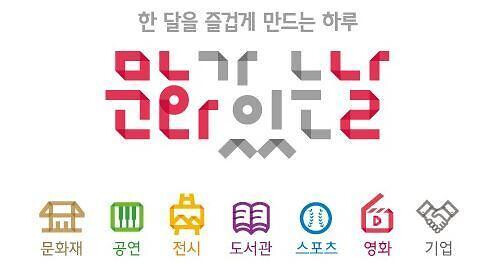
SEOUL — The South Korean government has officially moved to expand its flagship "Culture Day" program from once a month to every Wednesday, aiming to make cultural participation a staple of everyday life.

The Ministry of Culture, Sports and Tourism (MCST) announced on March 3 that an amendment to the Enforcement Decree of the Framework Act on Culture was approved during a cabinet meeting. The revised policy is scheduled to take effect on April 1, 2026.

From Monthly Events to Weekly Rhythms
Since its inception in 2014, "Culture Day" was observed only on the last Wednesday of each month. While the program started with a participation rate of 28.4%, it surged to 66.3% by 2024. The Ministry views this expansion as a strategic shift to transform cultural enjoyment from a "special event" into a consistent "lifestyle rhythm."

"This expansion is a turning point for the normalization of culture, where citizens can easily enjoy the arts whenever and wherever they want," said Kim Yong-seop, Director General of the Regional Culture Policy Bureau at the MCST.

Key Changes and Implementation
The expansion will be spearheaded by the public sector while encouraging voluntary participation from the private sector:

Public Institutions: State-run museums, art galleries, and cultural centers will strengthen "Wednesday-special" programming and expand existing benefits.
Regional Initiatives: Local governments plan to link the expansion with regional assets, such as traditional Hanok villages, folk music (Nongak), and craft workshops.
Private Sector Autonomy: Unlike the mandatory participation seen in some public sectors, private companies and venues will maintain the autonomy to decide their own discounts and special programs based on their business conditions.

Economic and Social Impact
The MCST expects that increasing the frequency of cultural opportunities will lead to a practical boost in cultural consumption. By lowering the barriers to entry, the government hopes to breathe new life into the arts and content industries, ultimately enhancing the overall quality of life for the public.

[Copyright (c) Global Economic Times. All Rights Reserved.]

  • #Korea
  • #Seoul
  • #Hallyu
  • #USA
  • #Economy
  • #Busoness
  • #Global
  • #World
  • #Consumer
  • #Export
  • #Import
  • #Hanguel
  • #Travel
  • #Tour
  • #Food
Min Gyu Mi Reporter
Min Gyu Mi Reporter

Popular articles

  • K-Beauty Dominates U.S. Market, Poised for Third Consecutive Year as Top Importer

  • "Sit by My Bed for 2 Hours Instead of Delivering Food": An Ambitious Relay of Compassion for a Young Cancer Patient

  • 11th Street Launches 'Grand 11th Day' Shopping Festival: A Strategic Move to Dominate South Korea's Mid-Year Retail Market

I like it
Share
  • Facebook
  • X
  • Kakaotalk
  • LINE
  • BAND
  • NAVER
  • https://www.globaleconomictimes.kr/article/1065588970441277 Copy URL copied.
Comments >

Comments 0

Weekly Hot Issue

  • South Korea’s KOSPI Surges to 7th in Global Market Cap, Overtaking Canada and UK
  • Global Pay Parity Demands Shaking Tech Giants: Samsung and SK Hynix Face Rising Labor Unrest in China
  • the 28th Overseas Koreans Literary Awards
  • Ambassador Hyuk-sang Sohn attended the "2026 Educational Community Sports Day" held at the Korean School of Paraguay on Friday, May 1.
  • Official Presentation of Credentials in Paraguay
  • U.S. World Cup "Host City Boom" Fizzles: Hotel Bookings Slump One Month Before Kickoff

Most Viewed

1
Korea and Vietnam Forge Strategic Partnership in Science, Technology, and Innovation
2
Iran Imposes Transit Fees on Strait of Hormuz Amid Escalating Maritime Tensions
3
80% of Enterprises Hit by 'AI Agent Anomalies': SailPoint Calls for Integrated Identity Governance
4
Tradition Meets the Public: Chungju’s Gugak Busking
5
Kurly Abandons 'All-Paper' Packaging Strategy Amid Rising Cost Pressures
광고문의
임시1
임시3
임시2

Hot Issue

Hyundai Motor Group Bets $700 Million on Mexico Amid Trade Policy Volatility

Honda Halts $15B Canada EV Plant Plans Amid Strategic Pivot to Hybrids

Digital Ghosts: The Rise of AI Ex-Partner Replicas and the Ethics of "Technological Mourning"

Kakao Hits Record Q1 Performance: Operating Profit Surges 66% as Focus Shifts to "Agentic AI"

Fashion Runway Show 2026

Global Economic Times
korocamia@naver.com
CEO : LEE YEON-SIL
Publisher : KO YONG-CHUL
Registration number : Seoul, A55681
Registration Date : 2024-10-24
Youth Protection Manager: KO YONG-CHUL
Singapore Headquarters
5A Woodlands Road #11-34 The Tennery. S'677728
Korean Branch
Phone : +82(0)10 4724 5264
#304, 6 Nonhyeon-ro 111-gil, Gangnam-gu, Seoul
Copyright © Global Economic Times All Rights Reserved
  • 에이펙2025
  • APEC2025가이드북TV
  • 반달곰 프로젝트
Search
Category
  • All articles
  • Synthesis
  • World
  • Business
  • Industry
  • ICT
  • Distribution Economy
  • Well+Being
  • Travel
  • Eco-News
  • Education
  • Korean Wave News
  • Opinion
  • Arts&Culture
  • Sports
  • People & Life 
    • 전체
    • International Student Report
    • With Ambassador
  • Column 
    • 전체
    • Cho Kijo Column
    • Cherry Garden Story
    • Ko Yong-chul Column
    • Kim Seul-Ong Column
    • Lee Yeon-sil Column
  • Photo News
  • New Book Guide
  • Multicultural News
  • Jobs & Workers