![[등록] 2026-09-01 15:48:31](/support/_updata/banner2/tl181982910_6749.png)


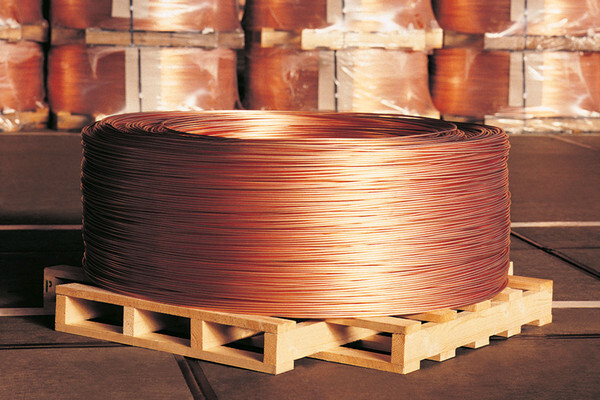
WASHINGTON D.C. - The international copper market has been shaken by an abrupt announcement from U.S. President Donald Trump regarding a 50% tariff on imported copper. On July 8 (local time), copper futures prices on the New York Mercantile Exchange surged by 13.12% from the previous trading day, reaching $5.69 per pound. This marks the largest single-day increase since 1969, 56 years ago. This sharp rise demonstrates that the Trump administration's protectionist stance has begun to directly impact the market for essential industrial raw materials.
Predicted Shock, Unexpected Intensity
While the market somewhat anticipated the imposition of copper tariffs, analysts suggest that the high tariff rate of 50% and the sudden timing of the announcement delivered an even greater shock. Copper is a key material in the electrical, construction, and information technology (IT) sectors, and it is the third most consumed metal in the United States after iron and aluminum. The U.S. relies heavily on imports for a significant portion of its copper needs, with the main importing countries being Chile, Canada, and Mexico, in that order.
This tariff announcement is interpreted as an extension of the Trump administration's "America First" policy, aimed at strengthening the U.S. manufacturing base and creating domestic jobs. However, experts warn that high tariffs could instead have an adverse effect on American industries. Pierre Gratton, President of the Mining Association of Canada, cautioned, "The U.S. lacks sufficient metal refining and smelting capacity and thus must rely on imported copper. High tariffs will disadvantage U.S. manufacturing." This suggests that rising copper prices could lead to increased production costs within the U.S., ultimately causing higher consumer prices.
"Dr. Copper" Transformed: From Economic Bellwether to Inflationary Pressure
Typically, copper is considered a leading indicator of global industrial activity and is thus dubbed "Dr. Copper." A rise in copper prices is generally interpreted as a sign of economic revitalization. However, the severity of the current copper price surge stems from the fact that it is not driven by industrial activity but rather by concerns over supply chain instability and increased costs due to the Trump administration's trade policies.
This implies that rising copper prices could, paradoxically, act as an inflationary pressure on the U.S. economy. If copper prices increase, production costs will rise across all industries that use copper, including construction, electronics, and automobiles. This, in turn, will lead to higher product prices, fueling consumer inflation. This scenario is also expected to burden the U.S. Federal Reserve's (Fed) monetary policy, which is already grappling with high inflation.
Concerns Over Global Supply Chain Realignment and Deepening Trade Conflicts
Trump's copper tariff announcement raises concerns that it could lead to more than just fluctuations in raw material prices, potentially causing a global supply chain realignment and deepening trade conflicts among major nations. If the U.S. imposes high tariffs on copper imports, existing supply chains will undergo changes, increasing uncertainty across the global market.
In particular, major copper exporting countries like Chile, Canada, and Mexico are likely to oppose the U.S. tariffs. This could easily escalate into international trade disputes, including World Trade Organization (WTO) complaints. Major nations are already increasingly adopting isolationist trade policies to protect their domestic industries, and the Trump administration's latest decision appears likely to accelerate this trend.
In conclusion, President Trump's copper tariff imposition has, in the short term, caused a sharp rise in copper prices. However, it is viewed as a significant decision that could, in the long term, lead to intensified inflation within the U.S., weakened manufacturing competitiveness, and disorder in the global trade order. The market now awaits details on the U.S. government's specific tariff implementation timeline and scope, as well as the international community's response.
[Copyright (c) Global Economic Times. All Rights Reserved.]