• 2025.12.17 (Wed)
  • All articles
  • LOGIN
  • JOIN
Global Economic Times
APEC2025KOREA가이드북
  • Synthesis
  • World
  • Business
  • Industry
  • ICT
  • Distribution Economy
  • Well+Being
  • Travel
  • Eco-News
  • Education
  • Korean Wave News
  • Opinion
  • Arts&Culture
  • Sports
  • People & Life
  • Column
    • Cho Kijo Column
    • Lee Yeon-sil Column
    • Ko Yong-chul Column
    • Cherry Garden Story
  • Photo News
  • New Book Guide
MENU
 
Home > Industry

Kidney Disease Drug Finerenone Shows Promise in Reducing Diabetes Risk

Hwang Sujin Reporter / Updated : 2025-02-11 14:49:00
  • -
  • +
  • Print

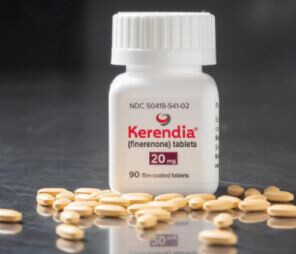
A recent study has shown that the kidney disease drug finerenone (Kerendia) may also be effective in reducing the risk of developing diabetes. This comes after previous findings suggested its potential as a treatment for heart failure.

Finerenone, a non-steroidal mineralocorticoid receptor antagonist (NS-MRA), is typically used to slow the progression of kidney and cardiovascular disease in patients with chronic kidney disease (CKD) and type 2 diabetes.

Following its success in the FIDELIO-DKD study in reducing the risk of diabetic kidney disease progression and cardiovascular events, and the FIGARO-DKD study in demonstrating cardiovascular protection in heart failure patients, researchers have now explored its potential in diabetes prevention.

Researchers, led by Zawad H. Butt of the British Heart Foundation Cardiovascular Research Centre, hypothesized that finerenone, a non-steroidal MRA, could also affect blood sugar levels, given the association between steroid MRAs like spironolactone and increased HbA1c levels.

The study involved 6,001 heart failure patients (NYHA class II-IV, left ventricular ejection fraction ≥40%) without pre-existing diabetes. Participants were randomly assigned to receive either finerenone or a placebo, and followed for the development of new-onset diabetes (HbA1c ≥6.5%).

Over a median follow-up period of 31.3 months, new-onset diabetes occurred in 115 (7.2%) participants in the finerenone group and 147 (9.1%) participants in the placebo group.

The analysis revealed that finerenone reduced the risk of new-onset diabetes by 24% compared to placebo (HR 0.76). Similar results were observed in Fine-Gray competing risk analysis (HR 0.75) and sensitivity analyses.

The researchers concluded that "the effects of finerenone on new-onset diabetes compared with placebo were consistent across major participant subgroups" and that "the clinical benefits of finerenone were greater in patients with heart failure with mildly reduced or preserved left ventricular ejection fraction without diabetes."

This new finding suggests that finerenone could potentially be used as a primary preventive agent in high-risk groups for diabetic CKD, given that chronic kidney disease often stems from diabetes.

[Copyright (c) Global Economic Times. All Rights Reserved.]

Hwang Sujin Reporter

Popular articles

  • From Court to Content: French Tennis Star Océane Dodin Trades Racquet for OnlyFans, Eyes $5M in a Year

  • Kimchi's Day Celebrated with a Glimpse into its Future

  • UNIQLO's Collaboration Strategy: Designer Fashion Meets Mass Appeal

I like it
Share
  • Facebook
  • X
  • Kakaotalk
  • LINE
  • BAND
  • NAVER
  • https://www.globaleconomictimes.kr/article/1065592092102536 Copy URL copied.
Comments >

Comments 0

Weekly Hot Issue

  • 'AI' Dominates 2025 Book Titles in South Korea
  • End-of-Year Concert Extravaganza: Jo Sumi, Geum Nan-sae, and Danny Koo Headline Diverse Lineup
  • R.E.D. Sectors Poised for Growth in 2026, the Year of the 'Red Horse,' Driven by AI Investment Boom
  • South Korea Launches $115 Million Export Voucher Program to Boost SME Global Reach
  • Extension Granted for '2026 Honors for SME Contributors' Application
  • 44% of Recent Construction Projects Report Deficits, Industry Survey Finds

Most Viewed

1
Choi Bun-do, Chairman of PTV Group, Assumes Presidency of the Korean Chamber of Commerce and Industry in South Central Vietnam
2
From Court to Content: French Tennis Star Océane Dodin Trades Racquet for OnlyFans, Eyes $5M in a Year
3
Lee Dismisses Vice Minister Amid Allegations of Misconduct and Vetting Gaps
4
NVIDIA Lobby Succeeds? U.S. Bill Expected to Drop AI Chip Export Restrictions
5
US Layoffs Surge: Over 1.17 Million Job Cuts Announced in First 11 Months of 2025
광고문의
임시1
임시3
임시2

Hot Issue

South Korean AI Models Flunk College Entrance Math Exams, Lagging Far Behind Global Leaders

KRX Temporarily Slashes Stock Trading Fees by 20-40% to Counter ATS Rival

Israel Condemns Australia After Sydney Shooting, Citing 'Fueling' of Anti-Semitism

Lotte Mart Launches Major Imported Fruit Discount Event Amid High Prices

Let’s recycle the old blankets in Jeju Island’s closet instead of incinerating them.

Global Economic Times
korocamia@naver.com
CEO : LEE YEON-SIL
Publisher : KO YONG-CHUL
Registration number : Seoul, A55681
Registration Date : 2024-10-24
Youth Protection Manager: KO YONG-CHUL
Singapore Headquarters
5A Woodlands Road #11-34 The Tennery. S'677728
Korean Branch
Phone : +82(0)10 4724 5264
#304, 6 Nonhyeon-ro 111-gil, Gangnam-gu, Seoul
Copyright © Global Economic Times All Rights Reserved
  • 에이펙2025
  • APEC2025가이드북TV
  • 독도는우리땅
Search
Category
  • All articles
  • Synthesis
  • World
  • Business
  • Industry
  • ICT
  • Distribution Economy
  • Well+Being
  • Travel
  • Eco-News
  • Education
  • Korean Wave News
  • Opinion
  • Arts&Culture
  • Sports
  • People & Life
  • Column 
    • 전체
    • Cho Kijo Column
    • Lee Yeon-sil Column
    • Ko Yong-chul Column
    • Cherry Garden Story
  • Photo News
  • New Book Guide
  • Multicultural News
  • Jobs & Workers