
![[등록] 2026-09-01 15:48:31](/support/_updata/banner2/tl181982910_6749.png)


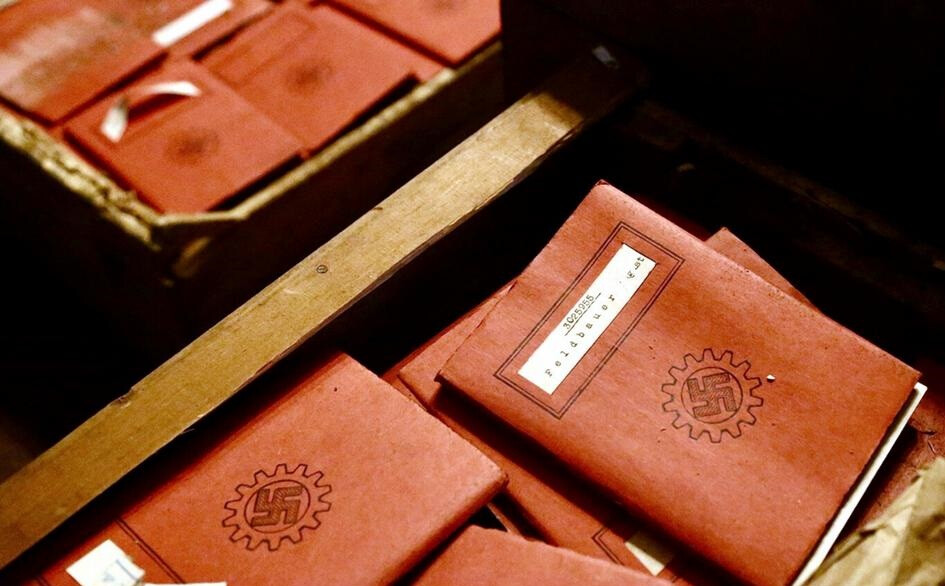
BUENOS AIRES, Argentina – Shockwaves are reverberating through Argentina after dozens of boxes containing World War II-era Nazi-related materials were serendipitously discovered in the underground archives of the Argentine Supreme Court. This find brings Argentina’s long-standing connection with Nazism back to the forefront, raising the possibility of new clues regarding undisclosed Holocaust information and the financial networks of Nazi fugitives.
Nazi Artifacts Found in Supreme Court Basement
The Argentine Supreme Court announced that while preparing for the establishment of a museum, staff discovered 83 boxes in the underground archive. These boxes contained a vast amount of Nazi-related material, including postcards, photographs, notebooks, documents, and Nazi propaganda. A Supreme Court official explained, "When we opened one of the boxes, we found material that sought to consolidate and spread Adolf Hitler's ideology in Argentina during World War II."
The Supreme Court immediately requested cooperation from the Argentine Holocaust Museum, which is currently documenting and preserving the materials. Experts anticipate that these materials could provide clues to unknown aspects of the Holocaust, particularly the international financial networks used by the Nazis.
Where Did the Nazi Boxes Come From?
According to the Supreme Court's tracing, these boxes were sent from Japan to Argentina by the German Embassy during World War II via a Japanese steamer. At the time, the German diplomatic mission in Argentina claimed the boxes were "personal belongings," but customs authorities randomly searched several boxes and discovered the Nazi materials.
In 1941, Argentine officials, concerned that the volume and nature of the materials would affect Argentina's wartime neutrality, seized the shipment. The case was then transferred to the Supreme Court, but it remains unclear what action the Court took at the time. The exact circumstances under which these boxes were stored in the Supreme Court's underground archive are still not fully clarified.
Expanding Access to Historical Documents
This underground archive discovery comes at a time when Argentina's National Archives are digitalizing over 1,850 original documents related to Nazism and making them freely available to the public. Julio Mutti, an Argentine author and researcher who has long studied the links between Argentina and the Nazis, emphasized the immense historical value of these materials in an interview with DW. He added that this extensive file of documents includes information on Josef Mengele, the infamous SS doctor of Auschwitz, and Adolf Eichmann, a key architect of the Holocaust. Both individuals sought refuge in Argentina after the war.
Ariel Gelblung, the Latin American director for the Jewish human rights organization Simon Wiesenthal Center, stated that the Argentine government recently provided the center with a vast collection of documents that could offer clues as to how Nazi fugitives were financed. He told DW, "We are specifically researching the financing of Nazi fugitives in Argentina. We are following a trail that no one has investigated. We are analyzing suspicious financial transactions disguised as accounting entries in diplomatic missions or central bank records." Gelblung added, "Many documents were previously in the domain of state institutions that had not been considered in relation to Nazi fugitives."
Argentina's Role During World War II
Argentina remained neutral for most of World War II. However, the European Holocaust Research Infrastructure website points out that "a significant portion of the Argentine population was of German descent" and "Nazi propaganda was very influential." Yet, only a few months before the war ended, Argentina declared war on Japan and its ally, Germany.
According to the Holocaust Encyclopedia, approximately 24,000 Jewish people entered Argentina between 1933 and 1943 to escape Nazi persecution, with an additional 20,000 entering illegally. However, Argentine President Juan Perón, who came to power in 1946, was a prominent Nazi sympathizer, and Argentina became a major refuge for Nazi German war criminals after World War II. This discovery of Nazi artifacts by the Supreme Court is a significant event that once again brings to light Argentina's complex past and the dark shadow of the Holocaust. Further research and analysis will determine whether these materials contribute to uncovering hidden historical truths.
[Copyright (c) Global Economic Times. All Rights Reserved.]














