![[등록] 2026-09-01 15:48:31](/support/_updata/banner2/tl181982910_6749.png)


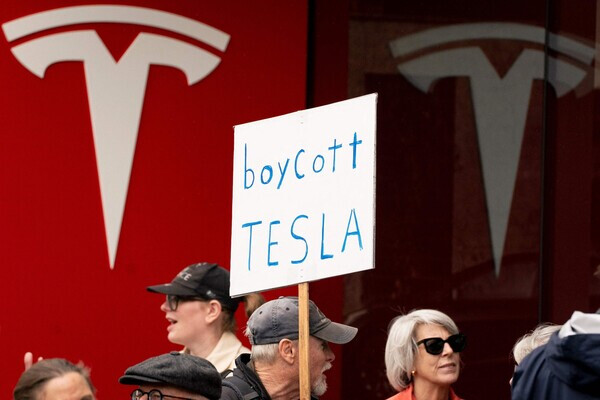
The European automotive market is ablaze with the electric vehicle (EV) boom. According to the European Automobile Manufacturers' Association (ACEA), in the first quarter of 2025, EV sales within the European Union (EU) reached 412,997 units, a 23.9% increase compared to the same period last year. Germany, overcoming the repercussions of subsidy reductions, saw a robust growth of 38.9%, while Sweden experienced a 13.3% increase. Overall, 23 out of the 27 EU member states recorded growth in EV sales, largely driven by the aggressive launch of more affordable electric models by various manufacturers. However, beneath this dazzling growth, a dramatic decline has befallen Tesla, the former frontrunner in the EV market. Tesla's first-quarter sales plummeted to a mere 36,000 units, a staggering 45% decrease year-on-year. At the heart of this unprecedented downfall lies the political maneuvering of Tesla's CEO, Elon Musk.
The Paradox of the Electric Vehicle Market: Tesla's Isolation
The European EV market is undergoing a significant structural shift. After a temporary slowdown in 2024 due to subsidy cuts and economic uncertainties, demand is rebounding strongly in 2025. European consumers are increasingly opting for EVs due to heightened awareness of the climate crisis, and manufacturers like Volkswagen, Stellantis, and BYD are strategically targeting the market with competitively priced models. In this dynamic environment, Tesla, with its technological prowess and brand recognition, should have remained a dominant force. Yet, the reality is starkly different. Tesla's sales decline is not merely a consequence of market competition; it is directly linked to a erosion of consumer trust in the brand. Initial reports in early 2025 indicated a significant drop in EV sales across the EU following subsidy cuts in several key markets in late 2024, underscoring the sensitivity of the market to policy changes. While the overall market has recovered, Tesla's failure to capitalize on this resurgence points to deeper, brand-specific issues.
Elon Musk's Political Gamble
Tesla's crisis stems from Elon Musk's increasing entanglement in European politics. Over the past few years, Musk has courted controversy through his deep involvement in the political landscapes of major European nations like Germany and France. His open endorsements of far-right politicians and parties, coupled with his politically charged pronouncements on the social media platform X, have triggered strong backlash from European consumers. In Germany, Musk faced severe public criticism for seemingly aligning himself with the Alternative for Germany (AfD), a far-right party. Similarly, in France, controversies surrounding his interactions with figures associated with Marine Le Pen's National Rally (RN) have ignited the fury of French consumers. Further scrutiny of Musk's social media activity reveals a pattern of amplifying divisive content and engaging with individuals known for their extremist views, exacerbating the perception of his political leanings.
Europe is a region highly sensitive to political polarization. Germany and France, in particular, harbor strong historical aversions to far-right ideologies. In this context, Musk's actions have inflicted irreparable damage on Tesla's brand image. Tesla was once perceived not just as a car brand, but as a symbol of sustainability and innovation. However, Musk's political rhetoric has painted Tesla as a company detached from progressive values. Consequently, a wave of boycotts against Tesla has gained momentum among environmentally conscious European consumers. Campaigns with slogans like "Choose other EVs instead of Tesla" have proliferated across social media and consumer forums, directly contributing to the plummeting sales figures. Reports from consumer advocacy groups indicate a significant rise in negative sentiment towards Tesla, directly correlating with Musk's controversial political engagements.
The Erosion of Brand Image
Tesla's downfall serves as a stark reminder of the critical importance of brand image management. Contemporary consumers prioritize not only product quality but also a company's social responsibility and values. The European market, in particular, is highly attuned to ESG (Environmental, Social, and Governance) standards. Tesla was once an icon of eco-friendly innovation, but Musk's political controversies have shattered this image. Consumers express that purchasing a Tesla vehicle feels like indirectly endorsing Musk's political agenda. This psychological detachment has translated directly into Tesla's declining market share. Market research indicates a growing preference among European consumers for brands that align with their social and political values, a trend that Tesla has conspicuously failed to address.
The advancements of competitors have further exacerbated Tesla's predicament. Volkswagen's ID series, Stellantis's Fiat 500e, and Chinese manufacturer BYD's affordable models offer compelling alternatives to Tesla's Model 3 and Model Y, often at more competitive prices. While Tesla maintained its premium brand positioning and pricing strategy in Europe, rivals capitalized on practicality and accessibility to win over consumers. Coupled with Musk's political controversies, Tesla has been relegated in the minds of European car buyers. Industry analysts point to the increasing sophistication and appeal of competing EV models, which offer similar or better features at more accessible price points, further eroding Tesla's competitive edge.
Future Prospects: A Path to Recovery?
For Tesla to stage a comeback in the European market, fundamental changes are imperative. Firstly, Musk must exercise restraint in his political pronouncements and actively work to rehabilitate Tesla's brand image. Tesla needs to amplify messages centered on sustainability and technological innovation to regain the trust of European consumers. A concerted effort to distance the brand from divisive political rhetoric is crucial. Secondly, a recalibration of market strategy is necessary. Tesla must introduce more affordable models tailored to European demand to enhance its competitiveness. The company has already adopted a strategy of price reductions for the Model 3 in the Chinese market to boost sales, a tactic that could be similarly effective in Europe.
However, despite these potential remedies, overcoming the deep-seated antipathy towards Tesla among European consumers will be a formidable challenge. Europeans are highly sensitive to corporate social responsibility, and rebuilding lost trust is a time-consuming process. If Musk's political engagements persist, Tesla risks sinking into an even deeper quagmire. Public opinion surveys reveal a significant decline in positive perception of the Tesla brand, directly linked to Musk's controversial statements and actions.
Conclusion: The Responsibility of Leadership
Tesla's declining sales in Europe are not merely a consequence of market dynamics. They underscore the profound impact a CEO's personal conduct can have on a company's fate. Elon Musk, a brilliant innovator who propelled Tesla to the forefront of the EV market, is now jeopardizing his achievements through political miscalculations. For Tesla to recover its footing in Europe, Musk must reassess his leadership style and demonstrate a respect for the values of European consumers. Failure to do so could result in Tesla permanently ceding its dominance in the European electric vehicle market to its competitors. The case of Tesla serves as a cautionary tale for other global leaders, highlighting the delicate balance between personal expression and corporate responsibility in an increasingly politically aware consumer landscape.
[Copyright (c) Global Economic Times. All Rights Reserved.]