![[등록] 2026-09-01 15:48:31](/support/_updata/banner2/tl181982910_6749.png)


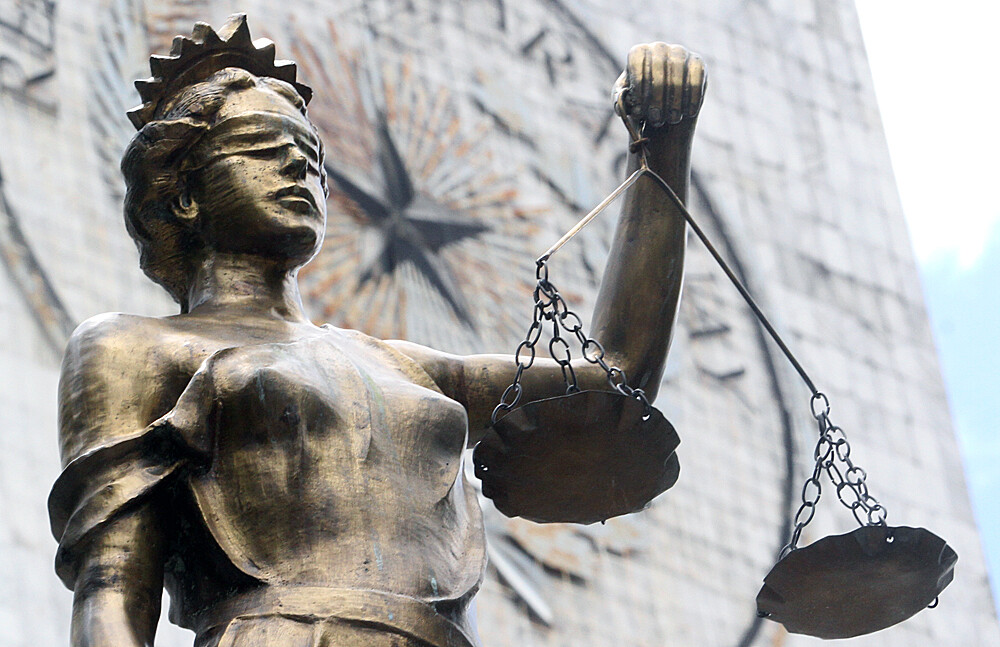
"Time is the most valuable thing a man can spend." This quote by the ancient Greek philosopher Theophrastus highlights the intrinsic value of time in human life. However, in the Paraguayan judicial system, this precious time sometimes flows away meaninglessly, and is even distorted under the ambiguous concept of a "reasonable period." This reality was starkly exposed in the verdict of a murder case that occurred in Guairá.
A Murder Conviction Confirmed After 19 Years, and the Time Hidden Behind It
On May 26, the Criminal Chamber of the Supreme Court of Paraguay upheld the conviction of a police officer who murdered his ex-girlfriend 19 years ago, on February 7, 2006. At the time of the incident, the maximum sentence was 25 years, and there was not yet a law for "femicide."
What's astonishing is that the Supreme Court's Criminal Chamber determined that "procedurally, only 3 years and 7 months had passed" in this case. This was based on a legal interpretation that the maximum duration for a trial under the Paraguayan Criminal Procedure Code is 4 years, with an additional year for appeals. While this interpretation may be legally valid, it disregards the reality of nearly two decades of waiting imposed on both the victim's family and the defendant.
Repeated Acquittals and Protracted Trials
This case went through an even more complex process. The defendant police officer had to undergo three oral trials before his conviction was finally confirmed. He was acquitted in the first two trials, but these verdicts were both nullified. Then, in 2018, 12 years after the crime occurred, he was finally found guilty in the third trial and sentenced to 7 years and 6 months in prison. This sentence was confirmed again by the Guairá Court of Appeals on May 13, 2020.
A Case Dormant for 5 Years in the Supreme Court: The Illusion of a "Reasonable Period"
Immediately after the appellate court's decision on May 26, 2020, the defendant's lawyer filed an extraordinary appeal with the Supreme Court's Criminal Chamber. Coincidentally, the Supreme Court made its decision on this appeal exactly five years later, on May 26, 2025.
Fortunately, the Supreme Court justices did not formally dismiss the defendant's appeal but rather reviewed its merits, which is a positive sign. The main issue of the appeal was precisely the "time elapsed," or what they call a "reasonable period."
The Supreme Court provided various answers to this issue. It subtracted time for periods when the case records were not in court, for retrial and incidental cases brought before the same judge, and for appeals by not only the defendant but also the prosecution and the plaintiff. Notably, a significant period was spent pending in the Supreme Court's Criminal Chamber. The first appeal in 2008 took 1,623 days, and the second appeal alone took 5 years, from May 26, 2020, until the current verdict on May 26, 2025. An additional 257 days for a constitutional lawsuit filed in 2016 were also added.
The Discrepancy Between Legal Fiction and Reality
Summing up all these periods, a total of 4,240 days passed from the issuance of the defendant's arrest warrant on December 2, 2006, until the final oral trial verdict. However, according to the majority opinion of the Supreme Court, 2,943 of those days were calculated as a "suspension period," reducing the actual "litigation period" to 1,297 days, or 3 years and 7 months.
Such "legal fictions" lead to a distortion of reality. While legal fictions are mechanisms by which the law treats something as true, even if it's not, to achieve specific legal outcomes, in this case, the fiction feels like a "big lie" that obscures the truth.
The primary goal of enacting the new Criminal Procedure Code was to prevent the protraction of cases. To this end, clear trial durations were set, but these periods have been flexibly applied for the convenience of judicial delays. Even if the law says 3 years and 7 months have passed, in reality, justice was served only after 19 years. This is the harsh reality faced by the Paraguayan judicial system, an undeniable truth.
This case once again brought to light the chronic problem of trial delays in the Paraguayan judicial system. When the legal concept of a "reasonable period" is used as a means to conceal long actual durations, can justice truly be said to have been fully realized? The Paraguayan judicial system must make more substantial efforts to prevent delays and ensure speedy trials to restore public trust.
[Copyright (c) Global Economic Times. All Rights Reserved.]