• 2026.03.22 (Sun)
  • All articles
  • LOGIN
  • JOIN
Global Economic Times
fashionrunwayshow2026
  • Synthesis
  • World
  • Business
  • Industry
  • ICT
  • Distribution Economy
  • Well+Being
  • Travel
  • Eco-News
  • Education
  • Korean Wave News
  • Opinion
  • Arts&Culture
  • Sports
  • People & Life
    • International Student Report
    • With Ambassador
  • Column
    • Cho Kijo Column
    • Cherry Garden Story
    • Ko Yong-chul Column
    • Kim Seul-Ong Column
    • Lee Yeon-sil Column
  • Photo News
  • New Book Guide
MENU
 
Home > Synthesis

A surfer dies in a shark attack in Sydney, Australia, marking the fourth casualty of the year.

Hannah Yeh Reporter / Updated : 2025-09-07 15:48:57
  • -
  • +
  • Print

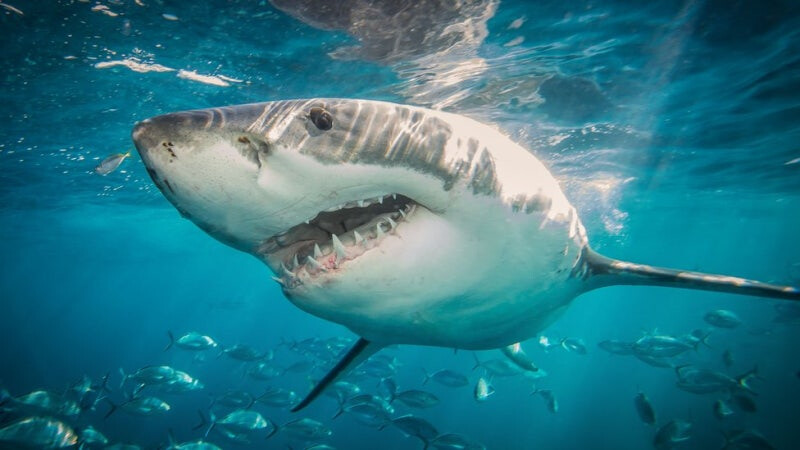
Sydney — A tragic accident occurred on September 6 (local time) when a 57-year-old male surfer died from a shark attack at Long Reef Beach in Sydney, Australia. This incident marks the fourth fatal shark attack in Australia this year.

The accident happened suddenly while the victim was surfing at Long Reef Beach. Local police and marine experts analyzed the marks left on the victim's surfboard and stated that it is highly likely the attack was the work of a large great white shark, measuring approximately 3.4 to 3.6 meters in length. Eyewitnesses were in shock as they recounted the desperate situation at the time of the accident.

Immediately after the incident, Long Reef Beach was closed, and the New South Wales Surf Lifesaving team deployed helicopters and drones to closely monitor shark activity in the area. In addition, coastal guards and rescuers are using jet skis to search the waters thoroughly for any additional risks.

This accident has once again raised concerns about beach safety throughout Australia. Experts point to climate change as a major reason for the recent increase in shark attacks. Analysis suggests that as ocean temperatures rise due to global warming, the migration patterns of fish, the sharks' main food source, have changed, causing sharks to more frequently overlap with human activity zones.

Furthermore, the increase in human marine leisure activities due to urbanization and coastal development is also cited as a reason for the rise in accidental encounters between sharks and humans. Since 1791, there have been over 1,280 reported shark attacks in Australia, with more than 250 of them resulting in fatalities. These statistics show that Australia is in a complex environment where sharks and humans coexist.

Australian authorities are urging beachgoers to heed shark sighting warnings and to only engage in marine activities within designated safe zones. This incident serves as a crucial wake-up call for coexistence with nature and a reminder of the impact of climate change on ecosystems.

[Copyright (c) Global Economic Times. All Rights Reserved.]

  • #globaleconomictimes
  • #micorea
  • #mykorea
  • #Lifeplaza
  • #nammidonganews
  • #singaporenewsk
  • #Samsung
  • #Daewoo
  • #Hyosung
  • #A
Hannah Yeh Reporter
Hannah Yeh Reporter

Popular articles

  • New York City Paralyzed by Historic Snowstorm: Emergency Snow Shovelers Offered Up to $45 per Hour Amid Crisis

  • New York's "Giant" Joy: Baby Weighing 5.9kg Shatters Hospital Records

  • FBI Internal Network Breached: U.S. Points Finger at China in Major Security Lapse

I like it
Share
  • Facebook
  • X
  • Kakaotalk
  • LINE
  • BAND
  • NAVER
  • https://www.globaleconomictimes.kr/article/1065595689693567 Copy URL copied.
Comments >

Comments 0

Weekly Hot Issue

  • Coway Clinches Top Honor at "Water Taste Awards" for 7th Consecutive Year
  • HP Targets Korea as Strategic Hub for 'Edge AI' Expansion, Seeking Startup Partnerships
  • Pearl Abyss’s 'Crimson Desert' Shatters Records with 2 Million Copies Sold on Day One
  • "BTS Over Books?" Indian Academies Issue Emergency Notices as Students Plot Mass Absences for Comeback Live
  • Naver to Shut Down Men's Fashion Service 'MR.' to Launch Expanded AI-Driven Fashion Platform
  • JBNU and SKKU Researchers Achieve Breakthrough in "Dream Material" MXene, Setting New World Records in Performance

Most Viewed

1
An Open Letter to BTS On the Eve of a Historic Performance
2
From Industrial Capital to Tourism Mecca... Ulsan Makes a Bold Move with ‘Experiential Content’ in 2026
3
Ko Sang-goo, President of World Federation of Korean Associations, Elected as First Private Sector Chair of World Korean Community Leaders Convention
4
It is Time for BTS’s Fandom, ARMY, to Step Forward
5
Korean Stock Market Plunges: Circuit Breaker and Sidecar Triggered Amid Geopolitical Crisis
광고문의
임시1
임시3
임시2

Hot Issue

Vishay Unveils Ultra-Compact 0404 RGB LED with Independent Chip Control for Enhanced Color Precision

Coway Clinches Top Honor at "Water Taste Awards" for 7th Consecutive Year

AI Medical Ecosystem in Focus: KIMES 2026 Opens in Seoul as Global Healthcare Hub

Netanyahu Declares Decisive Blow to Iran’s Nuclear and Missile Programs, Signals Early End to War

Let’s recycle the old blankets in Jeju Island’s closet instead of incinerating them.

Global Economic Times
korocamia@naver.com
CEO : LEE YEON-SIL
Publisher : KO YONG-CHUL
Registration number : Seoul, A55681
Registration Date : 2024-10-24
Youth Protection Manager: KO YONG-CHUL
Singapore Headquarters
5A Woodlands Road #11-34 The Tennery. S'677728
Korean Branch
Phone : +82(0)10 4724 5264
#304, 6 Nonhyeon-ro 111-gil, Gangnam-gu, Seoul
Copyright © Global Economic Times All Rights Reserved
  • 에이펙2025
  • APEC2025가이드북TV
  • 독도는우리땅
Search
Category
  • All articles
  • Synthesis
  • World
  • Business
  • Industry
  • ICT
  • Distribution Economy
  • Well+Being
  • Travel
  • Eco-News
  • Education
  • Korean Wave News
  • Opinion
  • Arts&Culture
  • Sports
  • People & Life 
    • 전체
    • International Student Report
    • With Ambassador
  • Column 
    • 전체
    • Cho Kijo Column
    • Cherry Garden Story
    • Ko Yong-chul Column
    • Kim Seul-Ong Column
    • Lee Yeon-sil Column
  • Photo News
  • New Book Guide
  • Multicultural News
  • Jobs & Workers