![[등록] 2026-09-01 15:48:31](/support/_updata/banner2/tl181982910_6749.png)


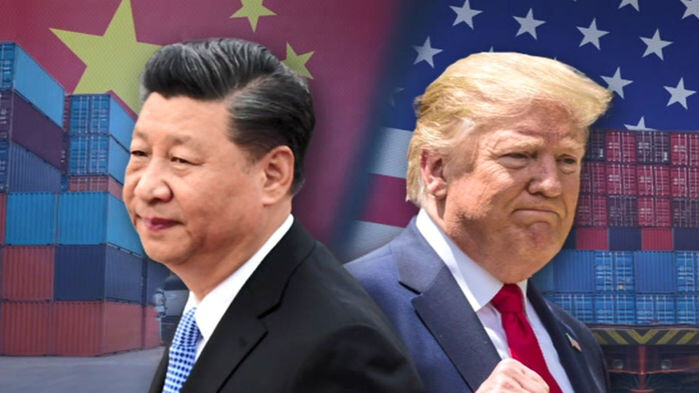
WASHINGTON D.C. - President Donald Trump's aggressive trade policies appear to be yielding unintended and unfavorable consequences, as evidenced by the latest economic data released this week. While the United States economy has unexpectedly shrunk, signaling a potential recession, China, the primary target of Trump's tariffs, has demonstrated surprising resilience and continued robust growth.
According to a report by Newsweek on May 1st, the U.S. Gross Domestic Product (GDP) contracted at an annualized rate of 0.3% in the first quarter of 2025. This downturn marks the first instance of economic contraction in three years for the American economy and arrives at a critical juncture, coinciding with President Trump's 100th day in office. The timing underscores concerns that his signature policy of imposing steep tariffs on a wide range of imports is negatively impacting domestic economic activity.
The contraction in the U.S. economy is largely attributed to a significant surge in imports, driven by businesses attempting to front-load purchases before the full implementation of anticipated tariffs on goods such as automobiles, steel, and aluminum from virtually all trading partners. This rush to import, while temporarily boosting trade figures for some partners, has seemingly disrupted domestic production and investment, contributing to the overall economic slowdown.
Following the release of the disappointing GDP figures, the U.S. stock market experienced a notable decline, reflecting investor anxiety over the economic outlook. In response, President Trump swiftly deflected blame, attributing the economic woes to the policies of the previous Biden administration, a familiar tactic in his political playbook.
However, economic analysts suggest a more direct link to the current administration's trade policies. Joseph Foudy, a clinical professor of finance at New York University's Stern School of Business, commented to Newsweek, "Trump wanted to project an image of strength through these tariffs, but the economic numbers are showing a clear weakening. The U.S. economy is demonstrably reacting negatively to the uncertainty and disruption caused by these trade actions, while ironically, the Chinese economy is currently experiencing an upward trajectory."
The resilience of the Chinese economy, which registered an impressive 5.4% growth rate in the same quarter, presents a stark contrast to the U.S. performance. This growth, paradoxically, has been partly fueled by a surge in exports to the United States in the lead-up to the imposition of new tariffs. Data from CNBC indicates that Chinese shipments to the U.S. witnessed a substantial increase of over 12% in March alone, providing a significant boost to China's quarterly economic expansion.
Professor Henry Gao, an expert in trade law and policy at Singapore Management University, elaborated on this phenomenon, stating, "Many Chinese enterprises accelerated their shipments to the United States in anticipation of the new tariffs, which some have dubbed 'Liberation Day' tariffs within China. This preemptive surge in exports implies that the full detrimental impact of these tariffs has not yet been fully reflected in U.S. import statistics or, crucially, in consumer prices."
China's Strategic Response and Shifting Global Alliances
While President Trump has consistently asserted that his tariff strategy would compel China to concede to U.S. demands and ultimately yield favorable trade outcomes, these objectives remain unrealized. Instead, China has adopted a multi-pronged approach, demonstrating a firm stance against U.S. pressure and actively pursuing the diversification of its trade relationships to reduce its dependence on the American market.
Todd Belt, the director of the Political Management Program at George Washington University, observed, "China has, in essence, called President Trump's bluff. They are adapting and reorienting their economic strategy at a pace faster than the U.S. administration likely anticipated. They are not experiencing the level of economic pain that was perhaps expected when these tariffs were initially conceived."
Intelligence suggests that China is strategically deepening its engagement with European nations and actively exploring new trade corridors spanning Southeast Asia, the Middle East, and Latin America. Furthermore, even traditional U.S. allies, such as Mexico and Canada, are reportedly investing in infrastructure improvements aimed at facilitating increased trade with China and the European Union, signaling a potential shift in global economic alignments.
Professor Foudy cautioned against the potential for unintended isolation, stating, "By simultaneously exerting intense pressure on China while also alienating traditional allies through broad tariff policies, the United States runs the significant risk of becoming increasingly isolated on the global stage. This scenario is precisely what China would likely view as a strategic victory."
Impending Impact on U.S. Consumers and Potential Policy Adjustments
Experts anticipate that the true impact of the tariffs will become increasingly apparent to American consumers in the coming months as the increased costs of imported goods begin to translate into higher retail prices. Professor Foudy projected, "The initial 'honeymoon period,' where the effects of new policies are not immediately felt by consumers, typically lasts around three to four months. We are likely to begin witnessing the tangible consequences in the form of rising consumer price inflation and potential product shortages starting in June."
As the economic pressures mount and fears of a more pronounced recession intensify, the Trump administration has reportedly begun to moderate its rhetoric towards China, hinting at a potential willingness to re-engage in negotiations. Professor Gao, considering this shift in tone, suggested that both the U.S. and China might be inclined to return to the negotiating table by June in an effort to mitigate further economic damage.
Meanwhile, the political fallout from the economic downturn is already evident. Representative Brendan Boyle, the ranking Democrat on the House Budget Committee, issued a scathing critique of the Trump administration's economic stewardship in light of the GDP report. "Donald Trump has achieved something truly remarkable – in a mere 100 days, he has managed to steer a strong economy towards a recession," stated Representative Boyle. "This GDP report effectively dismantles the myth that he possesses any genuine credibility when it comes to managing the economy."
The coming months will be critical in determining the long-term consequences of President Trump's trade policies and whether the U.S. and China can find a path towards a more stable and predictable economic relationship. The initial data, however, suggests that the first round of this high-stakes trade war has not unfolded as the Trump administration intended.
[Copyright (c) Global Economic Times. All Rights Reserved.]