• 2026.03.22 (Sun)
  • All articles
  • LOGIN
  • JOIN
Global Economic Times
fashionrunwayshow2026
  • Synthesis
  • World
  • Business
  • Industry
  • ICT
  • Distribution Economy
  • Well+Being
  • Travel
  • Eco-News
  • Education
  • Korean Wave News
  • Opinion
  • Arts&Culture
  • Sports
  • People & Life
    • International Student Report
    • With Ambassador
  • Column
    • Cho Kijo Column
    • Cherry Garden Story
    • Ko Yong-chul Column
    • Kim Seul-Ong Column
    • Lee Yeon-sil Column
  • Photo News
  • New Book Guide
MENU
 
Home > World

Azerbaijan's Renewable Energy Potential Stalled by Fossil Fuel Dominance

Desk / Updated : 2025-03-23 16:02:59
  • -
  • +
  • Print

Baku, Azerbaijan – Despite possessing vast renewable energy potential, Azerbaijan’s transition away from fossil fuels remains sluggish, overshadowed by its longstanding reliance on oil and gas. While the nation boasts significant wind and solar resources, particularly in the Caspian Sea and the Aran region, progress in developing these alternatives is hampered by state-centric policies and a reluctance to relinquish control over the energy sector.

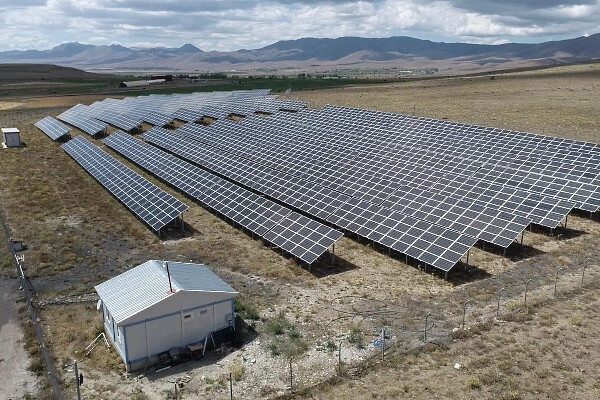
Azerbaijan's offshore wind capacity in the Caspian Sea is estimated at a staggering 157 gigawatts (GW), far exceeding its current total power capacity of 8 GW. The sun-drenched Aran region offers similar promise for solar energy. However, these resources remain largely untapped.

The government's commitment to renewable energy, exemplified by a 2030 target of 30% renewable power generation, contrasts sharply with the slow pace of project implementation. The 240-megawatt Shafag Solar Power Plant, announced in 2020, only commenced construction in late 2024, with completion expected in 2026. Similarly, offshore wind farm development in the Caspian Sea has yet to materialize, despite extensive feasibility studies.

Several factors contribute to this inertia. Primarily, the government's preference for maintaining control over the energy sector, mirroring its dominance in oil and gas, stifles private investment and market competition. Bureaucratic hurdles, an unclear legal framework, and a lack of competitive electricity markets further impede progress.

The 2021 renewable energy law, intended to liberalize the sector, still grants the state significant control through auction and tariff systems. This centralized approach contrasts with decentralized models in countries like Denmark, where local authorities play a crucial role in renewable project development.

Economic considerations also play a role. Azerbaijan's economy heavily relies on oil and gas revenues, which fund nearly half the state budget. Renewable energy projects, with their high upfront costs and long-term returns, are less appealing in comparison. Furthermore, the absence of robust incentives for businesses and individuals to adopt renewable solutions hinders widespread adoption.

Political factors are equally significant. The decentralized nature of renewable energy, which empowers local communities and businesses, challenges Azerbaijan’s authoritarian model. Unlike state-controlled oil and gas, solar, wind, and hydro projects could reduce the government’s leverage over economic activity.

Despite international pressure and commitments to "green energy" initiatives, Azerbaijan continues to prioritize fossil fuels. The government’s focus on natural gas exports to the European Union and plans to increase fossil fuel production over the next decade underscore this preference.

The vast renewable potential of the Caspian Sea and the Aran region presents a significant opportunity for Azerbaijan to diversify its energy mix and reduce its reliance on fossil fuels. However, realizing this potential requires a fundamental shift in government policy, embracing market liberalization, and fostering private sector participation. Without these changes, Azerbaijan risks missing out on its renewable energy future.

[Copyright (c) Global Economic Times. All Rights Reserved.]

  • #globaleconomictimes
  • #글로벌이코노믹타임즈
  • #한국
  • #중기청
  • #재외동포청
  • #외교부
  • #micorea
  • #mykorea
  • #newsk
  • #nammidonganews
  • #singaporenewsk
Desk
Desk

Popular articles

  • The Coronation of a New Queen: Kim Gil-li Clinches Double Gold, While a Tearful Farewell Marks the End of an Era

  • US House Probes Coupang Over ‘Discriminatory’ Korean Regulations: Potential Catalyst for Section 301 Investigation?

  • South Korea’s Bakery Giants Slash Prices as Government Ramps Up Pressure on Food Inflation

I like it
Share
  • Facebook
  • X
  • Kakaotalk
  • LINE
  • BAND
  • NAVER
  • https://www.globaleconomictimes.kr/article/1065596512146570 Copy URL copied.
Comments >

Comments 0

Weekly Hot Issue

  • Coway Clinches Top Honor at "Water Taste Awards" for 7th Consecutive Year
  • HP Targets Korea as Strategic Hub for 'Edge AI' Expansion, Seeking Startup Partnerships
  • Pearl Abyss’s 'Crimson Desert' Shatters Records with 2 Million Copies Sold on Day One
  • "BTS Over Books?" Indian Academies Issue Emergency Notices as Students Plot Mass Absences for Comeback Live
  • Naver to Shut Down Men's Fashion Service 'MR.' to Launch Expanded AI-Driven Fashion Platform
  • JBNU and SKKU Researchers Achieve Breakthrough in "Dream Material" MXene, Setting New World Records in Performance

Most Viewed

1
An Open Letter to BTS On the Eve of a Historic Performance
2
From Industrial Capital to Tourism Mecca... Ulsan Makes a Bold Move with ‘Experiential Content’ in 2026
3
Ko Sang-goo, President of World Federation of Korean Associations, Elected as First Private Sector Chair of World Korean Community Leaders Convention
4
It is Time for BTS’s Fandom, ARMY, to Step Forward
5
Korean Stock Market Plunges: Circuit Breaker and Sidecar Triggered Amid Geopolitical Crisis
광고문의
임시1
임시3
임시2

Hot Issue

Vishay Unveils Ultra-Compact 0404 RGB LED with Independent Chip Control for Enhanced Color Precision

Coway Clinches Top Honor at "Water Taste Awards" for 7th Consecutive Year

AI Medical Ecosystem in Focus: KIMES 2026 Opens in Seoul as Global Healthcare Hub

Netanyahu Declares Decisive Blow to Iran’s Nuclear and Missile Programs, Signals Early End to War

Let’s recycle the old blankets in Jeju Island’s closet instead of incinerating them.

Global Economic Times
korocamia@naver.com
CEO : LEE YEON-SIL
Publisher : KO YONG-CHUL
Registration number : Seoul, A55681
Registration Date : 2024-10-24
Youth Protection Manager: KO YONG-CHUL
Singapore Headquarters
5A Woodlands Road #11-34 The Tennery. S'677728
Korean Branch
Phone : +82(0)10 4724 5264
#304, 6 Nonhyeon-ro 111-gil, Gangnam-gu, Seoul
Copyright © Global Economic Times All Rights Reserved
  • 에이펙2025
  • APEC2025가이드북TV
  • 독도는우리땅
Search
Category
  • All articles
  • Synthesis
  • World
  • Business
  • Industry
  • ICT
  • Distribution Economy
  • Well+Being
  • Travel
  • Eco-News
  • Education
  • Korean Wave News
  • Opinion
  • Arts&Culture
  • Sports
  • People & Life 
    • 전체
    • International Student Report
    • With Ambassador
  • Column 
    • 전체
    • Cho Kijo Column
    • Cherry Garden Story
    • Ko Yong-chul Column
    • Kim Seul-Ong Column
    • Lee Yeon-sil Column
  • Photo News
  • New Book Guide
  • Multicultural News
  • Jobs & Workers