• 2026.03.23 (Mon)
  • All articles
  • LOGIN
  • JOIN
Global Economic Times
fashionrunwayshow2026
  • Synthesis
  • World
  • Business
  • Industry
  • ICT
  • Distribution Economy
  • Well+Being
  • Travel
  • Eco-News
  • Education
  • Korean Wave News
  • Opinion
  • Arts&Culture
  • Sports
  • People & Life
    • International Student Report
    • With Ambassador
  • Column
    • Cho Kijo Column
    • Cherry Garden Story
    • Ko Yong-chul Column
    • Kim Seul-Ong Column
    • Lee Yeon-sil Column
  • Photo News
  • New Book Guide
MENU
 
Home > World

Sudan's War: Hospitals Crumble as Doctors Battle Trauma and Starvation

Eugenio Rodolfo Sanabria Reporter / Updated : 2024-12-18 16:43:59
  • -
  • +
  • Print

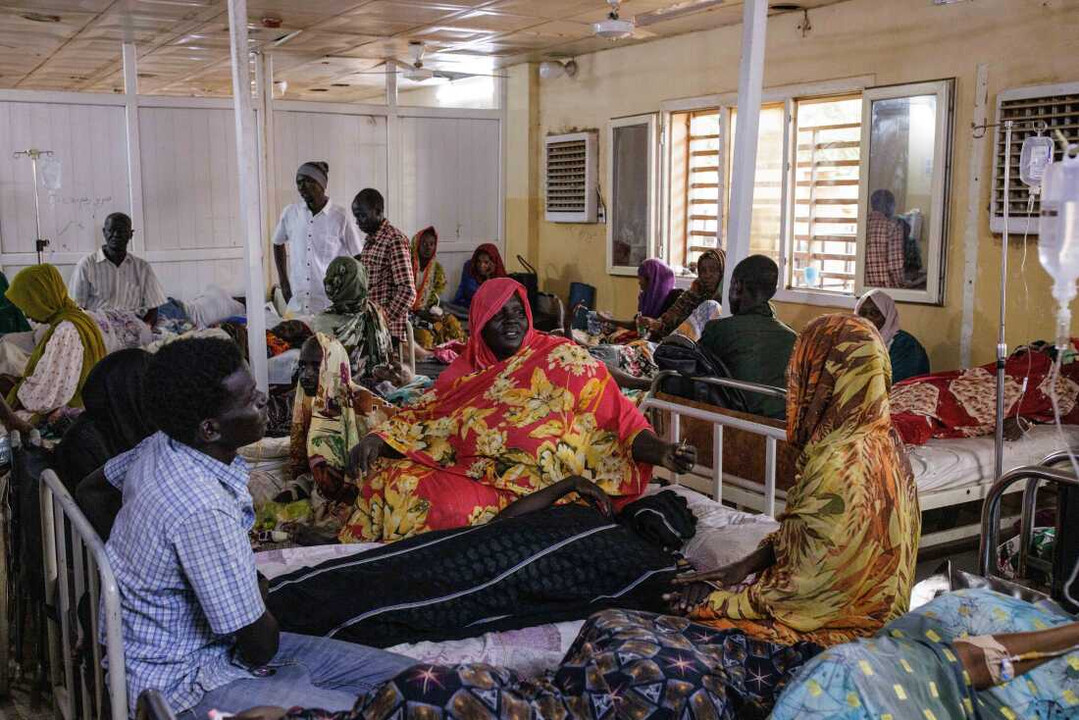
CAIRO, Egypt - In the face of relentless gunfire and shelling, Sudanese doctors like Mohamed Moussa are grappling with a devastating humanitarian crisis. More than a year and a half into the brutal conflict between the Sudanese army and the Rapid Support Forces (RSF), hospitals have become battlegrounds, leaving healthcare workers on the frontlines of a shattered system.

The war has inflicted a horrific toll on the civilian population. Hospitals are overwhelmed with patients suffering from gunshot wounds, burns, and amputations, including children as young as four months old. Medical facilities themselves have been repeatedly targeted, with bombings and shelling forcing many to close.

The situation is dire across the country. In North Darfur, a recent drone attack killed nine at a major hospital, while in famine-hit areas, aid organizations have been forced to evacuate their field hospitals.

Satellite imagery reveals the extent of the damage: nearly half of Khartoum's hospitals have suffered visible damage since the war began. The World Health Organization has documented 119 confirmed attacks on healthcare facilities, and the national doctors' union estimates that up to 90% of medical facilities in conflict zones have been forced to shut down.

Both sides of the conflict have been implicated in these attacks. The RSF has raided hospitals, while the army has conducted airstrikes on medical facilities. The targeting of healthcare workers is a grave concern, with 78 medical professionals killed since the war began.

The humanitarian crisis extends beyond the immediate impact of the war. With millions facing acute hunger, hospitals are now grappling with a surge of severely malnourished children.

The situation is dire, and the international community must urgently increase support for medical facilities in Sudan. Without immediate action, the already limited healthcare system faces a rapid deterioration.

[Copyright (c) Global Economic Times. All Rights Reserved.]

  • #globaleconomictimes
  • #koyongchul
  • #cherrylee
  • #seoulkorea
  • #periodicoeconomico
  • #글로벌이코노믹타임즈
  • #GET
  • #GETtv
  • #liderdel
Eugenio Rodolfo Sanabria Reporter

Popular articles

  • China’s Strategic Gold Rush: Beijing Amasses Reserves for 16th Straight Month Amid Dollar Uncertainty

  • Harnessing Taiwan’s soft power

  • AI Overlords or Digital Doomsday? 95% of LLM Simulations End in Nuclear Strike

I like it
Share
  • Facebook
  • X
  • Kakaotalk
  • LINE
  • BAND
  • NAVER
  • https://www.globaleconomictimes.kr/article/1065598991420793 Copy URL copied.
Comments >

Comments 0

Weekly Hot Issue

  • Coway Clinches Top Honor at "Water Taste Awards" for 7th Consecutive Year
  • HP Targets Korea as Strategic Hub for 'Edge AI' Expansion, Seeking Startup Partnerships
  • Pearl Abyss’s 'Crimson Desert' Shatters Records with 2 Million Copies Sold on Day One
  • "BTS Over Books?" Indian Academies Issue Emergency Notices as Students Plot Mass Absences for Comeback Live
  • Naver to Shut Down Men's Fashion Service 'MR.' to Launch Expanded AI-Driven Fashion Platform
  • JBNU and SKKU Researchers Achieve Breakthrough in "Dream Material" MXene, Setting New World Records in Performance

Most Viewed

1
An Open Letter to BTS On the Eve of a Historic Performance
2
From Industrial Capital to Tourism Mecca... Ulsan Makes a Bold Move with ‘Experiential Content’ in 2026
3
Ko Sang-goo, President of World Federation of Korean Associations, Elected as First Private Sector Chair of World Korean Community Leaders Convention
4
It is Time for BTS’s Fandom, ARMY, to Step Forward
5
Korean Stock Market Plunges: Circuit Breaker and Sidecar Triggered Amid Geopolitical Crisis
광고문의
임시1
임시3
임시2

Hot Issue

Vishay Unveils Ultra-Compact 0404 RGB LED with Independent Chip Control for Enhanced Color Precision

Coway Clinches Top Honor at "Water Taste Awards" for 7th Consecutive Year

AI Medical Ecosystem in Focus: KIMES 2026 Opens in Seoul as Global Healthcare Hub

Netanyahu Declares Decisive Blow to Iran’s Nuclear and Missile Programs, Signals Early End to War

Let’s recycle the old blankets in Jeju Island’s closet instead of incinerating them.

Global Economic Times
korocamia@naver.com
CEO : LEE YEON-SIL
Publisher : KO YONG-CHUL
Registration number : Seoul, A55681
Registration Date : 2024-10-24
Youth Protection Manager: KO YONG-CHUL
Singapore Headquarters
5A Woodlands Road #11-34 The Tennery. S'677728
Korean Branch
Phone : +82(0)10 4724 5264
#304, 6 Nonhyeon-ro 111-gil, Gangnam-gu, Seoul
Copyright © Global Economic Times All Rights Reserved
  • 에이펙2025
  • APEC2025가이드북TV
  • 독도는우리땅
Search
Category
  • All articles
  • Synthesis
  • World
  • Business
  • Industry
  • ICT
  • Distribution Economy
  • Well+Being
  • Travel
  • Eco-News
  • Education
  • Korean Wave News
  • Opinion
  • Arts&Culture
  • Sports
  • People & Life 
    • 전체
    • International Student Report
    • With Ambassador
  • Column 
    • 전체
    • Cho Kijo Column
    • Cherry Garden Story
    • Ko Yong-chul Column
    • Kim Seul-Ong Column
    • Lee Yeon-sil Column
  • Photo News
  • New Book Guide
  • Multicultural News
  • Jobs & Workers