• 2026.06.27 (Sat)
  • All articles
  • LOGIN
  • JOIN
Global Economic Times
fashionrunwayshow2026
  • Synthesis
  • World
  • Business
  • Industry
  • ICT
  • Distribution Economy
  • Well+Being
  • Travel
  • Eco-News
  • Education
  • Korean Wave News
  • Opinion
  • Arts&Culture
  • Sports
  • People & Life
    • International Student Report
    • With Ambassador
  • Column
    • Cho Kijo Column
    • Cherry Garden Story
    • Ko Yong-chul Column
    • Kim Seul-Ong Column
    • Lee Yeon-sil Column
  • Photo News
  • New Book Guide
MENU
 
Home > ICT

Masayoshi Son: AI-Driven Cyber Threats Pose "Worst Crisis for Japan Since the Black Ships"

Yim Kwangsoo Correspondent / Updated : 2026-06-22 16:59:34
  • -
  • +
  • Print


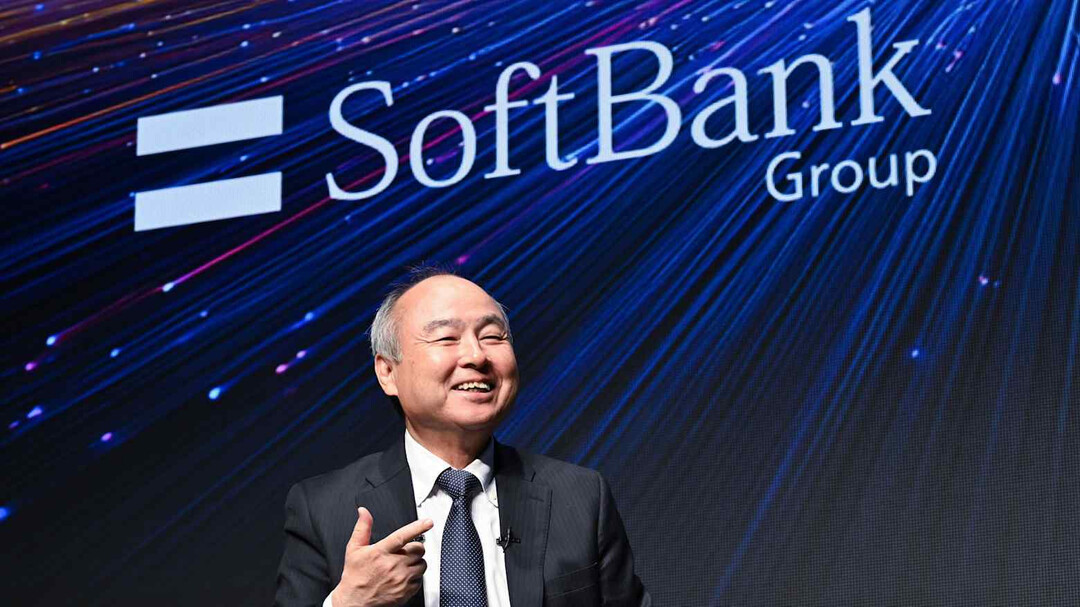
Masayoshi Son, the chairman of SoftBank Group, has sounded a grave alarm regarding the rapidly evolving landscape of artificial intelligence. He warned that the current cyber threats posed by advanced AI are the most severe national crisis Japan has faced since the arrival of the "Black Ships" in the 19th century. This striking comparison underscores the magnitude of the threat, suggesting that AI-driven hacking risks could jeopardize Japan’s national stability to the same extent that the arrival of U.S. warships in 1853 forced the end of Japan’s isolationist policy and triggered its modernization.

The urgency of this warning was highlighted during a business event in Tokyo on June 16, as reported by Bloomberg columnist Catherine Thorbecke. SoftBank, in collaboration with OpenAI, is actively introducing AI-based security and diagnostic systems to major Japanese corporations, emphasizing the critical need for proactive defense.

The catalyst for this heightened anxiety is the emergence of Anthropic’s latest AI model, "Mythos," which was unveiled in April. Mythos possesses the capability to identify "zero-day vulnerabilities"—security gaps previously unknown even to the human developers who built the systems—at unprecedented speeds. The prospect of such powerful technology being weaponized by malicious actors has ignited fears of widespread, sophisticated cyber-attacks.

Japan is uniquely vulnerable in this regard. Data from S&P and IBM reveals that in 2024, Japanese companies were the targets of 22.4% of global cyber-attacks, surpassing the U.S. (20.6%), Saudi Arabia (6.3%), and the U.K. (6.0%). This disproportionate targeting is attributed to several factors: the reliance on aging legacy IT infrastructure, the high concentration of lucrative manufacturing targets, and a chronic shortage of skilled cybersecurity professionals.

Given these weaknesses, there is a mounting fear that AI-based hacking could devastate the Japanese economy. Critics have pointed out that while relying on U.S.-led AI technology may create a new form of dependency, Japan has no choice but to make swift, decisive national actions. Thorbecke suggests that Japan must leverage its position as a key ally to secure technical support from the United States to fortify its defenses.

Furthermore, the consensus among experts is that cybersecurity can no longer be treated as a trivial line item in individual corporate budgets. Instead, it must be addressed as critical national infrastructure. Thorbecke emphasizes, "Japan must treat cybersecurity with the same level of seriousness as preparing for natural disasters like earthquakes or tsunamis." This includes establishing shared standards, government-subsidized security frameworks, and robust information-sharing networks among corporations and the state.

The 19th-century Black Ship incident served as a "technological shock" that fundamentally altered the course of Japanese history. Today, the threat of AI-driven cyber-attacks is being interpreted as a modern equivalent. For Japan, the challenge is not merely technological but existential—a call to overhaul its national security strategy before the new "Black Ships" of the digital age leave the nation vulnerable to irrevocable change. As Japan stands at this technological crossroads, the need for a unified, national response has never been more critical.

[Copyright (c) Global Economic Times. All Rights Reserved.]
  • #Hormuz Impasse
  • #globaleconomictimes
  • #micorea
  • #mykorea
  • #nammidonganews
  • #singaporenewsk
  • #Samsung
  • #Daewoo
  • #Hyos
Yim Kwangsoo Correspondent

Popular articles

  • Zeekr Targets 2,000 Sales for '7X' EV in South Korea This Year

  • Hyundai Motor Bets on ‘The New Grandeur’ to Jumpstart Sluggish Domestic Sales

  • Nvidia CEO Jensen Huang Lights Up Seoul with a 'GPU-Class' First Pitch at Jamsil Baseball Stadium

I like it
Share
  • Facebook
  • X
  • Kakaotalk
  • LINE
  • BAND
  • NAVER
  • https://www.globaleconomictimes.kr/article/1065599894119688 Copy URL copied.
Comments >

Comments 0

Weekly Hot Issue

  • BYD Unveils First Plug-in Hybrid ‘Sealion 6’ in Korea, Targeting Eco-Friendly Market at 37.5 Million Won 
  • Kia’s Strategic Pivot: Accelerating Electrification Through SDV, PBV, and EREV Innovation
  • Devastating Twin Earthquakes Strike Venezuela: Death Toll Rises Amid Humanitarian Crisis
  • Hyundai Motor Prioritizes "Customer Experience" Over Pricing: Aiming for Lifelong Loyalty with the New Avante
  • South Korea's Path to Round of 32 Grows Perilous Following Australia-Paraguay Draw
  • The True Face of Our Politics After Stripping Away the Mask of Fairness

Most Viewed

1
[In-depth Report] The Islamic ‘Halal Barrier’ Just Around the Corner… The Silent Screams of K-Beauty SMEs
2
Asking about the Future of ‘Hangeul City Ulsan’… Special Lecture by Novelist Kim Jin-myung to be Held
3
Embassy of Pakistan in Seoul Hosts Commemorative Event for the 150th Birth Anniversary of Muhammad Ali Jinnah
4
KOSPI Hits Historic 9,300 Milestone as Market Cap Surpasses 8,000 Trillion Won
5
'K-Medicine' Sweep Drives Foreign Medical Spending in Korea to Record High of 250 Billion Won
광고문의
임시1
임시3
임시2

Hot Issue

Devastating Twin Earthquakes Strike Venezuela: Death Toll Rises Amid Humanitarian Crisis

Political Debates Spark Over Semiconductor "Windfall" Redistribution

Google Play Hosts 'ChangGoo Alumni Day' to Accelerate Global Expansion for 760 Korean Startups

Government Slashes Petroleum Price Caps by 150 Won per Liter amid Easing Middle East Tensions

Fashion Runway Show 2026

Global Economic Times
korocamia@naver.com
CEO : LEE YEON-SIL
Publisher : KO YONG-CHUL
Registration number : Seoul, A55681
Registration Date : 2024-10-24
Youth Protection Manager: KO YONG-CHUL
Singapore Headquarters
5A Woodlands Road #11-34 The Tennery. S'677728
Korean Branch
Phone : +82(0)10 4724 5264
#304, 6 Nonhyeon-ro 111-gil, Gangnam-gu, Seoul
Copyright © Global Economic Times All Rights Reserved
  • 향기네무료급식
  • BCB부천방송
  • 반달곰 프로젝트
Search
Category
  • All articles
  • Synthesis
  • World
  • Business
  • Industry
  • ICT
  • Distribution Economy
  • Well+Being
  • Travel
  • Eco-News
  • Education
  • Korean Wave News
  • Opinion
  • Arts&Culture
  • Sports
  • People & Life 
    • 전체
    • International Student Report
    • With Ambassador
  • Column 
    • 전체
    • Cho Kijo Column
    • Cherry Garden Story
    • Ko Yong-chul Column
    • Kim Seul-Ong Column
    • Lee Yeon-sil Column
  • Photo News
  • New Book Guide
  • Multicultural News
  • Jobs & Workers