![[등록] 2026-09-01 15:48:31](/support/_updata/banner2/tl181982910_6749.png)


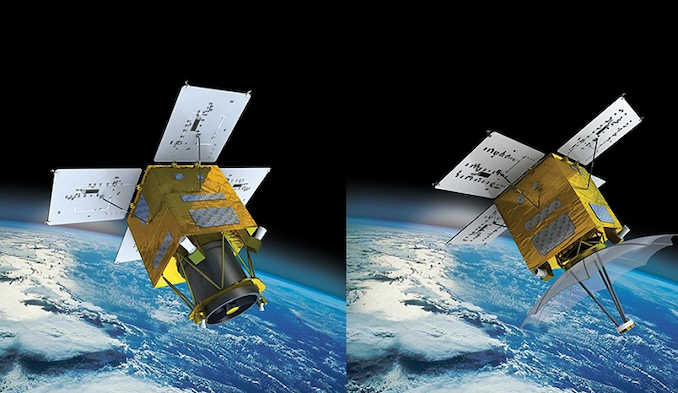
SEOUL – South Korea has officially expanded its "space territory" as the Next-Generation Medium Satellite No. 2 (CAS500-2) successfully reached orbit on May 3. This milestone signifies more than just a successful launch; it marks a pivotal shift in the nation’s aerospace strategy, transitioning from government-led research to a private-sector-driven "New Space" era.
Developed under the leadership of Korea Aerospace Industries (KAI), the CAS500-2 is the second fruit of a national project aimed at localizing a 500kg-class standardized satellite platform. By securing this indigenous technology, South Korea has established a mass-production system that significantly reduces development time and costs. Most impressively, the 0.5m-resolution electro-optical payload—the "eye" of the satellite—achieved near-total localization through collaboration with domestic firms like Hanwha Systems and Genohco.
The satellite will work in tandem with its predecessor, CAS500-1, to provide high-precision surveillance for national land management and disaster response. From monitoring wildfires and floods to updating digital maps, the "K-Satellite" duo will serve as a vital asset for national safety.
This success follows a period of geopolitical uncertainty. Originally slated for a 2022 launch via a Russian rocket, the mission faced indefinite delays due to the Russia-Ukraine war. After four years of waiting and a strategic switch to SpaceX, the successful deployment proves the resilience of Korea's aerospace sector.
Looking ahead, the Korea AeroSpace Administration (KASA) plans to target the global market. By leveraging the reliability of its standardized platform, Korea aims to export satellite technology to nations such as Saudi Arabia and Peru, mirroring its previous success in aircraft exports. With CAS500-4 scheduled for launch this July, the momentum for "K-Satellite" shows no signs of slowing down.
[Copyright (c) Global Economic Times. All Rights Reserved.]