• 2025.12.11 (Thu)
  • All articles
  • LOGIN
  • JOIN
Global Economic Times
APEC2025KOREA가이드북
  • Synthesis
  • World
  • Business
  • Industry
  • ICT
  • Distribution Economy
  • Well+Being
  • Travel
  • Eco-News
  • Education
  • Korean Wave News
  • Opinion
  • Arts&Culture
  • Sports
  • People & Life
  • Column
    • Cho Kijo Column
    • Lee Yeon-sil Column
    • Ko Yong-chul Column
    • Cherry Garden Story
  • Photo News
  • New Book Guide
MENU
 
Home > Column > Cherry Garden Story

Yeonpo-tang: A Korean Culinary Journey

Hwang Sujin Reporter / Updated : 2024-12-22 17:26:41
  • -
  • +
  • Print


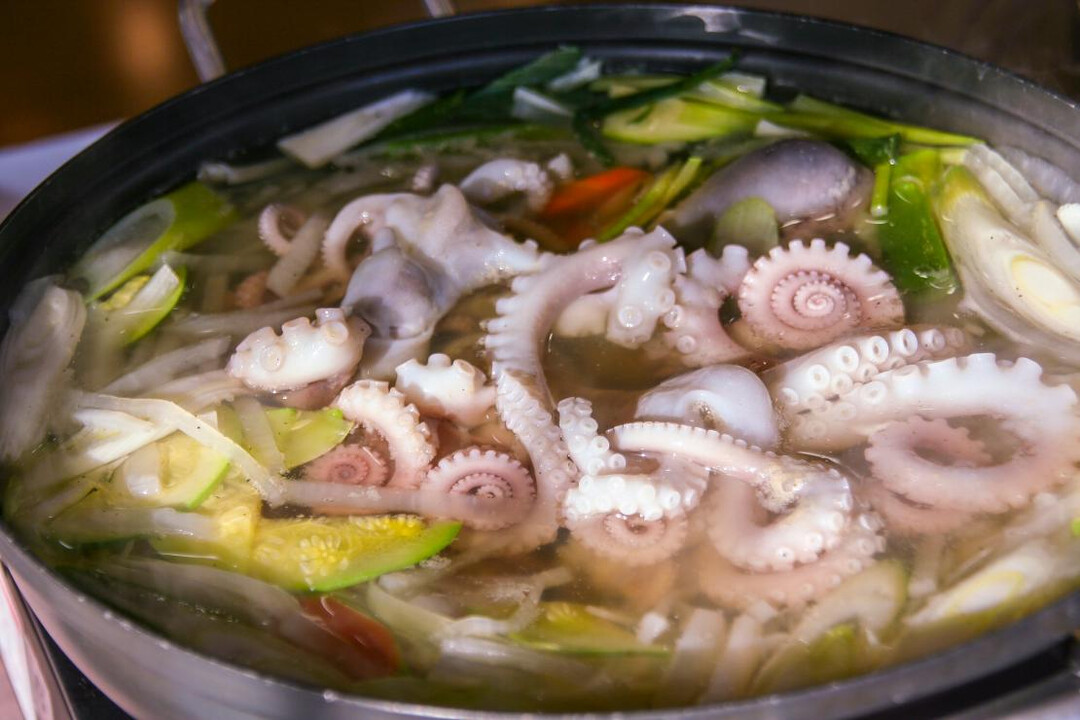
Seoul, South Korea – Yeonpo-tang, a beloved Korean dish, has a fascinating history that reflects the country's culinary evolution. While today it is most commonly associated with a hearty broth filled with tender octopus, its origins lie in a much simpler, and arguably more elegant, dish.

Traditionally, yeonpo-tang was a clear soup made primarily with tofu. The name itself, "yeonpo," translates to "soft foam," referring to the delicate texture of the tofu. Early recipes found in Korean cookbooks, such as "Seongbo Sanrim Gyeongje" and "Dongguk Sesigi," detail the preparation of this tofu-based soup.

So, how did we go from tofu soup to the octopus-centric dish we know today? The answer lies in the changing availability of ingredients and evolving tastes. As the popularity of octopus grew and its price became more accessible, it began to replace tofu as the star ingredient in many households. The result was a new version of yeonpo-tang that offered a more robust and flavorful experience.

How to Make Yeonpo-tang

While the ingredients may have changed over time, the core principles of yeonpo-tang remain the same: a flavorful broth and high-quality, fresh ingredients.

Ingredients:

Live octopus
Tofu (optional)
Various vegetables (such as enoki mushrooms, spinach, and zucchini)
Beef or chicken broth
Soy sauce
Sesame oil
Garlic
Green onions

Instructions:

Prepare the broth: Combine beef or chicken broth with soy sauce, sesame oil, minced garlic, and green onions. Bring to a boil, then reduce heat and simmer.
Blanch the octopus: Quickly blanch the live octopus in boiling water to tenderize.
Assemble the dish: Add the blanched octopus and desired vegetables to the simmering broth. Cook until the vegetables are tender.
Serve: Serve the yeonpo-tang hot, often accompanied by a bowl of steamed rice.

Whether you choose to follow the traditional tofu-based recipe or opt for the more modern octopus version, yeonpo-tang offers a delicious and satisfying meal that showcases the versatility of Korean cuisine.

[Copyright (c) Global Economic Times. All Rights Reserved.]

  • #globaleconomictimes
  • #koyongchul
  • #cherrylee
  • #seoulkorea
  • #periodicoeconomico
  • #글로벌이코노믹타임즈
  • #GET
  • #GETtv
  • #liderdel
Hwang Sujin Reporter

Popular articles

  • Massive Fire Engulfs E-Land Fashion Logistics Center in Cheonan, Causing Major Shipping Delays

  • Kimchi's Day Celebrated with a Glimpse into its Future

  • UNIQLO's Collaboration Strategy: Designer Fashion Meets Mass Appeal

I like it
Share
  • Facebook
  • X
  • Kakaotalk
  • LINE
  • BAND
  • NAVER
  • https://www.globaleconomictimes.kr/article/1065601448759672 Copy URL copied.
Comments >

Comments 0

Weekly Hot Issue

  • Won-Dollar Exchange Rate Rises to 7-Month High: South Korean Authorities Scramble to Stabilize Currency as Overseas Investment Surges
  • South Korea Confirmed as Co-Host of 2028 UN Ocean Conference (UNOC)
  • Netflix Stock Plummets 10% on Credit Downgrade Fears Following Blockbuster Warner Bros. Acquisition
  • Tech Tensions Flare: DeepSeek Allegedly Smuggles Banned NVIDIA Blackwell Chips for New AI Model
  • From Court to Content: French Tennis Star Océane Dodin Trades Racquet for OnlyFans, Eyes $5M in a Year
  • Alibaba's AI Ascent: Stock Soars 70% as Tech Giant Pivots Beyond E-commerce

Most Viewed

1
Korean War Ally, Reborn as an 'Economic Alliance' Across 70 Years: Chuncheon's 'Path of Reciprocity,' a Strategic
2
A Garden Where the City's Rhythm Stops: Dongdaemun's 'Cherry Garden', Cooking Consideration and Diversity
3
The Sudden Halt of Ayumi Hamasaki's Shanghai Concert: Unpacking the Rising Sino-Japanese Tensions
4
Alliance in a Dilemma: The Fallout of Trump's Advice to Takaichi Not to 'Provoke Taiwan' 
5
The Paradox of the 'Juvenile Offender' (Chokbeop Sonyeon): Impunity or Unfinished Rehabilitation?
광고문의
임시1
임시3
임시2

Hot Issue

Tech Tensions Flare: DeepSeek Allegedly Smuggles Banned NVIDIA Blackwell Chips for New AI Model

Samsung SDI Secures Multi-Trillion Won LFP Battery Deal, Marking Full-Scale Entry into US ESS Market

Netflix Stock Plummets 10% on Credit Downgrade Fears Following Blockbuster Warner Bros. Acquisition

LG Innotek Develops Eco-Friendly Next-Gen Smart IC Substrate, Reducing Carbon Emissions by Half

Let’s recycle the old blankets in Jeju Island’s closet instead of incinerating them.

Global Economic Times
korocamia@naver.com
CEO : LEE YEON-SIL
Publisher : KO YONG-CHUL
Registration number : Seoul, A55681
Registration Date : 2024-10-24
Youth Protection Manager: KO YONG-CHUL
Singapore Headquarters
5A Woodlands Road #11-34 The Tennery. S'677728
Korean Branch
Phone : +82(0)10 4724 5264
#304, 6 Nonhyeon-ro 111-gil, Gangnam-gu, Seoul
Copyright © Global Economic Times All Rights Reserved
  • 에이펙2025
  • APEC2025가이드북TV
  • 독도는우리땅
Search
Category
  • All articles
  • Synthesis
  • World
  • Business
  • Industry
  • ICT
  • Distribution Economy
  • Well+Being
  • Travel
  • Eco-News
  • Education
  • Korean Wave News
  • Opinion
  • Arts&Culture
  • Sports
  • People & Life
  • Column 
    • 전체
    • Cho Kijo Column
    • Lee Yeon-sil Column
    • Ko Yong-chul Column
    • Cherry Garden Story
  • Photo News
  • New Book Guide
  • Multicultural News
  • Jobs & Workers