![[등록] 2026-09-01 15:48:31](/support/_updata/banner2/tl181982910_6749.png)


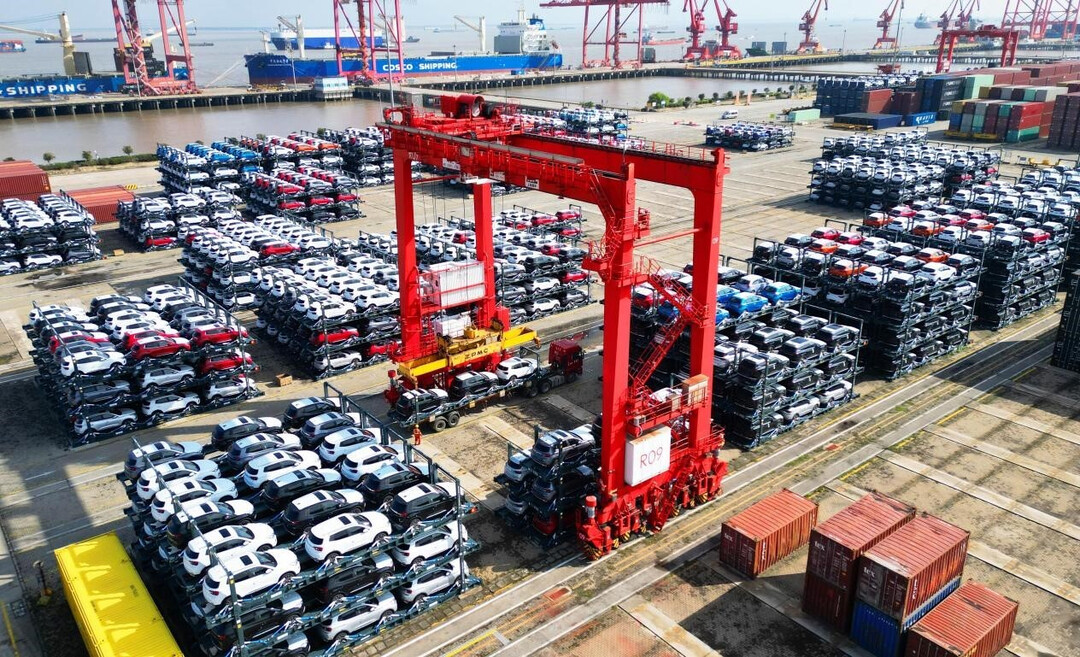
As high international oil prices reshape global consumer behavior, Chinese automakers are aggressively accelerating their overseas expansion to offset a cooling domestic market. Major players including BYD, Chery, and Geely reported record-breaking export figures for April, signaling a strategic shift toward global dominance amidst geopolitical volatility.
According to industry data released on May 3, the export volume for Geely Automobile skyrocketed by 245% year-on-year, reaching 83,186 units. Chery Automobile and BYD followed suit with increases of 102.4% and 71%, respectively. For these companies, exports now represent a critical share of total sales; Chery’s overseas shipments now account for a staggering 70.6% of its total volume.
The primary catalyst for this surge is the rising cost of fossil fuels. As Middle East tensions drive up gasoline prices, the economic appeal of Electric Vehicles (EVs) has been revitalized. Benchmark Mineral Intelligence (BMI) noted that global EV demand saw a distinct rebound following recent geopolitical conflicts, with Chinese EVs in Europe seeing a 78% jump in sales during March.
However, this international success comes as a necessary defense against a crumbling domestic front. In China, the termination of government subsidies and a general economic slowdown have led to a 24% drop in retail passenger car sales this April. BYD, despite its export prowess, saw its total sales fall 15.5%—marking eight consecutive months of negative growth—while its Q1 net profit plunged 55% to 4.09 billion yuan.
"The transition to electric mobility is an irreversible trend," noted Xu Tianchen, an economist at the EIU. "Chinese brands, equipped with price competitiveness and established tech stacks, are positioned to capture the lion's share of the next 10 million units of global demand."
Despite the optimism, the path is fraught with challenges. The "Great Wall of Tariffs" is rising in the U.S. and the EU, where protectionist policies threaten to blunt the price advantages of Chinese manufacturers. Analysts warn that to survive long-term, these companies must transition from being "low-cost leaders" to "technology innovators" to bypass political and trade barriers.
For now, the strategy is clear: Go Global. With BYD setting an ambitious export target of 1.5 million units for 2026, the battle for the future of the automotive industry has officially moved beyond China's borders.
[Copyright (c) Global Economic Times. All Rights Reserved.]