• 2026.03.22 (Sun)
  • All articles
  • LOGIN
  • JOIN
Global Economic Times
fashionrunwayshow2026
  • Synthesis
  • World
  • Business
  • Industry
  • ICT
  • Distribution Economy
  • Well+Being
  • Travel
  • Eco-News
  • Education
  • Korean Wave News
  • Opinion
  • Arts&Culture
  • Sports
  • People & Life
    • International Student Report
    • With Ambassador
  • Column
    • Cho Kijo Column
    • Cherry Garden Story
    • Ko Yong-chul Column
    • Kim Seul-Ong Column
    • Lee Yeon-sil Column
  • Photo News
  • New Book Guide
MENU
 
Home > Business

DNIT Simplifies Registration Procedures for Customs-Related Parties

Hwang Sujin Reporter / Updated : 2025-06-06 17:38:52
  • -
  • +
  • Print

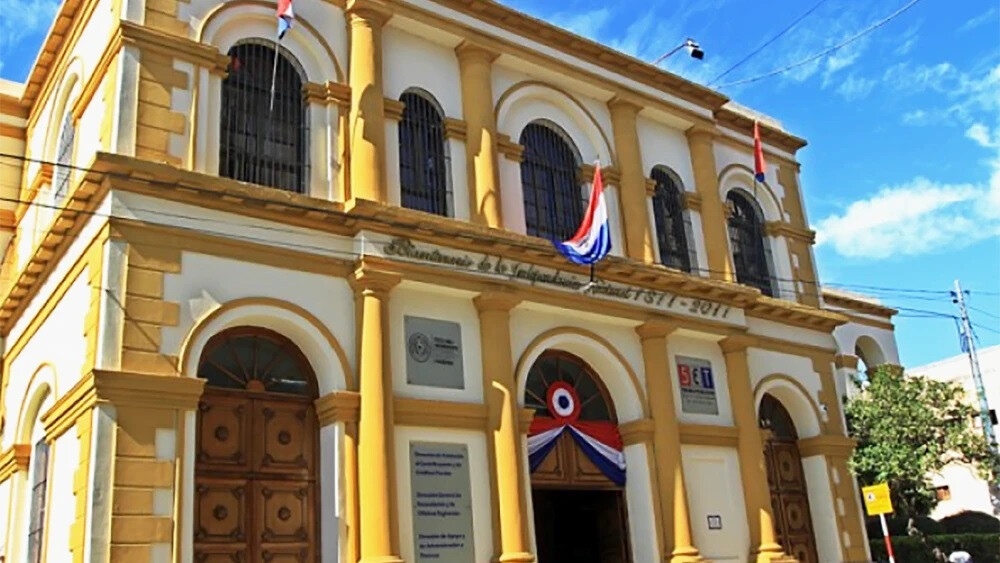
The Paraguayan Undersecretariat of State for Taxation (DNIT) is significantly streamlining the registration procedures for individuals and companies engaged in customs-related activities. This new system, effective August 1, 2025, aims to maximize taxpayer convenience by making the registration, renewal, and information update processes more efficient and unifying related regulations.

On June 5, 2025, the DNIT officially announced changes to the registration method for customs-related parties through Resolution 30/2025. As a result, customs brokers, importers, exporters, and all other entities performing customs-related tasks will be able to complete the registration process more easily. This overhaul focuses on reducing unnecessary procedures and simplifying the documents taxpayers are required to submit. In particular, it is designed to prevent duplicate data entry by actively utilizing information already registered in the 'Marangatu,' the National Tax Office's tax management system, thereby significantly shortening the registration time.

 
Accelerating Digitalization Through the Marangatu System

The core of the new registration procedure is digitalization through the Marangatu system. Taxpayers can complete registration, renewal, or information updates simply by accessing the system and filling out a digital form. This eliminates the hassle of in-person visits or manual document submission, allowing for convenient processing anytime, anywhere. The DNIT plans to provide training programs to help taxpayers smoothly adapt to the new system. This will enable users to familiarize themselves with how to complete digital forms and utilize the system, ensuring error-free registration. A DNIT official emphasized, "This measure will significantly contribute to saving taxpayers time and costs in processing customs-related tasks."

 
Enhancing Administrative Efficiency Through Technology Utilization

This institutional reform goes beyond mere procedural simplification, aligning with the DNIT's long-term goal of enhancing administrative efficiency through technology utilization. The DNIT seeks to integrate tax and customs-related information and actively adopt the latest technologies to improve the quality of taxpayer services. These efforts are expected to increase the accuracy of taxpayer data, reduce potential errors, and ultimately contribute to a more transparent and efficient customs administration.

 
Strengthening Digital Infrastructure Through BID Loan Introduction

Meanwhile, the DNIT is pursuing the introduction of a $30 million loan from the Inter-American Development Bank (BID). This loan will be entirely invested in strengthening the DNIT's technological infrastructure, with a particular focus on protecting taxpayer data from cyberattacks and enhancing system security. The loan agreement was recently approved by the Senate and is currently awaiting review by the Chamber of Deputies. This loan will support the DNIT's digital transformation for six years, until 2030, and is expected to play a crucial role in modernizing and securing Paraguay's tax and customs system. Such investments will support digital transformation efforts, like the simplification of customs-related party registration procedures, providing an essential foundation for the DNIT to become a future-oriented tax administration agency.

 
Overall, the DNIT's current measures demonstrate its commitment to modernizing Paraguay's customs administration, centered on three pillars: administrative simplification, technology adoption, and digital infrastructure strengthening. These efforts are expected to provide better services to taxpayers and contribute to increased national economic efficiency.

[Copyright (c) Global Economic Times. All Rights Reserved.]

  • #NATO
  • #OTAN
  • #OECD
  • #G20
  • #globaleconomictimes
  • #Korea
  • #UNPEACEKOR
  • #micorea
  • #mykorea
  • #UN
  • #UNESCO
  • #nammidonganews
  • #sin
Hwang Sujin Reporter

Popular articles

  • IVE Sheds "Princess" Persona for Darker Horizon with 2nd Full-Length Album 'REVIVE+'

  • BLACKPINK Becomes First Artist to Surpass 100 Million YouTube Subscribers, Receiving the ‘Red Diamond’ Award

  • Kim Jong-un Signals "New Leap Forward" at 9th Party Congress, Buoyed by Strengthening Russia Ties

I like it
Share
  • Facebook
  • X
  • Kakaotalk
  • LINE
  • BAND
  • NAVER
  • https://www.globaleconomictimes.kr/article/1065602278644943 Copy URL copied.
Comments >

Comments 0

Weekly Hot Issue

  • Coway Clinches Top Honor at "Water Taste Awards" for 7th Consecutive Year
  • HP Targets Korea as Strategic Hub for 'Edge AI' Expansion, Seeking Startup Partnerships
  • Pearl Abyss’s 'Crimson Desert' Shatters Records with 2 Million Copies Sold on Day One
  • "BTS Over Books?" Indian Academies Issue Emergency Notices as Students Plot Mass Absences for Comeback Live
  • Naver to Shut Down Men's Fashion Service 'MR.' to Launch Expanded AI-Driven Fashion Platform
  • JBNU and SKKU Researchers Achieve Breakthrough in "Dream Material" MXene, Setting New World Records in Performance

Most Viewed

1
An Open Letter to BTS On the Eve of a Historic Performance
2
From Industrial Capital to Tourism Mecca... Ulsan Makes a Bold Move with ‘Experiential Content’ in 2026
3
Ko Sang-goo, President of World Federation of Korean Associations, Elected as First Private Sector Chair of World Korean Community Leaders Convention
4
It is Time for BTS’s Fandom, ARMY, to Step Forward
5
Korean Stock Market Plunges: Circuit Breaker and Sidecar Triggered Amid Geopolitical Crisis
광고문의
임시1
임시3
임시2

Hot Issue

Vishay Unveils Ultra-Compact 0404 RGB LED with Independent Chip Control for Enhanced Color Precision

Coway Clinches Top Honor at "Water Taste Awards" for 7th Consecutive Year

AI Medical Ecosystem in Focus: KIMES 2026 Opens in Seoul as Global Healthcare Hub

Netanyahu Declares Decisive Blow to Iran’s Nuclear and Missile Programs, Signals Early End to War

Let’s recycle the old blankets in Jeju Island’s closet instead of incinerating them.

Global Economic Times
korocamia@naver.com
CEO : LEE YEON-SIL
Publisher : KO YONG-CHUL
Registration number : Seoul, A55681
Registration Date : 2024-10-24
Youth Protection Manager: KO YONG-CHUL
Singapore Headquarters
5A Woodlands Road #11-34 The Tennery. S'677728
Korean Branch
Phone : +82(0)10 4724 5264
#304, 6 Nonhyeon-ro 111-gil, Gangnam-gu, Seoul
Copyright © Global Economic Times All Rights Reserved
  • 에이펙2025
  • APEC2025가이드북TV
  • 독도는우리땅
Search
Category
  • All articles
  • Synthesis
  • World
  • Business
  • Industry
  • ICT
  • Distribution Economy
  • Well+Being
  • Travel
  • Eco-News
  • Education
  • Korean Wave News
  • Opinion
  • Arts&Culture
  • Sports
  • People & Life 
    • 전체
    • International Student Report
    • With Ambassador
  • Column 
    • 전체
    • Cho Kijo Column
    • Cherry Garden Story
    • Ko Yong-chul Column
    • Kim Seul-Ong Column
    • Lee Yeon-sil Column
  • Photo News
  • New Book Guide
  • Multicultural News
  • Jobs & Workers