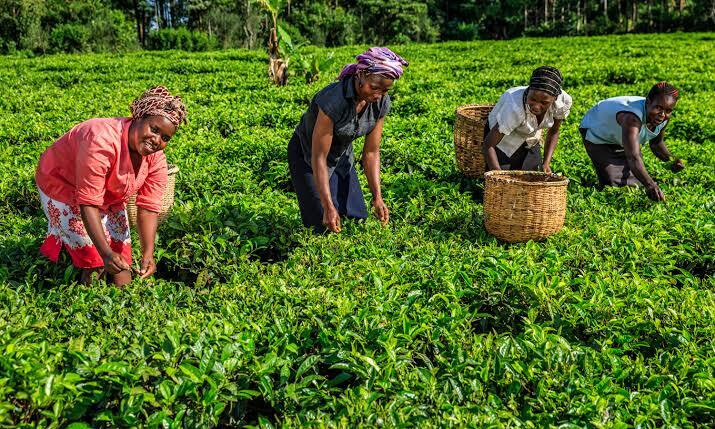
Recent global studies highlight that women farmers bear a disproportionate burden of climate change impacts while receiving only a fraction of adaptation funding.
The escalating severity of climate change has turned agriculture into one of the most volatile economic sectors worldwide. However, a growing body of international research reveals that the crisis carries a distinct gender imbalance. Although women make up nearly 40 percent of the global agricultural workforce, they remain largely sidelined when it comes to accessing vital financial support, land ownership, and climate resilience resources.
A Deepening Divide in Labor and Resources
A recent briefing published by the International Fund for Agricultural Development (IFAD) during the COP31 climate talks sheds light on systemic inequalities in rural regions. Titled "The Unfunded Half," the report highlights that female farmers routinely face barriers in acquiring stable land titles, modern farming inputs, and mobile banking services. Across 46 surveyed nations, men held superior land property rights in 40 of them. Furthermore, women made up nearly half (49 percent) of unpaid family farm laborers, compared to just 17 percent for men.
The disparity extends to daily workloads and earnings. In selected rural communities, women logged an average of 9.1 hours per day in combined paid and unpaid labor—outpacing their male counterparts, who averaged 7.3 hours. In wage-based farm labor, women earned an average of 82 cents for every dollar paid to men. Furthermore, financial inclusion remains a hurdle; women in developing economies are significantly less likely to possess mobile financial accounts, restricting their ability to secure capital quickly.
These foundational gaps critically undermine women’s capacity to withstand climate shocks. Without secure land rights or capital, implementing adaptive measures—such as purchasing drought-resistant seeds, setting up irrigation systems, or recovering from extreme weather—becomes exceedingly difficult. Consequently, farms managed by women display lower land-use productivity on average compared to those run by men.
The Heavy Cost of Climate Disasters on Women-Led Households
Data compiled by the Food and Agriculture Organization (FAO) further underscores the unequal toll of extreme weather. Analyzing tens of thousands of rural households across low- and middle-income regions, researchers found that female-headed households suffered greater income drops from heatwaves and floods than male-headed households—translating into billions of dollars in compounding economic losses globally.
Despite these heightened vulnerabilities, dedicated financial flows remain remarkably low. Out of tens of billions of dollars in international public climate finance directed toward agrifood systems, only a minor fraction specifically targets gender equality as a primary objective. Experts note that because private and domestic climate budgets rarely track or report gender-specific data, the true scope of inequality in local funding distribution remains obscured.
Pathways Forward: Smart Finance and Transparent Tracking
To correct course, international organizations advocate for targeted financial frameworks. Solutions include issuing specialized climate bonds that mandate gender-benefit metrics, deploying index-based micro-insurance to automatically compensate victims of extreme weather, and expanding microloans and loan guarantees channeled directly into accounts owned by women.
Successful models are already emerging on the ground. Initiatives like India's Self-Employed Women’s Association (SEWA) have demonstrated how automated weather-triggered insurance can swiftly deliver payouts directly to female workers during severe heatwaves, cushioning families against sudden economic shocks.
At the regional level, experts stress that institutional transparency is paramount. By enforcing gender-disaggregated data collection and integrating standardized policy markers, governments and financial institutions can accurately trace how effectively climate capital reaches women.
As countries prepare to submit updated national transparency reports under international climate frameworks, policymakers face mounting pressure to embed gender-responsive indicators into domestic adaptation strategies. Ensuring that climate resilience reaches every corner of the agricultural workforce, advocates argue, is no longer just an equity issue—it is an economic and ecological necessity.
[Copyright (c) Global Economic Times. All Rights Reserved.]