• 2026.03.22 (Sun)
  • All articles
  • LOGIN
  • JOIN
Global Economic Times
fashionrunwayshow2026
  • Synthesis
  • World
  • Business
  • Industry
  • ICT
  • Distribution Economy
  • Well+Being
  • Travel
  • Eco-News
  • Education
  • Korean Wave News
  • Opinion
  • Arts&Culture
  • Sports
  • People & Life
    • International Student Report
    • With Ambassador
  • Column
    • Cho Kijo Column
    • Cherry Garden Story
    • Ko Yong-chul Column
    • Kim Seul-Ong Column
    • Lee Yeon-sil Column
  • Photo News
  • New Book Guide
MENU
 
Home > Industry

Last Year's Net Profit from Rice Farming Drops by Over 24% Compared to the Previous Year

Min Gyu Mi Reporter / Updated : 2025-03-28 18:16:58
  • -
  • +
  • Print

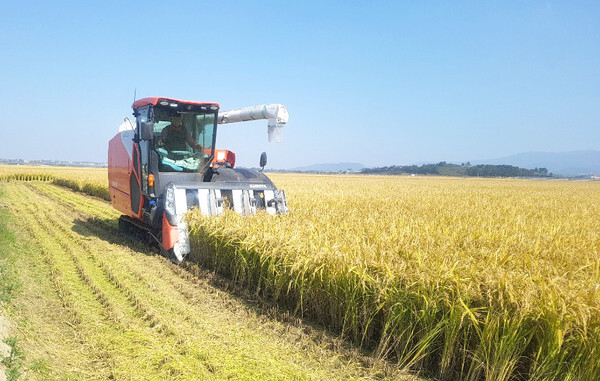
The net profit earned from rice farming last year decreased by over 24% compared to the previous year. This is attributed to increased production costs coupled with a decline in harvest yields due to abnormal weather conditions.

According to the '2024 Rice Production Cost Survey Results' released by Statistics Korea on the 28th, the net profit per 10a (1000㎡) last year was 271,000 won, a decrease of 87,000 won (24.3%) from the previous year. This marks the largest drop in two years since the 185,000 won (36.8%) decrease in 2022.

The net profit margin was 23.5%, a 5.5 percentage point decrease year-over-year. This is the lowest figure since 2016 (21.2%).

The sharp decline in profitability is due to falling farmgate rice prices and rising production costs. Farmgate rice prices fell by 8.9%, from 51,000 won per 20kg in 2023 to 46,000 won last year.

During the same period, the production cost of paddy rice per 10a increased by 7,000 won (0.8%) to 882,000 won. Direct production costs, which are expenses directly incurred in rice production, rose by 2.0% due to increases in contracted farming expenses and seedling costs (seed and seedling purchase costs). Indirect production costs decreased by 1.7% due to a fall in land service costs.

The production cost per 20kg of rice was 33,000 won, an increase of 845 won (2.6%). This is a result of the 1.7% decrease in rice production due to increased damage from pests and diseases caused by concentrated heavy rain and high temperatures during the grain-filling period, despite the rise in paddy rice production costs.

Imputed costs (self-labor costs, self-owned land service costs, and capital service costs) increased by 1.5% to 301,000 won per 10a. This increase is influenced by the rise in capital service costs due to higher interest rates.

[Copyright (c) Global Economic Times. All Rights Reserved.]

  • #globaleconomictimes
  • #글로벌이코노믹타임즈
  • #한국
  • #중기청
  • #재외동포청
  • #외교부
  • #micorea
  • #mykorea
  • #newsk
  • #nammidonganews
  • #singaporenewsk
Min Gyu Mi Reporter
Min Gyu Mi Reporter

Popular articles

  • ‘Culture Day’ Expanded to Every Wednesday; New Policy Set to Begin Next Month

  • Don't Toss Your Sweaty Gym Clothes Straight into the Washer: Here’s Why

  • S. Korea to Launch 'Disabled-Friendly Hospitals' Under First National Health Master Plan

I like it
Share
  • Facebook
  • X
  • Kakaotalk
  • LINE
  • BAND
  • NAVER
  • https://www.globaleconomictimes.kr/article/1065604525018264 Copy URL copied.
Comments >

Comments 0

Weekly Hot Issue

  • Coway Clinches Top Honor at "Water Taste Awards" for 7th Consecutive Year
  • HP Targets Korea as Strategic Hub for 'Edge AI' Expansion, Seeking Startup Partnerships
  • Pearl Abyss’s 'Crimson Desert' Shatters Records with 2 Million Copies Sold on Day One
  • "BTS Over Books?" Indian Academies Issue Emergency Notices as Students Plot Mass Absences for Comeback Live
  • Naver to Shut Down Men's Fashion Service 'MR.' to Launch Expanded AI-Driven Fashion Platform
  • JBNU and SKKU Researchers Achieve Breakthrough in "Dream Material" MXene, Setting New World Records in Performance

Most Viewed

1
An Open Letter to BTS On the Eve of a Historic Performance
2
From Industrial Capital to Tourism Mecca... Ulsan Makes a Bold Move with ‘Experiential Content’ in 2026
3
Ko Sang-goo, President of World Federation of Korean Associations, Elected as First Private Sector Chair of World Korean Community Leaders Convention
4
It is Time for BTS’s Fandom, ARMY, to Step Forward
5
Korean Stock Market Plunges: Circuit Breaker and Sidecar Triggered Amid Geopolitical Crisis
광고문의
임시1
임시3
임시2

Hot Issue

Vishay Unveils Ultra-Compact 0404 RGB LED with Independent Chip Control for Enhanced Color Precision

Coway Clinches Top Honor at "Water Taste Awards" for 7th Consecutive Year

AI Medical Ecosystem in Focus: KIMES 2026 Opens in Seoul as Global Healthcare Hub

Netanyahu Declares Decisive Blow to Iran’s Nuclear and Missile Programs, Signals Early End to War

Let’s recycle the old blankets in Jeju Island’s closet instead of incinerating them.

Global Economic Times
korocamia@naver.com
CEO : LEE YEON-SIL
Publisher : KO YONG-CHUL
Registration number : Seoul, A55681
Registration Date : 2024-10-24
Youth Protection Manager: KO YONG-CHUL
Singapore Headquarters
5A Woodlands Road #11-34 The Tennery. S'677728
Korean Branch
Phone : +82(0)10 4724 5264
#304, 6 Nonhyeon-ro 111-gil, Gangnam-gu, Seoul
Copyright © Global Economic Times All Rights Reserved
  • 에이펙2025
  • APEC2025가이드북TV
  • 독도는우리땅
Search
Category
  • All articles
  • Synthesis
  • World
  • Business
  • Industry
  • ICT
  • Distribution Economy
  • Well+Being
  • Travel
  • Eco-News
  • Education
  • Korean Wave News
  • Opinion
  • Arts&Culture
  • Sports
  • People & Life 
    • 전체
    • International Student Report
    • With Ambassador
  • Column 
    • 전체
    • Cho Kijo Column
    • Cherry Garden Story
    • Ko Yong-chul Column
    • Kim Seul-Ong Column
    • Lee Yeon-sil Column
  • Photo News
  • New Book Guide
  • Multicultural News
  • Jobs & Workers