![[등록] 2026-09-01 15:48:31](/support/_updata/banner2/tl181982910_6749.png)


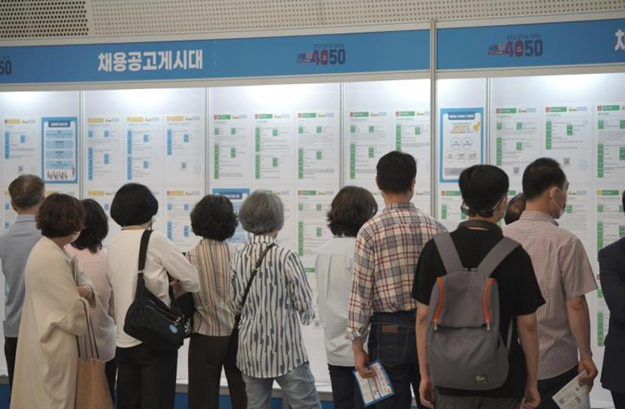
SEOUL, South Korea – South Korea's job market is experiencing an unprecedented tightening, with the number of new entrants and job movers declining for the second consecutive year, reaching the lowest levels since related statistics began in 2017. This simultaneous drop in both categories is a first, suggesting a rigid employment landscape.
According to the "2023 Job Mobility Statistics" released by Statistics Korea on June 4, the total number of registered employed individuals in 2023 was 26,145,000, an increase of 88,000 (0.3%) from 2022. Registered employed individuals are defined as wage and non-wage earners identified through administrative data reported to public institutions, such as the four major social insurance programs.
While the number of employees remaining with the same company increased, new entrants and job movers saw significant decreases. Those who maintained employment with the same company rose by 521,000 (2.9%) from the previous year, totaling 18,548,000.
Conversely, "new entrants"—individuals who were not registered in 2022 but became registered in 2023—amounted to 3,646,000, a decrease of 265,000 (6.8%) from the previous year. This marks the second consecutive year of decline for new entrants, shrinking to the smallest scale since the statistics began in 2017, and also representing the largest drop in absolute terms.
Similarly, "movers"—individuals who changed registered companies—also decreased to 3,951,000, down by 168,000 (4.1%) from the previous year. The simultaneous reduction in both new entrants and movers is an unprecedented event in the history of these statistics.
Understanding Job Mobility Trends
Among those who moved jobs, 72.4% transferred within the same company size category. A significant 81.3% of individuals moving from small and medium-sized enterprises (SMEs) relocated to other SMEs, while only 12.1% moved to large corporations. In contrast, 37.3% of those moving from large corporations found new positions within other large corporations, but a higher proportion, 56.5%, transitioned from large corporations to SMEs.
This trend of moving from large corporations to SMEs is partly attributed to older individuals re-entering the workforce after retirement, often accepting positions with reduced wages. This analysis is supported by the data on wage changes among job movers. Among wage earners who moved jobs, 38.4% transitioned to positions with lower wages, while 60.7% moved to jobs with increased wages.
When examining wage changes by age group, younger demographics showed a higher propensity for wage increases. Specifically, 64.7% of those aged 29 and under, 63.0% of those in their 30s, and 60.4% of those in their 40s experienced wage increases when moving jobs. This indicates that while overall job mobility is decreasing, younger workers are more likely to find better-paying opportunities when they do switch roles.
Limitations of the Data and Broader Economic Context
It is crucial to note that the Job Mobility Statistics are compiled using administrative data from social insurance and national tax records, focusing on registered workers aged 15 and above. This means that individuals not enrolled in social insurance or not reporting labor income are not included, leading to differences when compared to the employment figures from the Economically Active Population Survey, which covers a broader range of employed individuals, including those in the informal sector.
The overall decline in job market dynamism reflects broader economic challenges. Economic slowdowns typically lead to fewer job openings and a more cautious approach from both employers and potential employees. Companies may be less inclined to hire new staff or expand, while workers may be hesitant to leave stable positions, even if they are not ideal, due to uncertainty about finding new employment. This "wait-and-see" approach can further contribute to the observed stagnation.
Furthermore, demographic shifts, particularly an aging population and a declining birthrate, also play a role. As a larger proportion of the workforce approaches retirement age, and fewer young people enter the job market, the pool of new entrants naturally shrinks. While this doesn't fully explain the decrease in job movers, it does contribute to the overall impression of a less vibrant and more static labor force.
The government and policymakers will likely be closely monitoring these trends. A rigid labor market can hinder economic growth by limiting the efficient allocation of talent and potentially stifling innovation. Addressing these challenges may require a multi-faceted approach, including policies aimed at stimulating job creation, enhancing vocational training programs to improve labor mobility, and supporting older workers in their re-employment efforts. The current statistics paint a clear picture of a job market in need of revitalization and increased fluidity to ensure sustained economic health.
[Copyright (c) Global Economic Times. All Rights Reserved.]