• 2026.11.23 (Mon)
  • All articles
  • LOGIN
  • JOIN
Global Economic Times
한인동포뉴스(상단)
  • Synthesis
  • World
  • Business
  • Industry
  • ICT
  • Distribution Economy
  • Well+Being
    • Pet Life
    • Halal Horizon
  • Travel
  • Eco-News
  • Education
  • Korean Wave News
  • Opinion
  • Arts&Culture
  • Sports
  • People & Life
    • International Student Report
    • With Ambassador
  • Column
    • Cho Kijo Column
    • Cherry Garden Story
    • Ko Yong-chul Column
    • Kim Bong-seon's Photo Column
    • Kim Seul-Ong Column
    • Lee Yeon-sil Column
    • Professor Lee Soo-young’s Life Essays
  • Photo News
  • New Book Guide
MENU
 
Home > World

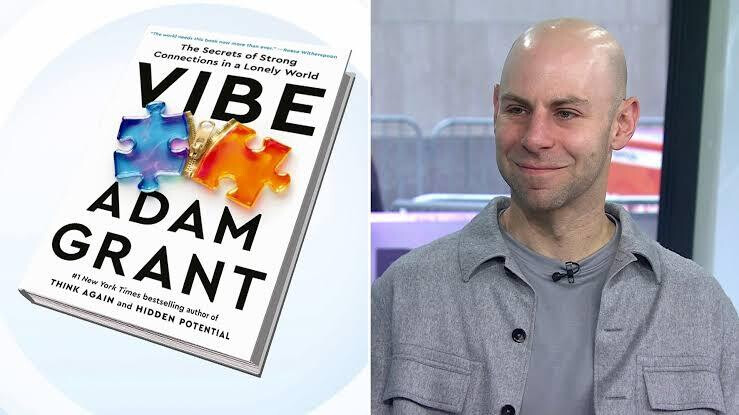
Connected Yet Alone: Organizational Psychologist Adam Grant on Why AI and Personality Labels Cannot Replace Real Human Bonds

Hannah Yeh Reporter / Updated : 2026-11-22 18:41:10
  • -
  • +
  • Print


In an era of endless digital chatter and algorithm-driven companionship, true emotional resonance requires shared experiences, constructive friction, and radical honesty.

Modern technology offers an unprecedented illusion of closeness. With a few taps on a smartphone, anyone can track the daily lives of dozens of peers or engage in round-the-clock conversations with artificial intelligence. Paradoxically, however, feelings of isolation are on the rise.

According to Adam Grant, a renowned organizational psychologist at the University of Pennsylvania’s Wharton School and author of the recent book Vibe, this modern loneliness stems from a fundamental contradiction: people are hyper-connected digitally yet deeply disconnected emotionally. Speaking on the mechanics of successful human relationships, Grant emphasizes that genuine emotional resonance—what he terms "vibe"—cannot be replicated through screens or algorithms.

The Limits of Artificial Companionship and Personality Labels

While acknowledging the practical utility of AI chatbots, Grant argues they fall short of fulfilling core human psychological needs. Meaningful connection is a two-way street; people inherently desire to matter to others and to reciprocate emotional impact. Because an individual cannot genuinely bring joy to a machine or make it laugh, relying on AI for companionship ultimately leaves a void.

Similarly, Grant warns against over-indexing on shortcuts to human understanding, such as first impressions, perceived compatibility, or popular personality frameworks like the Myers-Briggs Type Indicator (MBTI). Rather than relying on static labels, durable relationships are forged through sustained effort, shared rituals, deep dialogue, and navigating meaningful experiences together. For those still hesitant to socialize in the wake of the pandemic, he recommends starting small—such as reaching out to an old acquaintance—noting that physiological synchronization during in-person interactions boosts mood, sparks creativity, and energizes daily life.

Rethinking Workplace Harmony and Constructive Conflict

In professional environments, Grant draws a clear boundary between colleagues and close friends. High-performing teams do not require everyone to socialize outside of work; instead, they thrive on alignment around a shared mission. When friction arises with a difficult coworker, he advises addressing the behavior tactfully first. If that fails, shifting focus to the person's strengths—such as partnering with an overly competitive peer on a team project or sport—can build rapport. If no common ground emerges, stepping back from the relationship is a valid choice.

Crucially, Grant challenges the instinct to avoid workplace conflict altogether. Universal agreement is often a symptom of groupthink rather than genuine harmony. Productive teams learn how to debate constructively, framing disagreements around mutual problem-solving rather than personal judgment. As organizations scale, dividing staff into smaller, autonomous units anchored by a single overarching goal can preserve intimacy without breeding internal factions.

Candor Over Conformity in Hierarchical Cultures

Addressing workplace bonding traditions such as Korea’s hoesik (after-work team dinners), Grant notes that informal gatherings can effectively humanize coworkers and strengthen ties—provided they foster psychological safety. If such gatherings devolve into performative loyalty contests dominated by "yes-men," they lose their value.

To counteract rigid hierarchies, Grant frequently reminds team members from deference-oriented cultures that candor is the highest form of loyalty. Without an explicit agreement that honesty will not damage relationships, social gatherings alone cannot build authentic trust.

Background: A graduate of Harvard University with a doctorate in organizational psychology from the University of Michigan, Adam Grant is widely recognized for translating behavioral science into mainstream insights through bestselling works such as "Give and Take" and "Originals."

[Copyright (c) Global Economic Times. All Rights Reserved.]

  • #Cherry Garden
  • #HalalFood
  • #Halal
  • #Petlife
  • #Halalhorizone
  • #Hormuz Impasse
  • #Joseon
  • #globaleconomictimes
  • #micore
Hannah Yeh Reporter
Hannah Yeh Reporter

Popular articles

  • Apple Unveils New 8.5-inch iPad Mini with OLED Display and Water Resistance

  • The Hidden Power of Cucumbers: Low in Calories and Great for Detox

  • A Cup of Black Tea Every Day Reduces the Risk of Heart Disease? 6 Health Benefits Backed 

I like it
Share
  • Facebook
  • X
  • Kakaotalk
  • LINE
  • BAND
  • NAVER
  • https://www.globaleconomictimes.kr/article/1065606012533951 Copy URL copied.
Comments >

Comments 0

Weekly Hot Issue

  • U.S. Holiday Travel Faces Severe Disruption Risk as Budget Standoff Threatens Government Shutdown
  • Surge in AI-Assisted Cheating Forces Global Universities to Rethink Exams
  • Swimmer Braves Burning Waters in 15km Strait of Hormuz Crossing to Call for Peace
  • Shadow Supply Chains: How Gaming Moguls and Southeast Asian Syndicates Allegedly Funneled AI Chips to China
  • Civilian Casualties Mount and NATO Tensions Rise as Russian Strikes Shatter Brief Diplomatic Calm
  • AI Bubble Fears Spark Historic Rout in Taiwan and $1.7 Trillion Wipeout in Chinese Tech

Most Viewed

1
South Korea and Ethiopia Sign Trilateral MOU to Introduce Liquid-Based Cytology (LBC) Technology for Cervical Cancer Diagnosis
2
South Korean Burger Chain Lotteria Expands Singapore Footprint with Halal Certification and New Teriyaki Lineup
3
AI Semiconductor Stocks Plummet: Philadelphia Index Drops 5.28% and Micron Plunges 7.59% Amid Executive Shakeup and Export Restrictions
4
"Stay Out, Get Paid, or Have Police Stay With You": Shenzhen Imposes Strict Security Ahead of APEC Summit
5
Commuters Face Potential Delays as Seoul Subway Workers Launch Work-to-Rule Action
체리가든 스토리
nutri huevos
로타리
동포저널

Hot Issue

Market Analysts Urge Balanced Portfolio of AI Stocks, Big Tech Bonds, and Gold Amid KOSPI Volatility

U.S. Federal Agencies Grapple with Cyber Breaches and Outages Amid AI-Driven Security Shifts

Temporary Ocean Cooling Fuels Unexpected Surge in Lake Baikal’s Water Levels, Study Finds

Fashion Runway Show 2026

Let’s recycle the old blankets in Jeju Island’s closet instead of incinerating them.

Global Economic Times
korocamia@naver.com
CEO : LEE YEON-SIL
Publisher & Editor : KO YONG-CHUL
Registration number : Seoul, A55681
Registration Date : 2024-10-24
Youth Protection Manager: KO YONG-CHUL
Singapore Headquarters
5A Woodlands Road #11-34 The Tennery. S'677728
Korean Branch
Phone : +82(0)10 4724 5264
#304, 6 Nonhyeon-ro 111-gil, Gangnam-gu, Seoul
Copyright © Global Economic Times All Rights Reserved
  • News K
  • 반달곰 프로젝트
  • 광고문의
Search
Category
  • All articles
  • Synthesis
  • World
  • Business
  • Industry
  • ICT
  • Distribution Economy
  • Well+Being 
    • 전체
    • Pet Life
    • Halal Horizon
  • Travel
  • Eco-News
  • Education
  • Korean Wave News
  • Opinion
  • Arts&Culture
  • Sports
  • People & Life 
    • 전체
    • International Student Report
    • With Ambassador
  • Column 
    • 전체
    • Cho Kijo Column
    • Cherry Garden Story
    • Ko Yong-chul Column
    • Kim Bong-seon's Photo Column
    • Kim Seul-Ong Column
    • Lee Yeon-sil Column
    • Professor Lee Soo-young’s Life Essays
  • Photo News
  • New Book Guide
  • Overseas Koreans
  • Multicultural News