• 2026.03.05 (Thu)
  • All articles
  • LOGIN
  • JOIN
Global Economic Times
fashionrunwayshow2026
  • Synthesis
  • World
  • Business
  • Industry
  • ICT
  • Distribution Economy
  • Well+Being
  • Travel
  • Eco-News
  • Education
  • Korean Wave News
  • Opinion
  • Arts&Culture
  • Sports
  • People & Life
    • International Student Report
    • With Ambassador
  • Column
    • Cho Kijo Column
    • Cherry Garden Story
    • Ko Yong-chul Column
    • Kim Seul-Ong Column
    • Lee Yeon-sil Column
  • Photo News
  • New Book Guide
MENU
 
Home > Distribution Economy

South Korean Won Shakes as Exchange Rate Pierces 1,500 Mark Amid Middle East Oil Shock

Desk / Updated : 2026-03-04 18:54:25
  • -
  • +
  • Print


SEOUL — The South Korean won plummeted to its weakest level against the U.S. dollar in nearly 17 years during overnight trading, fueled by a perfect storm of geopolitical instability and a global rush toward safe-haven assets. On March 4, 2026, the won-dollar exchange rate briefly breached the psychologically critical 1,500 won barrier, a level not seen since the height of the 2008-2009 Global Financial Crisis.

A Midnight Surge
According to market data, the won-dollar exchange rate closed at 1,485.7 won during the late-night session in Seoul, marking a staggering 46.0 won jump from the previous day's domestic close. This represents the largest single-day increase in value since November 2008. During the height of the volatility, the rate peaked at 1,506.5 won, sending shockwaves through the Ministry of Economy and Finance and the Bank of Korea.

The Catalyst: Energy Security at Risk
The primary driver behind the won’s weakness is the deteriorating situation in the Middle East. Global markets went into a tailspin following Iran’s decision to blockade the Strait of Hormuz, a vital artery for nearly 20% of the world’s oil consumption. The crisis deepened as Iraq announced a total suspension of production at the Rumaila oil field, the world’s second-largest oil producing site.

The immediate reaction in the energy markets was a vertical spike in prices. West Texas Intermediate (WTI) crude for April delivery surged by more than 9% in a single session. For South Korea, an export-oriented economy that imports nearly 100% of its energy needs, surging oil prices act as a "double whammy"—widening the trade deficit while simultaneously devaluing the local currency.

Safe-Haven Flight to the Greenback
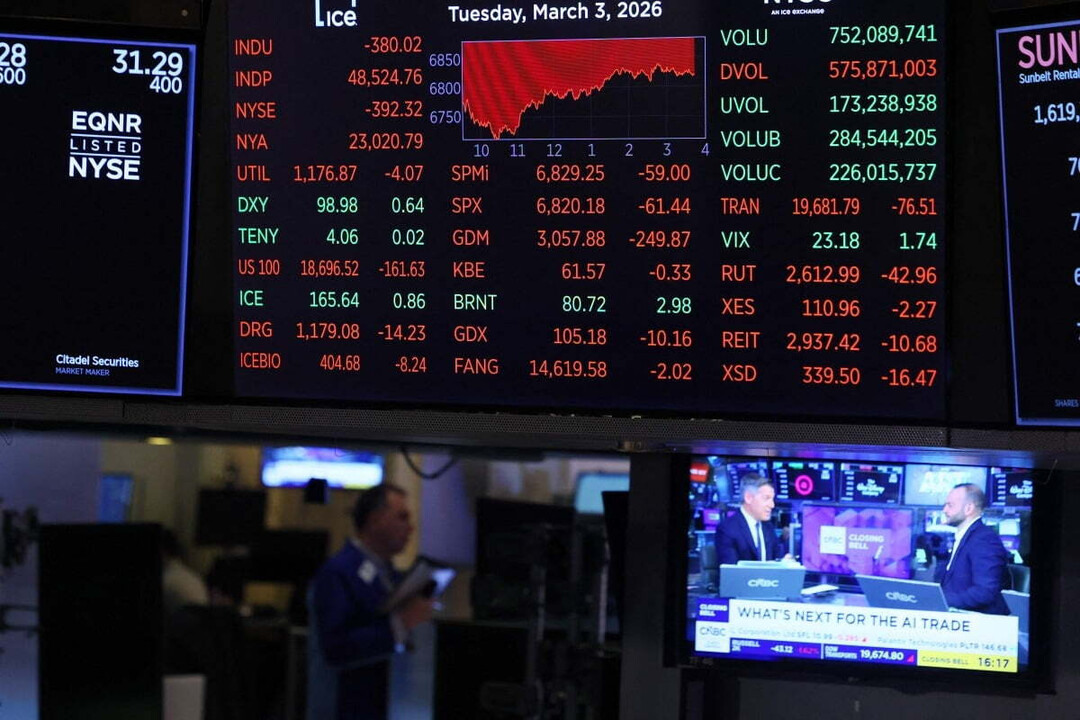
As uncertainty gripped the markets, investors abandoned emerging market currencies in favor of the U.S. dollar. The Dollar Index (DXY), which measures the greenback against a basket of six major currencies, climbed to 99.685.

"We are seeing a textbook flight to quality," said Cho Yong-gu, a senior researcher at Shinyoung Securities. "The blockade of the Strait of Hormuz has created an environment where risk aversion is the dominant theme. This is likely to persist throughout the week, putting sustained upward pressure on the exchange rate."

Economic Implications: Inflation and Interest Rates
The breach of the 1,500 won level is more than just a symbolic number; it carries dire implications for the Korean economy:

Imported Inflation: A weaker won makes essential imports—food, energy, and raw materials—significantly more expensive, potentially pushing CPI (Consumer Price Index) beyond the Bank of Korea's target.
Monetary Policy Dilemma: While a weak won usually helps exporters, the current volatility is so extreme that it may force the Bank of Korea to consider "defensive" interest rate hikes to prevent capital flight, even at the risk of cooling domestic consumption.

Government Response
South Korean financial authorities are reportedly monitoring the markets 24/7. While "fine-tuning" (market intervention) is expected to smooth out extreme volatility, the external nature of the current shock—driven by oil and global geopolitics—means domestic policy tools may have limited impact.

As the morning session opens in Seoul, all eyes remain on the Middle East. If the energy blockade persists, analysts warn that the 1,500 won level could transition from a temporary peak to a new, painful baseline for the South Korean economy.

[Copyright (c) Global Economic Times. All Rights Reserved.]

  • #Korea
  • #Seoul
  • #Hallyu
  • #USA
  • #Economy
  • #Busoness
  • #Global
  • #World
  • #Consumer
  • #Export
  • #Import
  • #Hanguel
  • #Travel
  • #Tour
  • #Food
Desk
Desk

Popular articles

  • Samsung TV Plus Surpasses 100 Million Monthly Active Users, Solidifying Leadership in Global FAST Market

  • South Korean Conglomerates Pledge 270 Trillion Won for Regional Investment to Boost Jobs and Growth

  • Mixed U.S. Employment Data Sparks Wall Street Retreat; Fed Shifts Focus to Inflation

I like it
Share
  • Facebook
  • X
  • Kakaotalk
  • LINE
  • BAND
  • NAVER
  • https://www.globaleconomictimes.kr/article/1065606747170154 Copy URL copied.
Comments >

Comments 0

Weekly Hot Issue

  • Luckin Coffee Shakes Up Global Market with Blue Bottle Acquisition
  • U.S. Private Sector Hiring Hits 7-Month High in February, ADP Reports
  • Self-Employed Loan Delinquency Rates Double in a Decade Amid Economic Headwinds
  • Multi-Homeowner Loan Balance Hits 103 Trillion Won; Half Concentrated in Seoul and Gyeonggi
  • Industrial Output Dips in January Amid Semiconductor Adjustments; Middle East Tensions Loom as Wild Card
  • South Korean Markets Shaken by "Iran Shock": KOSPI Suffers Historic Rout Amid Soaring Oil and FX Rates

Most Viewed

1
2026, The Grand Year of Hangeul Celebration — The River of History Where Five Streams Converge
2
A New Milestone for Ukraine’s Post-War Reconstruction: The Birth of ISVP
3
Mexican currency and the powerful history behind its designs
4
Revised and Expanded Edition of ‘Failure of Negotiations with North Korea: Truth and Solutions’ Published
5
About mexican food 
광고문의
임시1
임시3
임시2

Hot Issue

South Korean Markets Shaken by "Iran Shock": KOSPI Suffers Historic Rout Amid Soaring Oil and FX Rates

Self-Employed Loan Delinquency Rates Double in a Decade Amid Economic Headwinds

U.S. Private Sector Hiring Hits 7-Month High in February, ADP Reports

Industrial Output Dips in January Amid Semiconductor Adjustments; Middle East Tensions Loom as Wild Card

Let’s recycle the old blankets in Jeju Island’s closet instead of incinerating them.

Global Economic Times
korocamia@naver.com
CEO : LEE YEON-SIL
Publisher : KO YONG-CHUL
Registration number : Seoul, A55681
Registration Date : 2024-10-24
Youth Protection Manager: KO YONG-CHUL
Singapore Headquarters
5A Woodlands Road #11-34 The Tennery. S'677728
Korean Branch
Phone : +82(0)10 4724 5264
#304, 6 Nonhyeon-ro 111-gil, Gangnam-gu, Seoul
Copyright © Global Economic Times All Rights Reserved
  • 에이펙2025
  • APEC2025가이드북TV
  • 독도는우리땅
Search
Category
  • All articles
  • Synthesis
  • World
  • Business
  • Industry
  • ICT
  • Distribution Economy
  • Well+Being
  • Travel
  • Eco-News
  • Education
  • Korean Wave News
  • Opinion
  • Arts&Culture
  • Sports
  • People & Life 
    • 전체
    • International Student Report
    • With Ambassador
  • Column 
    • 전체
    • Cho Kijo Column
    • Cherry Garden Story
    • Ko Yong-chul Column
    • Kim Seul-Ong Column
    • Lee Yeon-sil Column
  • Photo News
  • New Book Guide
  • Multicultural News
  • Jobs & Workers