• 2026.11.11 (Wed)
  • All articles
  • LOGIN
  • JOIN
Global Economic Times
[등록] 2026-09-01 15:48:31
  • Synthesis
  • World
  • Business
  • Industry
  • ICT
  • Distribution Economy
  • Well+Being
    • Pet Life
    • Halal Horizon
  • Travel
  • Eco-News
  • Education
  • Korean Wave News
  • Opinion
  • Arts&Culture
  • Sports
  • People & Life
    • International Student Report
    • With Ambassador
  • Column
    • Cho Kijo Column
    • Cherry Garden Story
    • Ko Yong-chul Column
    • Kim Bong-seon's Photo Column
    • Kim Seul-Ong Column
    • Lee Yeon-sil Column
  • Photo News
  • New Book Guide
MENU
 
Home > Distribution Economy

Global Iron Scrap Prices Diverge: Loved Overseas, Cold-Shouldered in Korea—Why This Coming Winter Is Feared

KO YONG-CHUL Reporter / Updated : 2026-10-25 18:54:29
  • -
  • +
  • Print


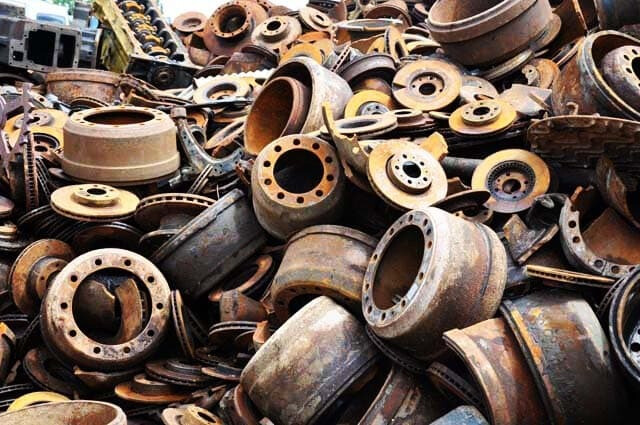
As global iron scrap (scrap metal) prices rebound, a downward trend persists in the domestic South Korean market. This divergence stems from steelmakers cutting production of steel products due to a severe construction market slump. With steelmakers lowering purchase prices compounded by an increase in import volumes, concerns are rising that the decline in scrap metal prices may be prolonged.

According to the steel industry on the 25th, the average domestic distribution price of iron scrap (based on prime scrap) stood at 435,670 won per ton this month, dropping about 12% from its yearly peak of 483,400 won in June. This downward movement was driven by major bar and structural steelmakers, such as Hyundai Steel and Dongkuk Steel, successively cutting their purchase prices since July.

This trend contrasts sharply with the strength seen in overseas iron scrap prices. East Asian iron scrap import prices rose from 488,998 won per ton in August to 516,477 won per ton this month. Furthermore, the export bidding price for iron scrap (H2 grade, etc.) for this month by Japan’s Kanto Tetsugen Cooperative rose 8.2% from the previous month to 52,077 yen per ton.

Iron scrap is a core raw material for the electric arc furnace (EAF) process, which is a low-carbon steelmaking method. Steelmakers melt this material to produce rebar and H-beams. Prime scrap, in particular, contains fewer impurities, making it ideal for producing high-quality steel products, though its supply is extremely limited.

The primary cause of the domestic price decline is pointed to as a drop in rebar demand caused by a contracting construction sector. Although price expectations briefly rose in June following POSCO's completion of a 2.5-million-ton annual capacity electric arc furnace in Gwangyang, the market could not overcome the ongoing construction recession. Additionally, demand for Japanese scrap increased as the weak yen lowered import costs. From January to September of this year, the import value of Japanese iron scrap reached $413.67 million, an 8.9% increase compared to $379.71 million during the same period last year.

The domestic iron scrap market is a buyer-dominated market with virtually no alternative sales outlets other than steelmakers. When steelmakers lower their operation rates and purchase prices, distributors have no choice but to hand over their inventory at low prices.

However, steelmakers are also struggling to fully enjoy the profit benefits of falling raw material prices. Because they link iron scrap prices when signing rebar supply contracts with large construction companies, a drop in raw material prices forces them to lower product selling prices as well, making it difficult to defend their profitability.

A battle of nerves is also unfolding among steelmakers. If distribution companies, protesting against the price cuts, suspend supplies, supply disruptions could occur. It is reported that POSCO and SeAH Besteel have suspended additional price cuts.

The industry views this coming winter as the ultimate hurdle. With the winter season serving as a traditional off-season for construction, compounded by major steelmakers' year-end facility maintenance, demand is expected to contract even further. Concerns are also being raised that if the price weakness is prolonged, it could lead to an outflow of high-grade iron scrap overseas.

[Copyright (c) Global Economic Times. All Rights Reserved.]

  • #Cherry Garden
  • #HalalFood
  • #Halal
  • #Petlife
  • #Halalhorizone
  • #Hormuz Impasse
  • #globaleconomictimes
  • #micorea
  • #mykor
KO YONG-CHUL Reporter
Reporter Page

Popular articles

  • US Pushes to Deploy Special Task Force to the Korean Peninsula—Is It Also Targeting China?

  • HMM Relocates Headquarters to Busan: A New Era for South Korea's Flagship Carrier

  • Samsung Electronics Unveils 'AI Memory' Technologies and Yongin Cluster Roadmap at SEDEX 2026

I like it
Share
  • Facebook
  • X
  • Kakaotalk
  • LINE
  • BAND
  • NAVER
  • https://www.globaleconomictimes.kr/article/1065606831129798 Copy URL copied.
Comments >

Comments 0

Weekly Hot Issue

  • Inha University Caught in Campus Culture Clash Over Proposed Rhee Syng-man Statue Revival
  • Honoring a Legacy: Poet Oh Dong-chun Recognized for Lifelong Dedication to Hangul and Sijo Poetry
  • Bongeunsa Temple to Host 2026 Patriotic Buddhism Cultural Festa
  • South Korea Confronts a Growing Health Crisis as Adult Obesity Rates Surge
  • Pain of Chosei Coal Mine Meets Japanese Readers: Moon Young-sook Publishes Japanese Edition of 'Black Sea'
  • Beyond the Trillion-Dollar Mark: China’s Trade Surplus and the Debate Over Global Economic Dominance

Most Viewed

1
US Army Conducts Rare Temporary Burial Drills to Prepare for Worst-Case Large-Scale War Scenarios
2
World Citizens are Flying Directly to Busan... The Era of 4 Million Foreigners is Just Around the Corner
3
Eating 100g of Baechu Kimchi Daily Linked to Lower High-Cholesterol Risks
4
Meeting Christmas Early!… Busan Dessert Sales Event "Daldal The Market" Held
5
November Shopping Festival Sparks Retail War in South Korea: Where to Find the Best Deals
체리가든 스토리
nutri huevos
로타리
동포저널

Hot Issue

Jensen Huang Faces Shareholder Class Action and Leadership Scrutiny Amid Espionage Allegations Involving Former Associate

Disgraced South Korean Scientist Hwang Woo-suk Becomes UAE Citizen

Is South Korea Heading Toward France's Path? Aging Population and Fiscal Pressures Looming Ahead

Fashion Runway Show 2026

Let’s recycle the old blankets in Jeju Island’s closet instead of incinerating them.

Global Economic Times
korocamia@naver.com
CEO : LEE YEON-SIL
Publisher : KO YONG-CHUL
Registration number : Seoul, A55681
Registration Date : 2024-10-24
Youth Protection Manager: KO YONG-CHUL
Singapore Headquarters
5A Woodlands Road #11-34 The Tennery. S'677728
Korean Branch
Phone : +82(0)10 4724 5264
#304, 6 Nonhyeon-ro 111-gil, Gangnam-gu, Seoul
Copyright © Global Economic Times All Rights Reserved
  • News K
  • 반달곰 프로젝트
  • 광고문의
Search
Category
  • All articles
  • Synthesis
  • World
  • Business
  • Industry
  • ICT
  • Distribution Economy
  • Well+Being 
    • 전체
    • Pet Life
    • Halal Horizon
  • Travel
  • Eco-News
  • Education
  • Korean Wave News
  • Opinion
  • Arts&Culture
  • Sports
  • People & Life 
    • 전체
    • International Student Report
    • With Ambassador
  • Column 
    • 전체
    • Cho Kijo Column
    • Cherry Garden Story
    • Ko Yong-chul Column
    • Kim Bong-seon's Photo Column
    • Kim Seul-Ong Column
    • Lee Yeon-sil Column
  • Photo News
  • New Book Guide
  • Overseas Koreans
  • Multicultural News