• 2026.03.22 (Sun)
  • All articles
  • LOGIN
  • JOIN
Global Economic Times
fashionrunwayshow2026
  • Synthesis
  • World
  • Business
  • Industry
  • ICT
  • Distribution Economy
  • Well+Being
  • Travel
  • Eco-News
  • Education
  • Korean Wave News
  • Opinion
  • Arts&Culture
  • Sports
  • People & Life
    • International Student Report
    • With Ambassador
  • Column
    • Cho Kijo Column
    • Cherry Garden Story
    • Ko Yong-chul Column
    • Kim Seul-Ong Column
    • Lee Yeon-sil Column
  • Photo News
  • New Book Guide
MENU
 
Home > Distribution Economy

South Korea's Wealth Gap Widens Amid Declining Household Debt

ONLINE TEAM / Updated : 2024-12-09 19:00:40
  • -
  • +
  • Print


Seoul, South Korea – South Korea's household wealth gap has widened despite a recent decline in overall debt, according to the 2024 Household Financial Survey released by the Korea National Statistical Office on Tuesday.

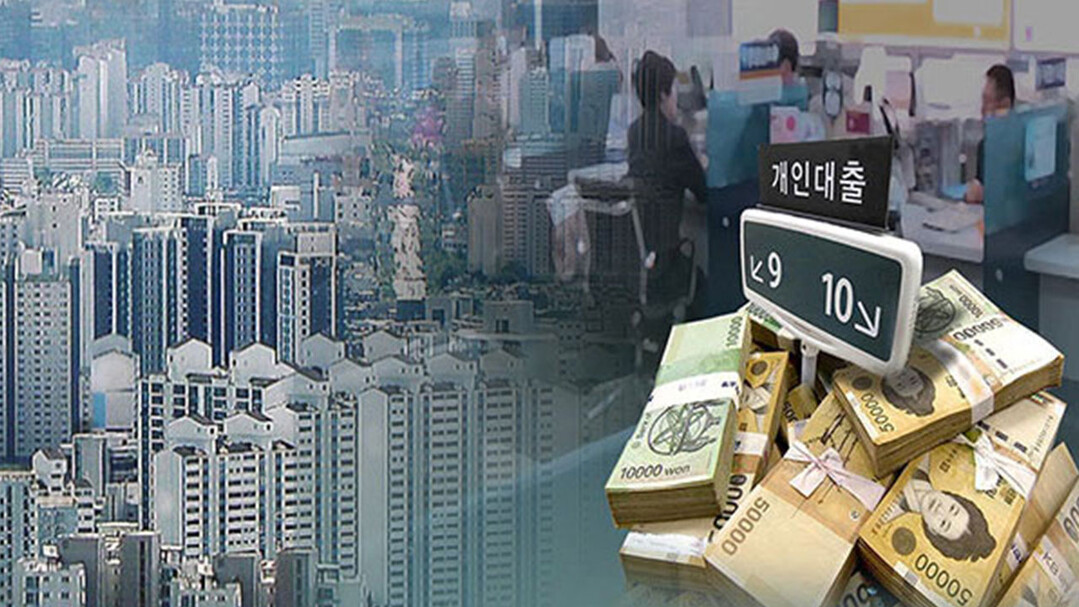
The survey, conducted on 20,000 households, revealed that the average household asset value rose 2.5% to 540.22 million won ($408,800) in 2024, primarily driven by increases in financial assets (6.3%) and real estate (1.3%). 1  However, this growth was concentrated among high-income households, exacerbating wealth inequality.   

For the first time since 2011, average household debt decreased by 0.6%. The decline can be attributed to a decrease in both mortgage and consumer debt. Despite this overall decrease, the average debt of households with debt actually increased by 1.6%.

While the survey indicated a slight improvement in overall household financial health, with the debt-to-asset ratio falling to 16.9%, the data also highlighted a growing wealth gap. Households in the top 20% of income earners saw their share of total assets increase to 45.8%, while those in the bottom 20% experienced a decline in net assets.

Furthermore, the survey revealed a growing disparity between young and older generations. While the proportion of households with an annual income exceeding 100 million won reached a record high, income growth for households headed by individuals aged 30 or younger lagged significantly behind the inflation rate.

Experts attribute these trends to a combination of factors, including government policies, demographic changes, and economic fluctuations. The findings underscore the ongoing challenges faced by South Korea in addressing income inequality and ensuring financial stability for its citizens.

[Copyright (c) Global Economic Times. All Rights Reserved.]

  • #globaleconomictimes
  • #koyongchul
  • #cherrylee
  • #seoulkorea
  • #periodicoeconomico
  • #글로벌이코노믹타임즈
  • #GET
  • #GETtv
  • #liderdel
ONLINE TEAM
ONLINE TEAM
Reporter Page

Popular articles

  • Over 1,800 Companies Sue Trump Administration for $129 Billion in Tariff Refunds

  • Samsung Doubles DRAM Prices in Q1 Amid Unprecedented AI Demand Surge

  • Yujin Robot Evolves Industrial Automation: Integrating Autonomous Mobility and Collaborative Robotics

I like it
Share
  • Facebook
  • X
  • Kakaotalk
  • LINE
  • BAND
  • NAVER
  • https://www.globaleconomictimes.kr/article/1065607172226599 Copy URL copied.
Comments >

Comments 0

Weekly Hot Issue

  • Coway Clinches Top Honor at "Water Taste Awards" for 7th Consecutive Year
  • HP Targets Korea as Strategic Hub for 'Edge AI' Expansion, Seeking Startup Partnerships
  • Pearl Abyss’s 'Crimson Desert' Shatters Records with 2 Million Copies Sold on Day One
  • "BTS Over Books?" Indian Academies Issue Emergency Notices as Students Plot Mass Absences for Comeback Live
  • Naver to Shut Down Men's Fashion Service 'MR.' to Launch Expanded AI-Driven Fashion Platform
  • JBNU and SKKU Researchers Achieve Breakthrough in "Dream Material" MXene, Setting New World Records in Performance

Most Viewed

1
An Open Letter to BTS On the Eve of a Historic Performance
2
From Industrial Capital to Tourism Mecca... Ulsan Makes a Bold Move with ‘Experiential Content’ in 2026
3
Ko Sang-goo, President of World Federation of Korean Associations, Elected as First Private Sector Chair of World Korean Community Leaders Convention
4
It is Time for BTS’s Fandom, ARMY, to Step Forward
5
Korean Stock Market Plunges: Circuit Breaker and Sidecar Triggered Amid Geopolitical Crisis
광고문의
임시1
임시3
임시2

Hot Issue

Vishay Unveils Ultra-Compact 0404 RGB LED with Independent Chip Control for Enhanced Color Precision

Coway Clinches Top Honor at "Water Taste Awards" for 7th Consecutive Year

AI Medical Ecosystem in Focus: KIMES 2026 Opens in Seoul as Global Healthcare Hub

Netanyahu Declares Decisive Blow to Iran’s Nuclear and Missile Programs, Signals Early End to War

Let’s recycle the old blankets in Jeju Island’s closet instead of incinerating them.

Global Economic Times
korocamia@naver.com
CEO : LEE YEON-SIL
Publisher : KO YONG-CHUL
Registration number : Seoul, A55681
Registration Date : 2024-10-24
Youth Protection Manager: KO YONG-CHUL
Singapore Headquarters
5A Woodlands Road #11-34 The Tennery. S'677728
Korean Branch
Phone : +82(0)10 4724 5264
#304, 6 Nonhyeon-ro 111-gil, Gangnam-gu, Seoul
Copyright © Global Economic Times All Rights Reserved
  • 에이펙2025
  • APEC2025가이드북TV
  • 독도는우리땅
Search
Category
  • All articles
  • Synthesis
  • World
  • Business
  • Industry
  • ICT
  • Distribution Economy
  • Well+Being
  • Travel
  • Eco-News
  • Education
  • Korean Wave News
  • Opinion
  • Arts&Culture
  • Sports
  • People & Life 
    • 전체
    • International Student Report
    • With Ambassador
  • Column 
    • 전체
    • Cho Kijo Column
    • Cherry Garden Story
    • Ko Yong-chul Column
    • Kim Seul-Ong Column
    • Lee Yeon-sil Column
  • Photo News
  • New Book Guide
  • Multicultural News
  • Jobs & Workers