![[등록] 2026-09-01 15:48:31](/support/_updata/banner2/tl181982910_6749.png)


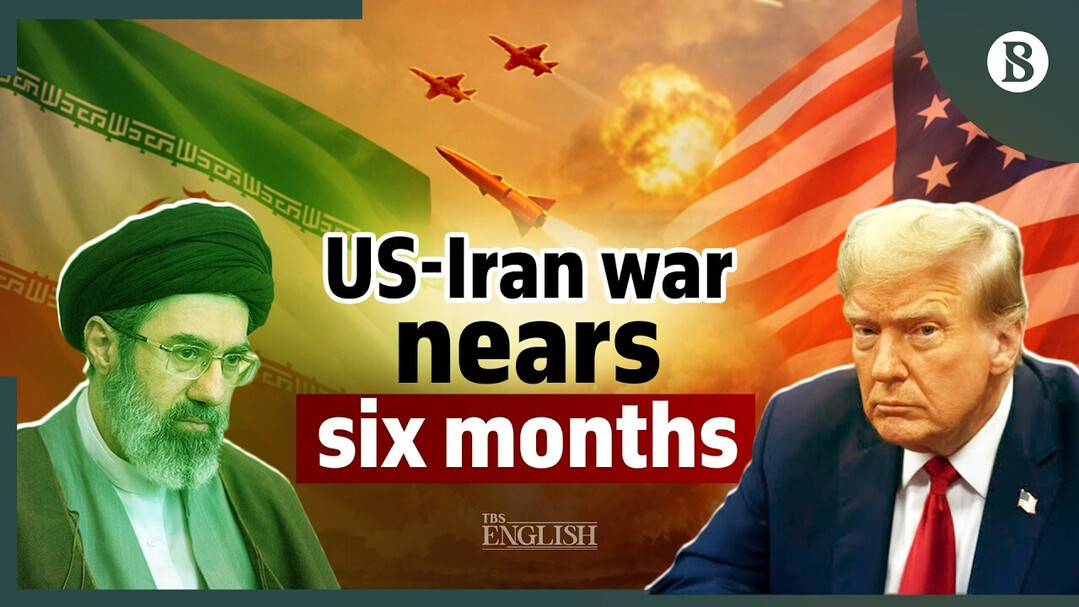
As of August 28, 2026, the conflict between the United States and Iran—which erupted on February 28—marks its grim six-month milestone. The initial bullish claims from U.S. President Donald Trump, who declared on March 11 that "we won and the war ended in just one hour," have morphed into a vastly different reality. Speaking on August 26, President Trump stated, "We are in no rush and have set no deadlines." This shift signals that the conflict has transformed from a swift military campaign into a prolonged structural contest, reshaping diplomatic and strategic calculations for Washington, Tehran, Beijing, Moscow, and Middle Eastern capitals alike.
Strategic Pivot in Washington: Military Pauses and Total Economic Warfare
The United States initially relied on overwhelming military dominance and rapid missile strikes, expecting a quick capitulation. However, practical constraints forced a dramatic recalibration. Following heavy strikes, the U.S. has notably refrained from major military engagements since late July. This de-escalation stems from several pressures: surging global oil prices causing domestic economic friction, the depletion of high-end strategic assets like interceptor missiles, and a worsening public sentiment ahead of upcoming midterm elections.
Consequently, the administration has pivoted toward a "war of attrition" centered on severe financial isolation. Secretary of State Marco Rubio recently informed allies that Washington has modified its strategic posture and holds no immediate plans for new military offensives, focusing instead on what Trump calls "unprecedented economic warfare." In a recent Al Jazeera interview, Trump doubled down on this approach, asserting that Iran’s economy is buckling under hyperinflation while maintaining that the U.S. is winning through economic strangulation.
Tehran’s Diplomatic Counteroffensive: Deepening Ties with China, Russia, and the Gulf
Facing isolation, Iran has engaged in sweeping diplomatic outreach to secure its survival. President Masoud Pezeshkian is scheduled to meet Russian President Vladimir Putin at the upcoming Shanghai Cooperation Organization (SCO) summit in Kyrgyzstan. Iranian Ambassador to Russia Kazem Jalali announced that both nations have already signed a $25 billion memorandum of understanding for new nuclear power plant construction near the Persian Gulf.
Simultaneously, traditional powers like Russia and China—which initially maintained a cautious, non-interventionist stance—have stepped up engagement. China recently issued a sharp rebuke of expanded U.S. economic sanctions against Iran, vowing to preserve bilateral ties. Iranian Parliamentary Speaker Mohammad Bagher Ghalibaf praised Beijing’s stance on social media, emphasizing that the comprehensive strategic partnership between Tehran and Beijing is anchored in mutual respect, shared win-win cooperation, and a vision for a multipolar world.
Middle Eastern Realignment: Security Autonomy and the Rise of Regional Mediators
Middle Eastern nations, bearing the brunt of the instability, are actively pursuing self-reliance and shifting from passive observers to active mediators. Witnessing the limits of the U.S.-led security umbrella, regional powers forged a landmark joint defense pact in Mecca, signed by Saudi Arabia, Turkey, and Pakistan.
At the same time, regional diplomacy is shifting into high gear. Qatari Prime and Foreign Minister Sheikh Mohammed bin Abdulrahman Al Thani announced a diplomatic mission to Iran to help defuse tensions around the strategic Strait of Hormuz. Alongside Oman—which has long facilitated back-channel talks—countries like Iraq and Egypt are increasingly asserting themselves as diplomatic "firefighters." Throughout critical junctures of the conflict, these regional actors have successfully stepped in to temper U.S. airstrikes and prevent total chokeholds on maritime transit, redefining the geopolitical landscape of the Middle East as the conflict enters its second half.
[Copyright (c) Global Economic Times. All Rights Reserved.]